Public evidence page
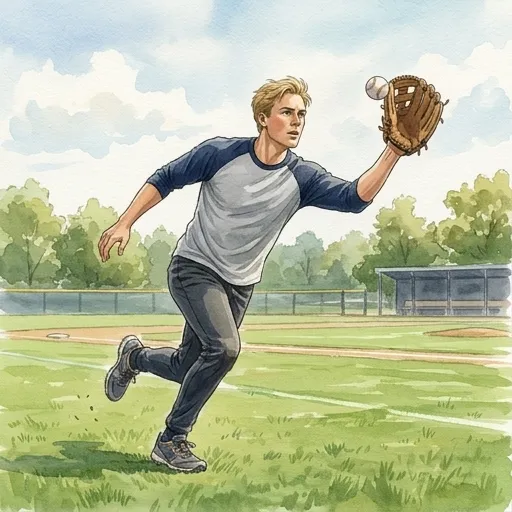
Baseball - Field player
Sport
Sport: Baseball
Position: Field player
Athletes' bodies
Elite male baseball field players (infield + outfield) typically fit an athletic, moderately muscular build that supports both batting power and repeated sprinting/fielding movements. Compared with specialized positions (e.g., pitchers, catchers), their “optimal body” is usually more speed/agility compatible and slightly leaner-to-balanced than catcher-heavy builds, while still having enough strength for throwing and contact power.
Cohort
Sex: Male
Level: Elite
Quick glossary
- Prior
- Model estimate before updating with the current evidence; the starting baseline.
- Posterior
- Model-updated estimate after combining prior evidence with observed data.
- Standard deviation
- Spread around the estimate; lower means tighter expected range.
- Alignment
- How well a goal/preference/injury profile matches this body pattern.
Measurements
| Factor | Prior | Posterior | Success-impact | Reasoning behind prior | Prior estimate sources |
|---|---|---|---|---|---|
| Height | 178.1 ± 4.1 cm | 178.1 ± 4.1 cm | high | No single elite dataset for “field player” aggregate was found in the sources above; therefore, an infield+outfield proxy was constructed by averaging the infield and outfield means from the elite position table and using a reasonable SD consistent with elite positional variability. | [1] |
| Weight | 85.5 ± 5.2 kg | 85.5 ± 5.2 kg | high | Field players need a balance between power (bat/throw) and repeatability (fielding/sprinting). The aggregate weight is set between infield and outfield positional means from the elite table, with SD reflecting elite heterogeneity (different player physiques within the field group). | [1] |
| Arm span | 179 ± 6.5 cm | 179 ± 6.5 cm | medium | Catcher-specific and field-player-specific arm-span databases were not located in the gathered sources. Arm span is therefore inferred from a near-neutral ape index typical of adult males/athletes, with a moderate SD for elite measurement variation. | [2] |
| Foot length | 27.1 ± 1.3 cm | 27.1 ± 1.3 cm | medium | Foot size relates to footwear fit and comfort during sprinting/fielding. Set to a height-consistent value with moderate variability. | [3] |
| Leg inseam | 92.5 ± 4.2 cm | 92.5 ± 4.2 cm | medium | Field players benefit from effective sprint mechanics and stable fielding stances; inseam is set to match typical elite adult proportions for the selected height, with moderate SD. | [4] |
| Leg-torso ratio | 1.09 ± 0.06 ratio | 1.09 ± 0.06 ratio | medium | A slightly higher leg-to-torso ratio supports sprint posture and quick recovery from fielding stances while keeping enough trunk control for throwing and batting mechanics transfer. | [5] |
| Pelvic bone width | 28 ± 2.3 cm | 28 ± 2.3 cm | medium | Pelvic stability is important for cutting, sprint transitions, and throwing mechanics. Pelvic width is set within typical adult athlete ranges with a moderate SD. | [6] |
| Shoulder width | 43 ± 3.1 cm | 43 ± 3.1 cm | medium | Throwing strength and upper-body leverage matter, but field players are not as specialized for extreme receiving/bracing as catchers. Thus shoulder width is set moderately wide with elite variability. | [7] |
| Torso length | 84.5 ± 3.8 cm | 84.5 ± 3.8 cm | medium | Effective fielding and sprinting often benefit from a torso length that supports efficient trunk swing and posture control. Torso length is set consistently with the chosen height and inseam. | [4] |
| Ankle circumference | 22.8 ± 1.6 cm | 22.8 ± 1.6 cm | low | Ankle circumference affects gear fit and may correlate weakly with foot/ankle mechanics. It’s included as a low-importance proxy. | [8] |
| Ape index | 1.01 ± 0.03 ratio | 1.01 ± 0.03 ratio | low | Set close to typical adult male values with small SD; arm span is mostly handled via the height-derived inference above. | [2] |
| Hand length | 19.4 ± 1.1 cm | 19.4 ± 1.1 cm | low | Hand length may influence catching radius slightly, but is not a dominant constraint versus strength, reaction time, and mobility; therefore importance is low and values are inference-based. | [9] |
| Shoulder-hip ratio | 0.97 ± 0.05 ratio | 0.97 ± 0.05 ratio | low | Field players generally benefit from balanced trunk mechanics (not extremely shoulder-dominant). Therefore ratio is near neutral with modest variability. | [10] |
| Wrist circumference | 16.9 ± 1.2 cm | 16.9 ± 1.2 cm | low | Wrist circumference is a minor gear/fit proxy for catching/throwing and therefore assigned low importance. | [11] |
Traits
| Factor | Value | Impact | Reasoning | Sources |
|---|---|---|---|---|
| Muscle fiber profile | balanced | high | Field players require repeated explosive actions (sprints, jumps, quick throws) and also tolerate intermittent activity across long games. This favors a balanced fiber profile rather than purely fast-twitch dominant. | [12] [13] |
| Metabolic tendency | mesomorphic tendency | medium | The cited elite-position data suggest athletic mesomorphic components across field roles. For “optimal,” mesomorph is selected as a pragmatic balance between power and repeatability. | [14] |
| Joint laxity | medium | medium | Field players need enough range for varied stances and reach, but repeated high-velocity throws and rapid cutting benefit from controlled stability. Medium laxity is the most robust default. | [15] |
| Foot arch | neutral arch | medium | Neutral arch is selected because it offers a stable compromise for sprinting + lateral fielding while still allowing adaptation. Extreme flat/high arch types are not consistently optimal across all elite field tasks. | [16] |
| Temperature tolerance | balanced | low | Baseball is largely outdoor and intermittent; morphology is not strongly specialized for heat or cold compared with strength/power and skill. | [17] |
| Dominant side | no meaningful side advantage | low | Field players’ effectiveness depends more on skill, training, and positioning than on a consistent anatomical advantage to being right- or left-dominant in the “field player” aggregate. | [18] |
Goals
| Factor | Alignment | Reasoning | Sources |
|---|---|---|---|
| Build confidence | high | Progress in batting and fielding shows up quickly: better contact, fewer errors, stronger/cleaner throws, and improved consistency. Because amateurs get frequent feedback in games and practice, confidence tends to rise noticeably over time. | [19] [20] |
| Build endurance | low | Endurance (aerobic stamina for long continuous efforts) is not baseball’s main training stimulus. Field players do intermittent high-intensity actions, so the sport more strongly builds repeat-burst ability than long, steady aerobic capacity. You can improve endurance if you practice consistently and add conditioning, but the position/sport structure alone makes this a weaker “high alignment” goal. | [21] [22] |
| Build strength and power | medium | Field players commonly sprint, decelerate, and throw, and batting involves powerful rotational movement. That can build strength and power—especially in arms/shoulders, legs (through sprints and fielding), and core—though it’s not a guaranteed substitute for structured progressive resistance training (weights), so it’s typically medium for amateurs. | [19] [21] [23] |
| Challenge myself | high | Baseball can be demanding because you need to stay mentally ready for long stretches, then execute high-skill actions under pressure (fielding, throwing accuracy, batting timing). The combination of physical effort and high technical difficulty makes it a strong “challenge myself” fit. | [24] [25] |
| Compete and measure myself | high | Amateur baseball has clear competitive outcomes and commonly tracked metrics (batting stats like average/OBP/SLG, fielding stats like errors, plus speed/strength proxies like throwing velocity or sprint times). Even if some metrics are imperfect, the overall structure strongly supports comparison and measurement. | [23] [26] |
| Improve agility and coordination | high | Field players need rapid reaction to the ball, quick changes in direction/body positioning, coordination of glove/eyes, and accurate throws after movement. That “react + move + throw” pattern is very coordination-heavy, so this aligns strongly with agility/coordination goals. | [21] [27] |
| Improve balance and control | medium | Fielding requires stable posture while tracking and catching, then controlled body positioning during throws. You do a lot of moving and stopping, but balance work depends on how you field (ground balls vs fly balls, your mechanics, etc.). That makes it a medium match rather than high. | [21] [26] |
| Improve flexibility and mobility | low | Playing baseball involves rotation, reaching, and occasional deep fielding positions, but most people won’t naturally gain mobility/ROM unless they actively stretch and do mobility work. Therefore it’s usually a low alignment goal for amateurs. | [20] [21] |
| Improve general health and fitness | high | As a field player, you both field (sprinting, stopping, throwing) and bat during the game. That means your training includes repeated bursts of movement plus some sustained periods of readiness. For an amateur, this reliably supports general fitness—especially leg conditioning, shoulder/arm strength endurance, and whole-body coordination—though it’s usually not as continuous cardio as sports like soccer. | [21] [22] [23] |
| Improve speed and explosiveness | high | Fielding rewards quick first steps, sprinting to balls, hard deceleration, and fast throwing. Batters also need explosive bat speed and coordinated power. So for amateurs who play regularly, this is one of the stronger matches for building speed/explosiveness. | [21] [22] [28] |
| Learn new skills and master technique | high | Field players develop many discrete, teachable skills: catching fundamentals, throwing mechanics, ground-ball vs fly-ball technique, footwork, and hitting mechanics. There’s a long learning curve, so mastery is strongly achievable over time. | [19] [20] [28] |
| Lose weight | medium | Field play includes lots of short, hard bursts (sprinting, throwing) but also many pauses between plays, so total calorie burn can be lower than continuous endurance sports. Still, because field players are active in both offense and defense and do lots of stop/start movement, weight loss is achievable—just not as predictably efficient as running/cycling or sports with sustained running. | [21] [22] |
| Make friends and feel a sense of belonging | high | Baseball is highly team-based with regular practices and shared responsibilities across innings. Field players are constantly interacting (coverage calls, throws, positioning), making it a strong social choice for belonging. | [26] |
| Reduce stress and feel better | medium | Team sports commonly help mood and stress through social connection and physical exertion, and fielding/batting require focus that can be mentally absorbing. However, baseball can also be frustrating (misses/strikeouts/errors), which can limit how consistently “feel better” it is—so medium. | [25] [26] |
| Spend time with people I care about | high | Practices, drills, and games naturally provide lots of time around teammates. While there are moments of silence during play, there’s generally enough downtime and shared activity (warmups, between innings, throwing/catching prep) to talk and catch up—especially in amateur leagues. | [26] |
Preferences
| Factor | Alignment | Reasoning | Sources |
|---|---|---|---|
| Competition-focused environment | high | Baseball is inherently competitive—games determine standings/wins/losses, and field players are judged directly on defensive outcomes (outs, errors, runners allowed). That creates a results-oriented culture in most leagues. ([britannica.com](https://www.britannica.com/topic/Baseball-Positions-and-Roles?utm_source=openai)) | [29] |
| Enjoys contact | medium | A field player can avoid deliberate contact, but in practice you often do hard stops, sliding into certain plays (at least in base-running contexts), diving/overreaching, and dealing with fast batted balls near you. If you don’t mind that kind of physical intensity, catcher-free “toughness” can still apply. ([en.wikipedia.org](https://en.wikipedia.org/wiki/Infielder?utm_source=openai)) | [30] [31] |
| Flexible Time Table | low | You can practice fielding skills some, but real field player development and meaningful practice usually need a team (throwing/catching partners, infield/outfield drills, and live balls). Also, game participation is tied to scheduled practices/games. So it’s less flexible than solo-running-style sports. ([cdn2.sportngin.com](https://cdn2.sportngin.com/attachments/document/0048/0753/Baseball_Positive_Coaching_Manual.pdf?utm_source=openai)) | [32] [33] |
| Indoor setting | none | Baseball fielding is intrinsically tied to playing on an outdoor field/diamond. While you can practice skills indoors (throwing/catching drills), the sport/role itself is not typically “an indoor, controlled-condition sport” in the way something like indoor track or gym sports are. ([britannica.com](https://www.britannica.com/topic/Baseball-Positions-and-Roles?utm_source=openai)) | [29] |
| Long steady efforts | low | While baseball games last a long time, the field player’s physical output is mostly intermittent (waiting, then sprinting/throwing on each ball in play). Endurance sports are more defined by continuous steady effort. ([britannica.com](https://www.britannica.com/topic/Baseball-Positions-and-Roles?utm_source=openai)) | [29] [30] |
| Low impact on joints | low | Compared with cycling or swimming, field play includes lots of sprinting, quick direction changes, and explosive throws/jumps for fly balls—so joint impact/load is not minimal. ([sciencedirect.com](https://www.sciencedirect.com/science/article/pii/S1466853X19300306?utm_source=openai)) | [34] |
| Mostly individual | low | Even though catching and throwing are individually performed skills, fielding success depends on knowing where teammates are and making the “right” throw quickly (which base, whether to throw now, whether to tag/force, etc.). So it’s not mainly “train alone then succeed,” it’s more “execute as part of the fielding unit.” ([britannica.com](https://www.britannica.com/sports/baseball/Outfielders?utm_source=openai)) | [30] [31] |
| Non-contact | low | Fielding is generally not “contact between players” like in football or basketball, but it still involves close physical effort—sprinting, diving/reaching, and catching/throwing balls. Also, collisions can happen in some amateur scenarios (e.g., plays at bases), so it’s not best described as “little or no direct physical contact.” ([en.wikipedia.org](https://en.wikipedia.org/wiki/Infielder?utm_source=openai)) | [30] |
| Outdoor setting | high | A field player’s core experience happens on the baseball diamond and outfield grass—tracking fly balls, breaking on ground balls, and making throws across the field—so it strongly matches an outdoor preference. ([britannica.com](https://www.britannica.com/topic/Baseball-Positions-and-Roles?utm_source=openai)) | [29] [31] |
| Playful recreational atmosphere | low | In typical amateur settings you can absolutely have fun, but the field player role often carries responsibility—mistakes can turn into baserunners/runs. That tends to create a more “serious about execution” atmosphere than very casual sports. ([en.wikipedia.org](https://en.wikipedia.org/wiki/Infielder?utm_source=openai)) | [30] [31] |
| Routine and structure | high | Baseball has a highly structured format (innings, outs, specific roles on defense). Field players repeatedly cycle through the same categories of actions: get into position → react on balls in play → throw to the right base → reset. That makes it predictable in structure even if the ball itself varies. ([britannica.com](https://www.britannica.com/topic/Baseball-Positions-and-Roles?utm_source=openai)) | [29] [31] |
| Short explosive efforts | high | Field players repeatedly handle short, high-intensity moments: sprinting to a ball, charging grounders, breaking on fly balls, and making strong throws. Most of the effort is bursty rather than long steady running. ([en.wikipedia.org](https://en.wikipedia.org/wiki/Infielder?utm_source=openai)) | [30] [31] [34] |
| Tactical and strategic | medium | There is strategy (where to position, what plays to make on throws, how to handle runners, when to go for specific outs), and different roles like infield vs outfield can demand different reads. But compared with sports where you’re making constant tactical decisions moment-to-moment, fielding is more “react and execute” than “build the plan every second.” ([britannica.com](https://www.britannica.com/topic/Baseball-Positions-and-Roles?utm_source=openai)) | [29] [35] |
| Team environment | high | A field player constantly switches between defense and offense contributions, but on defense you’re also a key part of a coordinated unit: you field balls and then relay/throw to the correct base (sometimes as part of cutoffs, doubles, or force plays). That “team choreography” is a big part of what makes baseball work. ([britannica.com](https://www.britannica.com/topic/Baseball-Positions-and-Roles?utm_source=openai)) | [29] [30] [31] |
| Technique-heavy | high | Fielding well requires refined technique: glove positioning, receiving grounders/fly balls, footwork for throws, and getting the ball out quickly and accurately. Small mechanical improvements can make big differences at amateur level. ([britannica.com](https://www.britannica.com/sports/baseball/Outfielders?utm_source=openai)) | [30] [31] [36] |
| Variety and novelty | medium | There is some variety: different batter tendencies, ball locations, runner situations, and different defensive plays. But compared with sports that constantly change environments or tasks (e.g., racket sports where you face new shot types constantly), many fielding actions fall into repeatable buckets (ground ball, fly ball, throws to bases). ([en.wikipedia.org](https://en.wikipedia.org/wiki/Infield_shift?utm_source=openai)) | [30] [31] [35] |
| Water environment | none | No water component is part of playing field positions in baseball. ([britannica.com](https://www.britannica.com/topic/Baseball-Positions-and-Roles?utm_source=openai)) | [29] |
Injuries
Risk
| Factor | Value | Definition | Full reasoning | Sources |
|---|---|---|---|---|
| Achilles tendon pain (tendinopathy) | low | Pain and irritation in the Achilles tendon at the back of the ankle. | In field baseball, the Achilles can be stressed by acceleration/deceleration and sprinting, so risk isn’t zero. But it’s usually less central than knee, hip/groin, and ankle sprains; thus low. | [37] [38] |
| ACL injury | low | A major ligament injury inside the knee, often linked to pivoting, landing, or sudden deceleration. | Any athlete can tear an ACL, but catcher/sustained squatting isn’t the classic ACL risk pathway. Fielding includes stopping/pivoting, so not zero—but for moderate frequency play, risk is low. | [37] [41] |
| Ankle sprain | medium | A stretched or torn ankle ligament, usually after the foot rolls awkwardly. | Ankle sprains are plausible and often common in field sports with dynamic footwork. Baseball fielding (infield/outfield) includes rapid lateral movements and pivots, supporting medium risk. | [37] [38] |
| Calf strain | low | A pulled or overloaded calf muscle, often felt during pushing off, sprinting, or jumping. | Fielding involves push-off and quick strides, so calf strain is plausible, but at moderate frequency it’s usually less highlighted than groin/knee and ankle injuries. So low. | [37] |
| Finger or hand impact injury | high | Pain from jamming, bending, or striking the fingers or hand during sport. | Even without catcher-specific impact at the plate, fielding involves repeated ball-to-hand impacts (glove-caught balls, mis-catches, deflections). Equipment reduces risk but doesn’t eliminate it, so high risk is reasonable for impact-related hand/finger injuries. | [47] [48] |
| General forearm overuse pain | none | Ongoing forearm pain from repeated gripping, lifting, or arm use when the exact tendon is unclear. | Catch-and-throw demands can irritate many parts of the upper extremity, but the best-supported and most commonly discussed baseball injury patterns for field players are usually shoulder/elbow problems rather than isolated forearm overuse. Without clearer catcher/field-epidemiology for forearm pain, I keep risk at none in this category. | [37] [51] |
| General foot or ankle pain | medium | Ongoing foot or ankle pain when the exact structure or diagnosis is unclear. | Because field players frequently accelerate and decelerate and are exposed to uneven footing, nonspecific foot/ankle pain is plausible. It’s not necessarily the top injury compared with knees/hips/shoulder, so medium. | [37] [54] |
| General hip or groin pain | high | Ongoing hip or groin pain when the exact structure or diagnosis is unclear. | Hip/groin pain is strongly plausible in baseball fielding due to repeated acceleration/deceleration, lateral movements, and throwing-related pelvic stabilization. Groin/hip problems are also commonly referenced among baseball lower-extremity injuries, so I rate risk high. | [37] [57] |
| General knee pain | high | Ongoing knee pain when the exact structure or diagnosis is unclear. | Knee pain is one of the most plausible high-risk issues for field players due to the combination of low, bent-knee stances and repeated high load through running/cutting. This aligns with broader baseball knee injury concerns. | [37] [60] |
| General lower-back pain | medium | Ongoing lower-back pain when the exact source is unclear. | Baseball fielding involves trunk flexion/rotation during preparation and throws. This makes mechanical low back pain plausible. But compared to knee and groin issues, it’s a bit less consistently position-defining, so medium. | [37] |
| General lower-leg pain | medium | Ongoing shin or calf pain when the exact diagnosis is unclear. | Lower-leg pain is plausible because fielding stresses the entire lower limb with repeated strides and deceleration. Still, not clearly the top subtype versus ankle/knee/hip. Medium. | [37] |
| General shoulder pain | medium | Ongoing shoulder pain when the exact structure or diagnosis is unclear. | Shoulder injuries are a prominent issue in baseball athletes overall, and fielding involves throwing and catching with overhead mechanics. However, pitchers have higher throwing load than typical field players, so I rate medium for field players at moderate frequency. | [51] [67] |
| General wrist or hand pain | medium | Ongoing wrist or hand pain when the exact structure or diagnosis is unclear. | Fielding uses the hands for glove control and frequently involves catching/throwing impacts and torsion. Wrist/hand pain is plausible, but “impact fingers” is likely more dominant, so medium. | [37] [70] |
| Golfer's elbow | none | Pain on the inside of the elbow linked to overload in the forearm tendons. | Medial epicondyle problems can occur in throwing athletes, but when mapping common baseball injuries, the clearest association is with throwing elbow/shoulder issues rather than categorizing specifically as “golfer’s elbow” for field players. So risk is treated as none in this simplified injury list. | [51] |
| Groin strain | high | A pulled or irritated groin muscle, often felt in cutting, sprinting, or kicking movements. | Fielding requires repeated acceleration, deceleration, and quick lateral movement that loads adductors. Groin strain is therefore high risk for field players. | [37] [75] |
| Hip flexor strain | high | A strain or overload in the front-of-hip muscles that help lift the leg. | Hip flexor strain is plausible and common in sports involving frequent sprinting and rapid leg swings. Field baseball includes those demands, making risk high. | [37] [78] |
| Side-of-hip tendon pain | medium | Irritation of the hip or gluteal tendons around the outer side of the hip. | Fielding repeatedly loads hip abductors/extensors (gluteal tendons) during sprint mechanics and cutting. But it’s not as position-defining as knee/back issues, so medium risk. | [37] [81] |
| Lower-back disc irritation | low | Lower-back pain that may involve irritation of a spinal disc and sometimes pain spreading into the leg. | Disc irritation is plausible but less clearly supported as a dominant field-player injury subtype. Therefore low. | [37] |
| Mechanical lower-back pain | medium | Common lower-back pain related to movement, loading, stiffness, or irritated supporting tissues. | This is a plausible mechanical response to repetitive trunk demands in fielding. Medium rather than high because disc/nerve or severe mechanisms are not clearly dominant, and fielding varies by role and technique. | [37] |
| Meniscus injury | medium | Irritation or tearing of the knee cartilage that helps cushion and stabilize the joint. | Fielders experience change-of-direction and deceleration with the knee loaded, which can irritate/tear meniscal tissue. However, the most typical dominant baseball injury concerns are broader knee pain and overuse, so I rate medium. | [37] [88] |
| Jumper's knee (patellar tendinopathy) | medium | Pain and irritation in the tendon just below the kneecap. | Fielding’s repeated low knee flexion and subsequent extension to sprint/throw can overload the patellar tendon in susceptible athletes. But again, not as uniquely documented for field players as general knee pain. Medium risk. | [91] |
| Front-of-knee pain (patellofemoral pain) | high | Pain around or behind the kneecap that often flares with repetitive knee bending. | Patellofemoral pain is associated with squatting/knee flexion loads. Since fielding includes repeated bent-knee postures (especially infield), this is a high-risk outcome for field players. | [37] [94] |
| Heel pain (plantar fasciitis) | low | Irritation of the tissue under the foot that often causes pain near the heel. | Fielding can irritate plantar fascia due to repeated walking/sprinting and sharp decelerations. Still, it’s not as consistently dominant as knee/hip/back injuries, so low. | [54] |
| Rotator cuff irritation | medium | Pain and overload in the shoulder muscles and tendons that help control arm movement. | Field players throw overhead and decelerate through the shoulder, making rotator cuff irritation plausible. Risk is medium because throwing volume is typically less than pitchers. | [98] [99] |
| Shin splints | low | Exercise-related pain along the shin that often appears when impact load rises too quickly. | Intermittent bursts reduce classic shin-splints drivers compared with distance running, so low risk. | [102] [103] |
| Shoulder impingement-type pain | low | Shoulder pain that appears when tissues feel pinched or irritated during arm elevation. | Throwing mechanics can contribute to subacromial irritation, but without strong field-player-specific evidence, risk is low rather than medium/high. | [98] |
| Shoulder instability or dislocation | none | A shoulder that has slipped out, partly slipped out, or feels unreliable in vulnerable positions. | While dislocation can occur, it isn’t well supported as likely from moderate fielding practice alone. So none. | [108] |
| Back stress reaction (spondylolysis) | none | A stress injury in the back often linked to repeated extension and rotation loading. | Field play involves bending and rotation more than repetitive lumbar extension. While any back stress is possible, this injury subtype isn’t well supported as a field-player–dominant risk, so none. | [111] |
| Tennis elbow | none | Pain on the outside of the elbow linked to overload in the wrist and forearm tendons. | Baseball fielding can load the elbow extensor tendons, but epidemiology more strongly emphasizes shoulder/elbow (broadly) and other positions’ overuse patterns. For this injury subtype, there’s insufficient position-specific support to raise risk above none. | [51] |
| Shin bone stress injury | low | Stress irritation in the tibia from repeated impact that has outpaced recovery. | Fielders can still develop stress injuries if overall training/impact volume is high, but at moderate frequency baseball fielding isn’t as classic a trigger as distance running. Low risk. | [37] |
| Wrist sprain | medium | A stretched or irritated wrist ligament, often after a fall, impact, or awkward bend. | Fielding can create unexpected hand/wrist positions. Because gloves reduce but don’t eliminate, and sprains are plausible from those incidents, medium risk. | [37] [118] |
| Wrist tendon pain | low | Irritation of wrist tendons from repeated gripping, racquet use, lifting, or supporting body weight. | Repetitive gripping and catching could irritate wrist tendons, but without strong support that wrist tendinopathy is common specifically for field players, I keep risk low. | [121] |
Prevention
| Factor | Value | Definition | Full reasoning | Sources |
|---|---|---|---|---|
| Achilles tendon pain (tendinopathy) | none | Pain and irritation in the Achilles tendon at the back of the ankle. | No direct evidence that field baseball participation alone prevents Achilles tendinopathy; set to none. | [39] |
| ACL injury | none | A major ligament injury inside the knee, often linked to pivoting, landing, or sudden deceleration. | No direct evidence that fielding prevents ACL; set prevention to none. | [42] |
| Ankle sprain | low | A stretched or torn ankle ligament, usually after the foot rolls awkwardly. | There’s no direct evidence that playing field baseball prevents ankle sprains; skill/conditioning could help somewhat, but not enough for medium/high. So low. | [38] |
| Calf strain | none | A pulled or overloaded calf muscle, often felt during pushing off, sprinting, or jumping. | No direct evidence; none. | [45] |
| Finger or hand impact injury | medium | Pain from jamming, bending, or striking the fingers or hand during sport. | Prevention is medium: gear/technique help, but impacts still happen. (No assumption of extra rehab/taping beyond normal play.) | [49] |
| General forearm overuse pain | none | Ongoing forearm pain from repeated gripping, lifting, or arm use when the exact tendon is unclear. | There isn’t direct evidence that doing fielding (as opposed to targeted forearm conditioning) prevents forearm overuse pain, so prevention is none. | [52] |
| General foot or ankle pain | low | Ongoing foot or ankle pain when the exact structure or diagnosis is unclear. | No direct evidence of prevention; only mechanistic conditioning. So low. | [55] |
| General hip or groin pain | medium | Ongoing hip or groin pain when the exact structure or diagnosis is unclear. | Because the sport repeatedly trains pelvic/hip stability via sprinting and fielding movements, moderate participation can improve capacity and control, lowering risk somewhat. But since the same movements can also provoke pain, prevention isn’t high. So medium. | [58] |
| General knee pain | medium | Ongoing knee pain when the exact structure or diagnosis is unclear. | Because the knee is repeatedly trained by the sport’s demands, adaptation can occur and lower recurrence for some athletes. But there’s no guarantee because the same demands can cause overload. Medium prevention. | [61] |
| General lower-back pain | low | Ongoing lower-back pain when the exact source is unclear. | Without evidence that fielding itself prevents low back pain, prevention is low. | [63] |
| General lower-leg pain | low | Ongoing shin or calf pain when the exact diagnosis is unclear. | No evidence that sport participation alone prevents these issues; low. | [65] |
| General shoulder pain | low | Ongoing shoulder pain when the exact structure or diagnosis is unclear. | Without evidence that playing field baseball alone prevents shoulder pain, prevention is low. | [68] |
| General wrist or hand pain | low | Ongoing wrist or hand pain when the exact structure or diagnosis is unclear. | No strong direct prevention evidence for wrist/hand pain; low. | [71] |
| Golfer's elbow | none | Pain on the inside of the elbow linked to overload in the forearm tendons. | No direct prevention evidence that simply playing field baseball prevents golfer’s elbow, so set to none. | [73] |
| Groin strain | medium | A pulled or irritated groin muscle, often felt in cutting, sprinting, or kicking movements. | Sport participation can contribute to capacity, but no evidence it reliably prevents groin strains without additional load management and targeted strengthening. Medium prevention. | [76] |
| Hip flexor strain | medium | A strain or overload in the front-of-hip muscles that help lift the leg. | Without targeted rehab assumptions, prevention is not guaranteed, but moderate participation can improve conditioning and neuromuscular control. Medium prevention. | [79] |
| Side-of-hip tendon pain | low | Irritation of the hip or gluteal tendons around the outer side of the hip. | Set low because there’s no direct evidence for prevention from the sport itself alone. | [82] |
| Lower-back disc irritation | none | Lower-back pain that may involve irritation of a spinal disc and sometimes pain spreading into the leg. | Without direct evidence, set prevention to none. | [84] |
| Mechanical lower-back pain | low | Common lower-back pain related to movement, loading, stiffness, or irritated supporting tissues. | No direct prevention evidence for fielding preventing mechanical low back pain; low. | [86] |
| Meniscus injury | low | Irritation or tearing of the knee cartilage that helps cushion and stabilize the joint. | Meniscus injury prevention usually relies on technique, neuromuscular control, and load management beyond sport exposure. Set low. | [89] |
| Jumper's knee (patellar tendinopathy) | low | Pain and irritation in the tendon just below the kneecap. | No direct sport-alone prevention evidence; low. | [92] |
| Front-of-knee pain (patellofemoral pain) | medium | Pain around or behind the kneecap that often flares with repetitive knee bending. | PF pain responds to mechanics/load tolerance. Regular fielding provides repeated practice of knee positioning; if you’re moderate and consistent, it can build tolerance and control. But it doesn’t guarantee prevention. Medium prevention. | [95] |
| Heel pain (plantar fasciitis) | none | Irritation of the tissue under the foot that often causes pain near the heel. | No direct prevention evidence; set to none. | [97] |
| Rotator cuff irritation | none | Pain and overload in the shoulder muscles and tendons that help control arm movement. | No direct evidence that sport participation alone prevents rotator cuff irritation; set to none. | [100] |
| Shin splints | none | Exercise-related pain along the shin that often appears when impact load rises too quickly. | No direct evidence; none. | [104] |
| Shoulder impingement-type pain | none | Shoulder pain that appears when tissues feel pinched or irritated during arm elevation. | Set to none. | [106] |
| Shoulder instability or dislocation | none | A shoulder that has slipped out, partly slipped out, or feels unreliable in vulnerable positions. | No evidence; none. | [109] |
| Back stress reaction (spondylolysis) | none | A stress injury in the back often linked to repeated extension and rotation loading. | No direct evidence; none. | [112] |
| Tennis elbow | none | Pain on the outside of the elbow linked to overload in the wrist and forearm tendons. | No evidence that sport participation alone prevents tennis elbow; prevention remains none. | [114] |
| Shin bone stress injury | none | Stress irritation in the tibia from repeated impact that has outpaced recovery. | No direct evidence; none. | [116] |
| Wrist sprain | low | A stretched or irritated wrist ligament, often after a fall, impact, or awkward bend. | No direct evidence prevention; low. | [119] |
| Wrist tendon pain | none | Irritation of wrist tendons from repeated gripping, racquet use, lifting, or supporting body weight. | No direct evidence; none. | [122] |
Heal
| Factor | Value | Definition | Full reasoning | Sources |
|---|---|---|---|---|
| Achilles tendon pain (tendinopathy) | none | Pain and irritation in the Achilles tendon at the back of the ankle. | Without assuming symptom-limited play or rehab, regular fielding likely maintains tendon load and doesn’t inherently accelerate healing. So none. | [40] |
| ACL injury | none | A major ligament injury inside the knee, often linked to pivoting, landing, or sudden deceleration. | Without assuming structured rehab, continuing play does not inherently heal ACL injury. Set to none. | [43] |
| Ankle sprain | none | A stretched or torn ankle ligament, usually after the foot rolls awkwardly. | Without explicit rehab and load modification, normal fielding likely continues provoking stress. Therefore none. | [44] |
| Calf strain | none | A pulled or overloaded calf muscle, often felt during pushing off, sprinting, or jumping. | Without rehab/load modification, heal effect is none. | [46] |
| Finger or hand impact injury | none | Pain from jamming, bending, or striking the fingers or hand during sport. | Without modifying play to protect the injured finger/hand, continued exposure doesn’t inherently speed recovery. So none. | [50] |
| General forearm overuse pain | none | Ongoing forearm pain from repeated gripping, lifting, or arm use when the exact tendon is unclear. | Without assuming symptom-limited modifications or a dedicated rehab program, continuing field play generally maintains irritant loading, so healing effect is none. | [53] |
| General foot or ankle pain | none | Ongoing foot or ankle pain when the exact structure or diagnosis is unclear. | Without rehab/load modification, healing effect is none. | [56] |
| General hip or groin pain | low | Ongoing hip or groin pain when the exact structure or diagnosis is unclear. | Without assuming targeted rehab, normal fielding likely continues provocative hip/groin loading; however, for milder pain it may preserve mobility. Hence low (not none). | [59] |
| General knee pain | low | Ongoing knee pain when the exact structure or diagnosis is unclear. | Without rehab/load modification, typical field play tends to keep knee loading high. For mild pain, activity might help function—so low, not none. | [62] |
| General lower-back pain | none | Ongoing lower-back pain when the exact source is unclear. | Without targeted rehab, normal field demands likely maintain provoking lumbar loading patterns. Set to none. | [64] |
| General lower-leg pain | none | Ongoing shin or calf pain when the exact diagnosis is unclear. | Without rehab/load management assumptions, heal effect is none. | [66] |
| General shoulder pain | none | Ongoing shoulder pain when the exact structure or diagnosis is unclear. | Without rehab/load modification, continued play likely maintains provoking shoulder loading, so none. | [69] |
| General wrist or hand pain | none | Ongoing wrist or hand pain when the exact structure or diagnosis is unclear. | Without rehab/load modification, heal effect none. | [72] |
| Golfer's elbow | none | Pain on the inside of the elbow linked to overload in the forearm tendons. | Without assuming modified rehab/loading strategy, continuing play likely maintains symptoms rather than healing faster, so none. | [74] |
| Groin strain | low | A pulled or irritated groin muscle, often felt in cutting, sprinting, or kicking movements. | Without rehab/load modification, continued play tends to maintain the provocative loading pattern. So healing effect is low, not none. | [77] |
| Hip flexor strain | low | A strain or overload in the front-of-hip muscles that help lift the leg. | No targeted rehab assumed: continued fielding likely delays healing for many cases; mild cases may not be fully derailed. Low healing effect. | [80] |
| Side-of-hip tendon pain | none | Irritation of the hip or gluteal tendons around the outer side of the hip. | Without rehab/load modification, healing effect is none. | [83] |
| Lower-back disc irritation | none | Lower-back pain that may involve irritation of a spinal disc and sometimes pain spreading into the leg. | Without rehab/load modification, healing effect is none. | [85] |
| Mechanical lower-back pain | low | Common lower-back pain related to movement, loading, stiffness, or irritated supporting tissues. | Without targeted rehab, continued play is a mixed stimulus: it may help maintain motion but can also provoke symptoms. So low healing effect. | [87] |
| Meniscus injury | none | Irritation or tearing of the knee cartilage that helps cushion and stabilize the joint. | Meniscus healing is not typically accelerated by continued fielding without modification/rehab. So none. | [90] |
| Jumper's knee (patellar tendinopathy) | none | Pain and irritation in the tendon just below the kneecap. | Without rehab/load management, healing effect is none. | [93] |
| Front-of-knee pain (patellofemoral pain) | none | Pain around or behind the kneecap that often flares with repetitive knee bending. | Without rehab and symptom-limited modifications, continuing fielding maintains provoking joint loading. Therefore none. | [96] |
| Heel pain (plantar fasciitis) | none | Irritation of the tissue under the foot that often causes pain near the heel. | Without activity modification/rehab, healing effect is none. | [56] |
| Rotator cuff irritation | none | Pain and overload in the shoulder muscles and tendons that help control arm movement. | Without rehab/load modification, heal effect none. | [101] |
| Shin splints | none | Exercise-related pain along the shin that often appears when impact load rises too quickly. | Without rehab/load modification, heal effect is none. | [105] |
| Shoulder impingement-type pain | none | Shoulder pain that appears when tissues feel pinched or irritated during arm elevation. | Heal effect none without rehab. | [107] |
| Shoulder instability or dislocation | none | A shoulder that has slipped out, partly slipped out, or feels unreliable in vulnerable positions. | Heal none without assuming rehab. | [110] |
| Back stress reaction (spondylolysis) | none | A stress injury in the back often linked to repeated extension and rotation loading. | These conditions typically need unloading/structured management; sport play alone doesn’t heal it. So none. | [113] |
| Tennis elbow | none | Pain on the outside of the elbow linked to overload in the wrist and forearm tendons. | Without rehab/load modification assumptions, healing effect is none. | [115] |
| Shin bone stress injury | none | Stress irritation in the tibia from repeated impact that has outpaced recovery. | Without load restriction/rehab, heal effect none. | [117] |
| Wrist sprain | none | A stretched or irritated wrist ligament, often after a fall, impact, or awkward bend. | Without rehab/load modification, heal effect none. | [120] |
| Wrist tendon pain | none | Irritation of wrist tendons from repeated gripping, racquet use, lifting, or supporting body weight. | Without rehab/load modification assumptions, heal effect none. | [123] |
Past-sport transfer logic
| Past sport | Average correlation (success) | Std dev | Correlation reasoning | Correlation sources |
|---|---|---|---|---|
| american-football-defensive-back | 0.12 | 0.1 | Defensive back success should show a weak positive correlation with baseball field player success because both roles involve anticipating plays, reacting quickly, and moving athletically in open space. However, the future “field player” category includes batting and a specific set of hand-eye and timing skills (contact mechanics, glove timing, and throw/catch sequences) that are not strongly developed in defensive back training. The correlation should therefore remain low, with substantial individual variation driven by prior baseball experience and general hand-eye coordination. | [124] [125] [126] [127] |
| american-football-line-player | 0.23 | 0.14 | We’re estimating the correlation between being successful in **American football (line player)** and later being successful as a **baseball catcher (field player role focused on receiving/blocking and coordinating the running game)**—disregarding body-size effects. **Skill overlap (increases correlation):** - Both roles are highly time-constrained and require rapid perception and response to an opponent-driven environment. - Both benefit from eye–hand coordination and visual processing (tracking, peripheral awareness, reaction timing), which are present across football positions and vary by role type rather than being exclusive to a single position. - “Perceptual-cognitive expertise” (anticipation/decision timing) is a performance-relevant factor in many sports and can plausibly contribute to cross-sport success when the new sport is also decision/timing heavy. **Skill mismatch (decreases correlation):** - Catcher success depends on *highly baseball-specific* mechanics: crouched receiving, framing/hand positioning, blocking technique, and quick transitions into throws—coordination patterns that are not learned in line play. - Line play success is strongly shaped by leverage/force production in short-area collisions, which only weakly maps to the repeated fine-motor timing required to handle pitches. - Transfer literature suggests prediction drops when stimuli/affordances and coordination patterns overlap only partially across sports. **Bayesian point estimate:** Start from a small-to-moderate positive baseline due to shared perceptual/response demands and general coordination under pressure, then down-weight for sport-specific catcher motor learning. This yields **r ≈ 0.23** with a fairly large uncertainty (**~0.14**) because some football-to-baseball athletes (e.g., those who already played baseball or trained catching) will be far above/below the average. | [128] [129] [130] [131] |
| american-football-linebacker-tight-end | 0.14 | 0.09 | A linebacker/tight end who performs well should have some transferable advantages for becoming a good baseball field player: athleticism, quick reaction/anticipation, and strong body positioning under pressure. Those create a modest positive correlation. However, baseball field player success is dominated by baseball-specific technical skills—tracking the ball off the bat, consistent catching fundamentals, routes to the ball, and accurate throwing mechanics (plus decision-making tied to baserunners). LB/TE roles only partially train these perceptual-motor patterns (they train collision-contact and short-burst movement much more than continuous fielding reads and glove/throw technique). Because of this mismatch, the carryover should be small-to-low rather than strong. | [132] [133] [134] |
| american-football-quarterback | 0.33 | 0.14 | Define success correlation as: (being successful previously as an NFL-style **quarterback**) → (having above-average success as a **baseball field player**). Main shared skill components that increase correlation: 1) **Perceptual anticipation & fast visual processing**: both roles require reading fast-moving cues (defensive structure / receiver routes vs ball flight / batted-ball trajectories) and acting with timing. 2) **Visuomotor coupling & coordination under time pressure**: QBs coordinate feet/torso/arms in timed sequences; fielders coordinate glove/feet/body positioning in response to incoming balls. 3) **Expertise-related attention strategies** (e.g., how eyes scan before action): quarterback film study and in-game reading plausibly overlap with expert gaze behavior. Key non-overlap components that reduce correlation: 1) **Event-specific motor programs**: baseball fielding is glove/hand positioning + catching/fielding footwork + reading bounces; quarterback throwing mechanics and pocket movement do not directly map. 2) **Training distribution**: a QB’s repetition is dominated by throwing/reads/cadence rather than thousands of catching/receiving reps. Bayesian synthesis: start with a moderate baseline for dissimilar-but-still-ball-fast sports where perceptual/anticipation skills transfer (~0.20–0.28). Then move slightly upward because baseball evidence strongly links performance to visual anticipation and visuomotor predictors, which conceptually overlaps with quarterback visual processing (~+0.05). Keep the ceiling modest because the motor/skill mechanics are still very different, leaving substantial variance by individual athletic profile and how early they switch. Final estimate: mean ~0.33 with std dev ~0.14. | [135] [136] [137] [138] [139] |
| american-football-receiver-running-back | 0.17 | 0.11 | Receiver/running back success should correlate positively with baseball field-player success because both roles reward: - reading where a ball will go (or where play will develop) - catching/handling a fast-moving ball reliably - reacting quickly and moving to the ball with good balance and body control - throwing mechanics at least in the broad sense (generating arm/torso power to make accurate throws) However, baseball fielding is more role-diverse than football receiving/rushing: infield and outfield demand different footwork, angles, and throwing-transfer patterns. Also, baseball requires repeated precision skills tied to bat-ball dynamics and bounce/roll trajectories, which WR/RB experience only partially covers. That limits the strength of the correlation to the low-to-mid range. Therefore, a plausible average correlation is around ~0.17 with moderate uncertainty. | [140] |
| athletics-distance | 0.21 | 0.14 | Distance-running success should transfer mainly via general athletic foundations—fatigue resistance, maintaining coordination over long sessions, and training discipline—fitting the “long game with many moments” demands of baseball field play. But the biggest determinants of field-player performance are baseball-specific: tracking the ball, reaction timing to batted/throwing trajectories, receiving/catching mechanics, and throwing accuracy/footwork. Since that technical skill overlap with distance running is limited, the correlation should remain small but positive (low-0.20s), with notable scatter based on how much baseball-specific practice the athlete gets. | [141] [142] [143] |
| athletics-jumps-high-jump | 0.07 | 0.07 | High-jump success should have only a small, variable relationship with baseball field player success. The shared component is general athleticism that is technique-adjacent—elastic power, balance, and body control—helpful for defensive positioning and quick movement. But field player performance also depends heavily on baseball-specific, open-skill skills: batting timing and pitch recognition, catching with glove tracking, throwing mechanics/accuracy, and decision-making in live play. Those elements are mostly absent from high-jump training. Therefore the expected correlation is modestly positive but low. | [144] [145] [146] |
| athletics-jumps-long-triple-jump | 0.06 | 0.07 | Long jump/triple jump performance indicates strong explosive leg power, coordination, and acceleration mechanics that can provide a modest athletic advantage for baseball fielding (chasing fly balls, reacting quickly, making short bursts, and getting into position). However, baseball field player success is dominated by sport-specific ball skills: hand–eye timing for catching and hitting mechanics, throwing accuracy and arm action, and reading ball trajectories. Since those are largely non-overlapping with the skills trained by horizontal jumping, the expected correlation is small but positive, with meaningful variability between individuals. | [147] [148] [149] |
| athletics-jumps-pole-vault | 0.06 | 0.05 | Pole vault success should have a small positive correlation with baseball field player success because both involve general athletic qualities (fast acceleration in short bursts, coordination, body control, and willingness to perform complex movements under pressure). However, baseball field player performance is heavily driven by baseball-specific skills: catching/throwing technique timing, bat-ball hand-eye coordination for batting, and situational decision-making. Those domains are only weakly connected to pole-vault training, so the average correlation remains low with substantial variance. | [150] [151] [152] |
| athletics-middle-distance | 0.1 | 0.05 | Athletics middle distance and baseball field play share mostly general athletic foundations (coordination, running efficiency, stamina, and training discipline). However, the key field-player determinants—ball tracking, catching/receiving timing, throwing mechanics/accuracy, and (for the field-player family including batting) batting timing and pitch reading—have limited technical overlap with middle-distance running. Therefore the expected carry-over is small but positive, around ~0.10. | [153] [154] [155] [156] [157] |
| athletics-sprints-hurdles | 0.11 | 0.06 | Sprint/hurdle success should correlate slightly positively with baseball field-player success due to shared “movement quality” needs: quick acceleration, deceleration/re-acceleration, lower-limb stiffness for rapid footwork, and repeated short-burst conditioning across a game. But baseball field-player performance is also heavily constrained by baseball-specific technical skills (hand–eye timing for catching and batting, throwing/transfer mechanics, reading ball flight/spin, and game/defensive decision-making). Those components are only weakly trained in track sprints/hurdles, so the predictive power stays small. Thus the expected correlation is modest—around ~0.10–0.12—with moderate uncertainty. | [158] |
| athletics-throws-discus | 0.06 | 0.04 | Field players in baseball succeed through a mix of sport-specific skills: batting timing against a moving pitch, hand-eye coordination for bat-ball contact, catching technique for incoming balls, and situational fielding reads/footwork. While baseball also uses throwing and quick explosive movements, the dominant technical determinants differ substantially from discus. Discus performance reflects rotational strength, leverage concepts, and timing/rhythm to produce a ballistic release. Those underlying athletic capacities can help with baseball throwing power, balance, and some overall coordination, creating a small positive association. However, most of what determines fielding/batting success is not trained by discus (batting mechanics, pitch reading, catching/framing, and in-game decisions). Therefore the correlation should be low. A realistic Bayesian estimate is ~0.06 average with std dev ~0.04 due to variation in how many discus athletes also train baseball skills or other hand-eye sports. | [159] [160] [161] |
| athletics-throws-hammer-throw | 0.05 | 0.03 | Hammer throw success indicates good overall coordination, balance during complex movement, and whole-body force production. Those traits can slightly help in baseball as a field player (covering ground, accelerating/adjusting, and making throws). However, baseball fielding is dominated by sport-specific perceptual skills (tracking the ball), fine timing for glove work, and repeated reactive movements during play. Hammer throw’s main technique—rotational throwing with a levered implement—doesn’t directly train the key baseball components. Therefore the expected correlation is small but positive. | [162] [163] |
| athletics-throws-javelin | 0.13 | 0.08 | Javelin-to-baseball field player has some shared technique/athletic building blocks: an effective throw (shoulder/arm action plus whole-body kinetic-chain coordination), and the general ability to translate body mechanics into ball/implement velocity. But “field player” is a broad role, and the hardest parts of baseball fielding are mostly not taught by javelin: reading the ball off the bat, judging bounces/line drives, receiving with correct glove/body positioning, and repeated rapid decel/turn/route adjustment. Batting-side skills are also very different and are not captured by javelin technique. Therefore the carry-over should be small but positive (athletic/throwing foundation helps, while the core hand-eye + reactive fielding skills dominate). | [164] |
| athletics-throws-shot-put | 0.11 | 0.07 | Shot put success reflects highly specific throwing/displacement mechanics, maximal-force coordination, and bracing. Baseball field players require additional, highly sport-specific skills: visual tracking, bat/ball timing for hitters (even though fielding-only still needs pitch/ball reads), catching technique, and repeated reaction under ball-flight timing. There is some overlap via general power, trunk stability, and ability to throw forcefully with good sequencing, which can help arms/throwing exchanges and first-step bursts. But because much of the predictive value in baseball field performance comes from fine timing and reactive catching/positioning, the overall correlation should be small but positive. | [165] [166] [167] [168] |
| badminton | 0.1 | 0.06 | Badminton success should correlate positively with general baseball fielding/batting ability because both require fine visual tracking, timing, and fast perception–action under uncertainty. However, field player success in baseball is strongly driven by baseball-specific skills (bat mechanics, catching/throwing technique, and situational decisions from particular positions). Therefore the correlation should be modest rather than large. A plausible average is around ~0.07–0.13. | [169] |
| baseball-catcher | 0.62 | 0.15 | Catcher-to-field-player success should correlate fairly strongly because: (1) both roles depend on core baseball competencies—tracking a ball off the bat, hand–eye timing, catching/fielding fundamentals, throwing mechanics, and applying those skills at game speed; (2) both require anticipating where the ball will go and making quick, correct decisions; and (3) both involve extensive learning from feedback on technique and performance cues. What reduces the correlation from being extremely high is that catcher success also depends heavily on position-specific skills (receiving pitches in a crouch, blocking balls in the dirt, managing the running game behind the plate, and pitch-game organization/communication). Many of those are not directly the driver for infield/outfield fielding grades and batting outcomes for typical field-player evaluation. So we expect a strong but not near-perfect relationship: good catchers are often very capable overall baseball athletes, but field-player mastery still requires additional role-specific development (defensive positioning patterns, outfield vs infield reading, baserunning/fielding mix, and different throwing-cadence demands). Variance is moderate-to-high because some catchers have weaker hands/footwork for certain field-player spots or have less batting focus depending on coaching and opportunity. | [170] |
| baseball-pitcher | 0.28 | 0.12 | Pitcher and field player are both in the same sport, so there is substantial overlap in “baseball fundamentals”: tracking the ball, coordinating glove/throw mechanics, and handling stressful in-game moments. Pitchers also get a strong throwing/arm-accuracy foundation and a deep understanding of pitch movement, which can indirectly help batting timing and fielding decisions. But the roles diverge: field players must become competent hitters and execute a wide range of fielding actions from stable positions after reading batted balls—while pitchers have highly specialized overhand delivery mechanics and largely different daily practice emphasis. Because the correlation is meant to capture technique/skills carryover (not body traits), this limits the strength to moderate rather than high. A plausible average is around 0.25–0.30 with meaningful uncertainty (std dev ~0.1+). | [171] [172] [173] |
| basketball-big | 0.12 | 0.06 | There’s a modest positive correlation expected because both sports reward visual tracking, quick reaction/anticipation, and learning how to position your body to receive or contest a moving ball. However, baseball “field player” success is a blend of bat/throw/field techniques that differ substantially from the basketball Big skill set (interior rebounding, rim protection, close finishing). Since body proportions are excluded, only coordination and general athletic learning carry over, so the predictive value stays small. | [174] [175] |
| basketball-guard | 0.1 | 0.08 | Basketball guards and baseball field players both reward good perceptual skills (tracking a fast, moving ball), quick reactions, and coordinated use of hands/feet to make contact or field balls. That produces a small positive association between being skilled at guard play and later being skilled at general baseball fielding. However, baseball field player success depends on highly specific mechanics: the types of catching (glove-work at different heights/trajectories), throwing and transfer patterns from varied stances, and for many field players, batting/swing mechanics. Those are not directly practiced as a basketball guard, so the carryover cannot be large. Excluding body-proportion traits, the expected carryover is modest with substantial individual variation depending on how much catching/batting practice they already get. | [176] [177] |
| basketball-wing | 0.14 | 0.09 | A basketball wing should have a modest positive correlation with success as a baseball field player because both demand hand-eye coordination, quick reaction, and anticipatory timing for ball contact and receiving/fielding under pressure. However, baseball fielding/batting technique and the sport’s situational rules are substantially different from basketball’s open-court shooting/passing environment, limiting transfer. Thus the expected correlation is small-to-moderate (~0.14) with meaningful uncertainty (~0.09). | [178] [179] [180] [181] |
| boxing | 0.09 | 0.07 | Boxing can help baseball field players in transferable ways—especially quick visual processing, reaction timing, and staying composed when plays happen suddenly. However, baseball field-player performance (both offense and defense) is dominated by baseball-specific technical primitives: batting mechanics, pitch recognition, catching/receiving technique, throwing mechanics, and game-reading within baseball’s rule structure. Because boxing’s core skills (striking/guarding, distance management) only weakly overlap with those primitives, the expected correlation is modestly positive but not large. | [182] [183] [184] [185] [186] |
| climbing-bouldering | 0.06 | 0.06 | Bouldering success is tied to strong body tension/bracing, dynamic balance, and coordinated movement when limbs are loaded. Baseball fielding/field-player performance also benefits from athletic body control (stopping/turning/covering ground) and reacting while tracking a ball. However, baseball field players are judged largely on sport-specific skills: throwing mechanics and accuracy, catching technique at varying heights/angles and speeds, batting-related coordination (for many players), and tactical positioning/decision-making at game speed. Those skills have limited direct similarity to bouldering’s grip/hold-based motor patterns. So the expected carryover is positive but small. | [187] [188] [189] |
| climbing-lead | 0.14 | 0.09 | Lead climbing success reflects high body control (balance on changing points), precise upper-body coordination, and maintaining movement quality through progressive fatigue (pump/grip burn). Baseball field players also require body control and reliable execution under game intensity, plus good hand-eye coordination. There is some overlap in general coordination, proprioception, and “staying technical when tired,” which should produce a positive but modest correlation. However, for baseball fielding the dominant determinants are sport-specific: reading the ball off the bat, timing the hands for catches, reacting to bounces, and executing quick throwing mechanics and routes. Since lead climbing does not train these ball-impact/timing tasks, the correlation should remain limited. A realistic estimate is therefore a small positive correlation centered around ~0.14 with moderate uncertainty (~0.09). | [190] |
| climbing-speed | 0.09 | 0.07 | Speed climbing performance is a proxy for explosive upward acceleration, neuromuscular coordination, and executing repeated movements accurately under time constraints. A baseball field player also benefits from quick burst movement, balance, and rapid reaction/positioning. However, most performance determinants for field players are dominated by baseball-specific techniques: catching/fielding mechanics, throwing accuracy/velocity, and (for many players) batting timing and ball-tracking. Those have relatively low direct overlap with the hold-based, vertical, climbing-speed movement pattern. Therefore the correlation should be modest and closer to “small positive” than “strong.” | [191] [192] [193] |
| cricket-all-rounder | 0.23 | 0.1 | Cricket all-rounders and baseball field players share meaningful transferable skills: tracking a ball, timing responses, and coordinating hands/eyes while moving. That creates a moderately positive carryover. However, baseball batting/fielding involve sport-specific techniques (different bat swing mechanics, pitch/ball movement patterns, and distinct fielding reads/footwork), so cricket success won’t strongly predict baseball field-player success. Because we exclude body-proportion advantages, the correlation should land in the low-to-mid 0.2s. | [194] [195] [196] [197] [198] |
| cricket-batter | 0.33 | 0.1 | Cricket batter success is heavily driven by reading a ball early, timing the strike, and maintaining consistent lower-body mechanics during batting actions—skills that overlap with baseball batting mechanics and the core perceptual-motor problem of tracking a ball and coordinating hands. Because “baseball field player” includes both batting exposure and diverse defensive roles (infield/outfield), it still benefits from shared ball-tracking, catching/reaction coordination, and general athletic decision-making. However, baseball and cricket differ in pitch/ball dynamics, batting apparatus mechanics (bat angle/swing patterns), and defensive requirements: baseball fielding emphasizes quick transfers from catch to throw, route/position reads over shorter reaction windows, and throwing mechanics. Those reduce how strongly cricket batting performance predicts top-level baseball fielding outcomes. Net: clearly positive but not extremely high—moderate on average. | [199] |
| cricket-bowler | 0.14 | 0.09 | Cricket bowling-to-baseball field-player success should be meaningfully positive because both are bat-and-ball environments with repeated ball tracking, anticipation, and rapid responses. A cricket bowler also gains extra transferable “ball-flight” knowledge (how trajectories are created and what to expect), which can help with batting timing and fielding positioning. But the correlation cannot be very high because cricket bowling mechanics (overarm release/line-length control) only partially match baseball’s primary field-player skill set (catching/ground-ball reactions, and batting mechanics vary). Since the future position is broad (batting + infield/outfield fielding), much of the relevant technical variance is not trained in cricket bowling specifically. A Bayesian compromise yields a modest positive correlation around ~0.14 with fairly large uncertainty across individuals (especially depending on how much they also batted/fielded in cricket). | [200] [201] [202] [203] [204] |
| cricket-wicketkeeper | 0.28 | 0.14 | Wicketkeeper success should relate positively to overall baseball fielding success because both roles share core skills: rapid ball tracking, reactive positioning, reliable hand–eye contact/catching, and decision-making under uncertainty. But because the wicketkeeper is specialized (low crouch, wicket-specific receive/throw patterns) and baseball “field player” includes many different sub-roles with different movement/throwing patterns, plus baseball ball trajectories and field dimensions differ, the carryover should be moderate rather than high. | [205] [206] [207] |
| cycling-mountain-bike-cross-country | 0.1 | 0.08 | Cycling (mountain bike cross-country) is expected to have a low-to-small positive correlation with future baseball “field player” success. The overlap is mainly general athletic qualities: balance/proprioception, body control on uneven/chaotic terrain, and tolerance for fatigue across long sessions. Those can make it easier to learn positioning, reaction readiness, and recovery between plays. However, field player success is strongly determined by baseball-specific hand-eye timing (catching/fielding), accurate throwing mechanics, and (for many field player roles) batting mechanics and pitch recognition—none of which are meaningfully trained by MTB cross-country. Therefore the correlation remains modest and far from high. | [208] [209] [210] |
| cycling-road-climber | 0.09 | 0.08 | A cycling road climber’s best skills are sustained power-to-weight, pacing, and efficient repeating of effort over long durations. Baseball field-player success, in contrast, is dominated by sport-specific perceptual-motor skills: tracking the ball, bat timing for hitting, catching/fielding angles, throwing mechanics, and quick decision-making. These have limited overlap with cycling climbing technique. Still, there is modest, indirect carry-over through general coordination, the ability to practice hard, and aerobic/conditioning that helps with repeated effort across innings. Because the major components are different, the expected correlation is low but not zero, with substantial spread depending on how much additional ball-sport/strength training the athlete has done. | [211] [212] [213] [214] |
| cycling-road-sprinter | 0.12 | 0.08 | Cycling road sprinter success should show a weak-to-low-moderate positive relationship with baseball field player success because some transferable components exist (staying mentally sharp in fast-changing environments, and being able to produce and repeat hard efforts). However, baseball field-player performance is heavily determined by sport-specific hand-eye coordination and ball-contact skills (batting timing, catching with the glove, and ball-tracking/footwork). Those mechanics have limited overlap with cycling. Therefore the overall correlation should remain small, around the low teens, with fairly high uncertainty depending on whether the athlete becomes more of a hitter or a pure fielder. | [215] [216] [217] [218] |
| cycling-road-time-trialist | 0.08 | 0.08 | Cycling time-trial success should have only a weak positive relationship with becoming a successful baseball field player. The overlap is mainly general—lower-body strength base, conditioning for long periods of play/training, and mental discipline. However, field-player success is strongly driven by sport-specific skills: hand–eye coordination, fast reaction to a moving ball, catching/throwing mechanics, and efficient sprint-to-fielding movement patterns. Because those perceptual-motor patterns are not trained in time-trial cycling, only a small carry-over is expected, with high variability across individuals (especially those with prior baseball/ball-sport background). | [219] [220] [221] |
| cycling-track-endurance | 0.08 | 0.06 | Cycling endurance should have a small positive relationship with later baseball field-player success because both benefit from repeated high-output training, good movement consistency, and work capacity during long sessions/games. However, baseball fielding (and especially the overall field-player skill set) depends heavily on baseball-specific technique: tracking the ball, catching/fielding footwork, throwing accuracy from different stances/angles, and fast reactive timing after a pitch/bounce/line-drive. Those skills have limited direct technical overlap with velodrome endurance cycling. So the expected carry-over correlation should be low, plausibly around ~0.05–0.14, with an average near 0.08 and meaningful spread depending on an individual’s natural hand–eye coordination and prior racket/batting/contact-sport exposure. | [222] |
| cycling-track-sprint | 0.09 | 0.12 | Cycling track sprinting offers some transferable ingredients for baseball field players—explosive acceleration, lower-body coordination, and the ability to perform repeated high-intensity efforts. But field-player performance is also strongly driven by sport-specific, hand-eye and projectile skills: bat-ball timing for batting, catching/receiving mechanics, throw timing/accuracy, and defensive footwork patterns. Since cycling sprint track does not meaningfully train those baseball-specific perceptual-motor loops, the correlation should be small positive. A plausible estimate is ~0.09 with substantial uncertainty (~0.12), reflecting that some sprint cyclists may have unusually good overall coordination or prior baseball exposure. | [223] [224] [225] |
| fencing-epee | 0.08 | 0.07 | Epee success should correlate modestly with baseball field player success because both draw on transferable components like rapid timing, anticipation of an opponent’s actions, and coordinated footwork/reaction under pressure. However, baseball’s dominant determinants for fielders are baseball-specific ball tracking, catching/fielding mechanics, and situational rules/throws—all of which are not trained by epee. That limits carry-over, making the expected correlation positive but not strong. | [226] [227] [228] |
| fencing-foil | 0.14 | 0.12 | Foil fencing performance should correlate positively with baseball field player success because both sports reward technique-neutral capabilities: reading an opponent early (pitcher/batter vs fencer’s opponent), fast timed decision-making, and executing precise actions under pressure. A skilled fencer also tends to have good coordination, footwork timing, and composure during repeated discrete contests. However, baseball field player performance depends heavily on ball-tracking, catching/glove technique, throwing mechanics, and (for many field player outcomes) batting-specific timing to a moving ball. Those mechanics are largely absent in foil, where interaction is via weapon distance/timing rather than tracking and intercepting a ball. So the carryover should be modest rather than strong, with considerable variance: some fencers adapt quickly to ball skills, while others find batting/fielding mechanics the limiting factor. | [229] [230] [231] |
| fencing-sabre | 0.12 | 0.13 | Fencing sabre and baseball field play share some transferable components: reacting quickly to an opponent’s actions, tracking a fast-moving object/person, coordinating upper-limb timing with footwork, and maintaining technical discipline under pressure. But “field player” success spans both batting and fielding. Baseball performance is strongly driven by sport-specific skills: batting mechanics and swing timing, pitch recognition and strike-zone judgment, catching/glove setup, throwing accuracy, and route/positioning concepts. Those are not meaningfully trained in fencing. As a result, carry-over should be positive but limited—enough to give a head start in general reflex/coordination and adaptability, not enough to strongly predict baseball fielding or batting quality. | [232] |
| field-hockey-goalkeeper | 0.24 | 0.1 | Field-hockey goalkeeper success and baseball “field player” success share meaningful defensive *process* overlap: both require high-quality ball tracking, anticipation of where the ball will go (and why), rapid movement to an expected location, and executing under time pressure. However, baseball fielding has substantial role-specific technique differences from hockey goalie play (glove handling, catching mechanics, and different recovery/throw patterns). Because the dominant motor patterns are not the same, the correlation should be moderate rather than high. Net result: a modest-to-moderate positive correlation, with enough overlap that good hockey goalkeepers often adapt reasonably well to baseball fielding, but not enough for a large advantage. | [233] [234] [235] |
| field-hockey-outfield | 0.16 | 0.11 | Field-hockey outfield success should correlate positively with success as a general baseball field player, but only modestly. Transfer should come mainly from shared perceptual and athletic habits: tracking a ball/shuttle quickly, making decisions under time pressure, moving efficiently into defensive positions, and learning game plans with teammates. However, baseball field-player performance is heavily shaped by two sport-specific technical systems—batting mechanics (timing, swing path, contact quality) and baseball catching/throwing mechanics (glove reception patterns, throwing release/accuracy). Because those mechanics are not trained in a direct way by hockey outfield roles (especially when excluding body-proportion traits), the correlation should be limited rather than strong. | [236] [237] |
| golf | 0.08 | 0.05 | Golf success should correlate somewhat positively with baseball field-player success, mainly through transferable general coordination skills (hand-eye control, ability to learn repeatable technique, and visual focusing). But because baseball fielding and batting are dominated by baseball-specific mechanics (swing/stance vs club swing), high-speed timing, and rapid reactive movement, the correlation should remain modest rather than high. | [238] [239] [240] |
| gymnastics-artistic | 0.14 | 0.07 | Artistic gymnastics should correlate positively with later success as a baseball field player because there is meaningful overlap in transferable components: balance and body control (helpful for fielding in low/high positions), quick re-positioning, and general eye–hand timing/proprioception that can speed up learning of catching and swing mechanics. However, baseball field player success is heavily driven by baseball-specific technique and decisions: hand–eye timing under pitched ball variability, bat swing mechanics, glove catching/release patterns, throwing accuracy, and reading baserunners/plays. Since these are not trained in gymnastics to the same degree, the carryover should be moderate rather than high. | [241] [242] [243] |
| gymnastics-rhythmic | 0.09 | 0.08 | Rhythmic gymnastics can carry over to baseball field player performance through general athletic prerequisites: exceptional balance, proprioception, and fluid coordination/weight transfer. Those skills can make it easier to learn defensive footwork, getting into position quickly, and maintaining body control when reacting. However, baseball fielding and overall field-player success are heavily constrained by baseball-specific perceptual-motor skills: tracking the ball (including off the bat), glove-to-ball timing, catching/fielding mechanics, quick accurate throws, and—depending on the definition of “field player”—batting skills as well. Rhythmic gymnastics does not directly train those exact bat/ball tracking and throwing/batting timing mechanics. Therefore the expected correlation is positive but modest, with substantial uncertainty: ~0.09 mean and ~0.08 std dev is a realistic choice for technique-only carryover across these domains. | [244] [245] [246] [247] |
| gymnastics-trampoline | 0.1 | 0.07 | Trampoline-to-baseball-field-player transfer is modest. The carryover is mainly general neuromotor capability: balance, spatial awareness, and quickly getting into/maintaining athletic positions. Those help fielders react to bad hops and maintain coordination on the move. However, baseball fielding success is dominated by baseball-specific perceptual-motor skills—tracking ball flight, timing the glove/hand to the ball, fielding angles, and quickly transferring to an accurate throw. Because trampoline does not strongly train these, the correlation should remain small-to-modest. | [248] [249] [250] [251] |
| handball-backcourt | 0.14 | 0.1 | Handball backcourt success should correlate positively with baseball field player success, mainly because both involve repeated high-speed ball interactions and strong perception-action timing: - Track ball trajectory and make rapid contact/receiving decisions. - Coordinate hands/eyes and time actions under pressure. - Execute throws/catches accurately as part of a fast-paced sequence. But the correlation is limited because baseball field players require major technique that handball doesn’t directly train: - Batting mechanics (swing plane, timing vs pitch speed/spin, strike-zone strategy) is distinct from handball passing/shooting. - Fielding mechanics (glove work, hops, transfers) and throwing mechanics (baseball release/ball spin) are different from handball ball handling. So overall, the expected carry-over is small-to-moderate at the skill/technique level, with substantial individual variability, consistent with a low correlation around ~0.14. | [252] |
| handball-goalkeeper | 0.12 | 0.07 | Handball goalkeepers build strong visuomotor skills for tracking a fast ball, anticipating direction, and making secure catches/deflections despite interference—abilities that overlap with baseball fielding (reacting to batted balls, positioning, and catching). That creates a modest positive correlation. However, “baseball field player” spans many roles, and many definitions of success include batting, which depends on swing mechanics and timing that handball goalkeeping does not train. Even on defense, baseball uses a glove, different ball trajectories, and different movement/footwork patterns. So carry-over should be positive but limited. | [253] [254] |
| handball-pivot | 0.05 | 0.04 | Handball Pivot performance requires rapid ball tracking, secure handling in congested situations, and quick decision-making on what to do next (pass/shoot) while absorbing contact and maintaining balance. Baseball Field Player success involves different but overlapping abilities: tracking the ball off the bat, reacting quickly for catches/fielding plays, and making fast, accurate throws, plus batting timing if included. The overlap that can create some carryover is mainly (1) hand-eye coordination and visual anticipation, (2) comfort dealing with fast, unpredictable ball trajectories, and (3) general game-time decision speed. But the biggest drivers of baseball success—batting mechanics (timing/launch angle), fielding footwork angles/transfer timing, glove-to-ball fundamentals for specific plays, and baseball-specific throwing/rhythm—are not trained in the same way in handball Pivot play. Therefore the correlation should be small rather than moderate. | [255] |
| handball-wing | 0.07 | 0.06 | Handball wing success should correlate only modestly with baseball field player success because there is some technique-relevant overlap in fast perception, reaction timing, and catching/throwing accuracy under pressure. However, baseball fielding requires very sport-specific mechanics (glove reception at different angles/velocities, precise ball-to-hand transfers, and specific throwing footwork), and “field player” also includes batting training, which is largely non-overlapping with handball wing skills. This keeps the carryover positive but low. | [256] [257] [258] |
| ice-hockey-defenseman | 0.09 | 0.08 | Ice hockey defensemen and baseball field players share some role-level skills: fast tracking of an incoming object, anticipating play outcomes, and organizing positioning/coverage with teammates. That produces a modest positive correlation. However, overall baseball field-player success (especially because “field player” aggregates many roles, including different infield/outfield patterns and also batting demands for many athletes) depends heavily on baseball-specific skills—glove work, catching/fielding bounce/spin, and striking mechanics for batting—that aren’t directly trained by hockey defense. Hockey-specific skills (stick-handling, skating patterns, check timing) do not map cleanly. So the expected correlation is positive but not large: mostly general perceptual-cognitive readiness and defensive instincts, with limited direct technical transfer. | [259] [260] [261] |
| ice-hockey-forward | 0.13 | 0.08 | Ice-hockey forwards and baseball field players share several learning components: reading the ball/puck trajectory, reacting quickly, and coordinating hands/upper body to intercept at speed. That creates a modest positive correlation. However, the dominant technique systems differ substantially: hockey’s stick-and-puck contact, skating/balance on ice, and zone-specific puck-handling patterns don’t directly map onto baseball’s glove work, ball-bounce reading, and throwing footwork/arm mechanics. Because of that mismatch, the carryover is unlikely to be large. | [262] [263] [264] |
| ice-hockey-goalkeeper | 0.09 | 0.07 | Ice hockey goalkeepers and baseball field players both repeatedly handle a fast-moving ball/object and must track it early, anticipate where it will go, react quickly, and perform safely in chaotic, high-speed moments. That creates a moderate positive link for “fielding competence” domains (tracking + receiving/deflecting + composure). However, baseball field players (especially across infield/outfield) must also learn substantially different technical skills: catching with a glove vs using a goalie’s stick/gear, reading spin and bounce, and executing throws with different timing and arm mechanics. Additionally, batting (if the person is judged overall as a “field player”) has no real goalie analogue. Because the overlap is stronger for defense/fielding than for batting, the expected correlation should be clearly above near-zero, but still well below the level you’d expect from very similar sports/roles. Variation is large: some goalies adapt extremely well to glove-based catching and route/throw timing, while others struggle with the baseball-specific mechanics and judging the ball off the bat. | [265] |
| judo | 0.1 | 0.07 | Judo and baseball field play overlap mainly in *general* skill components: (1) balance and body control under disruptive forces, (2) hand/eye coordination, and (3) staying coordinated at speed and reacting under pressure. These factors can make it easier to learn defensive positioning and basic catching/fielding fundamentals. However, as a field player, much of performance is dominated by sport-specific mechanics—tracking a ball traveling at high speed, glove positioning and catching in many stances, accurate throws with specific arm mechanics, and (for batting) timing of bat-ball contact. Judo does not train these core baseball techniques directly. Because that mismatch is large, we expect only a small-to-modest positive carry-over in “who is better,” not a strong predictor. | [266] [267] |
| lacrosse-attacker | 0.16 | 0.12 | Lacrosse attacker performance should have a modest positive association with becoming good at baseball fielding in general (field player), mainly through shared hand-eye coordination, ball tracking, and receiving timing under pressure. However, baseball performance—especially at higher levels—depends on highly specific batting and throwing mechanics (and, for fielding, glove-based technique and baseball route reads). Because those core techniques are different from lacrosse stick handling/finishing, the relationship is only moderate and varies widely depending on how quickly an athlete adapts to baseball’s equipment and technique constraints. | [268] [269] [270] |
| lacrosse-defender | 0.1 | 0.08 | A lacrosse defender who succeeds is likely strong in: reading the offense early, tracking a fast-moving ball, moving into coverage lanes, and maintaining decision quality under physical pressure. Those perceptual-tactical skills map reasonably well to being a good baseball field player (field awareness, anticipating ball direction/landing, making plays in traffic, and reacting quickly). But the technical overlap is limited: lacrosse uses a stick for ball control/changes in ball handling, while baseball fielding depends on glove/hand catching technique, footwork for different ground-ball angles, and throwing/relay mechanics. Because the biggest determinants in baseball are ball-strike/fielding mechanics specific to baseball, the carry-over should be low-to-modest rather than moderate. | [271] |
| lacrosse-goalkeeper | 0.14 | 0.07 | A lacrosse goalkeeper who is very successful is likely above-average in perceptual skills (tracking a ball quickly), reaction timing, and maintaining coordination during high-speed, chaotic moments. Those transfer reasonably well to baseball fielding—catching in motion, reacting to line drives/grounders, and making quick decisions. However, the detailed technical mechanics differ: lacrosse saves use stick handling and specific defensive body positioning, while baseball fielding depends heavily on glove presentation, catching technique, throwing accuracy, and baseball-specific footwork. Because of that mismatch, the correlation is expected to be modest rather than high. It should be somewhat lower than the lacrosse->baseball catcher case because “field player” includes many roles, some of which are less about receiving pitches cleanly and more about routes and throwing. | [272] [273] [274] |
| lacrosse-midfielder | 0.09 | 0.07 | Lacrosse midfielders who perform well tend to show strong general skills that also help baseball field players: tracking a fast-moving ball, reacting at the right moment, coordinated hand-eye control, and staying effective while transitioning between offense/defense-like phases. But baseball “field player” success is split across multiple subskills that map poorly onto lacrosse: (1) glove-based receiving and ball-transfer mechanics, (2) throwing/cutoff timing governed by base-running geometry, and (3) the broader context of innings and positioning rules that differ from lacrosse’s continuous invasion flow. Batting is especially unrelated when the comparison is “field player,” since catching/fielding still requires very baseball-specific mechanics. Therefore the carry-over from lacrosse midfield success to general baseball field-player success should be positive but modest—enough for a small advantage over random, but not a strong predictor. Estimated correlation ~0.09 with a relatively wide spread because some lacrosse athletes adapt quickly to glove/throw mechanics while others do not. | [275] [276] [277] |
| padel | 0.14 | 0.07 | Padel performance should correlate positively with baseball field-player success because both demand rapid visual tracking, anticipation, and timely hand contact with a moving ball under pressure. Many padel skills (staying “ready,” reading trajectory, timing reactions) are transferable. But baseball fielding also depends on sport-specific receiving/catching technique (glove positioning, ball-to-body/ball-to-foot transfer), reaction to ground balls and hops, and in many cases specialized batting mechanics (bat swing timing, hitting different pitch trajectories). Since padel’s primary contact is racket-to-ball in a walled environment, not bat/glove-to-ball in open space, the overlap is incomplete. Hence the relationship is expected to be modest with substantial variance depending on whether the person already has or develops baseball-specific catching/footwork skills. | [278] |
| pickleball | 0.14 | 0.07 | Pickleball and baseball field play share several learnable ingredients—especially hand-eye coordination, fast perception of ball trajectory, and quick reactive movement/positioning. Those create a modest positive correlation between pickleball success and future success as a baseball field player. However, baseball batting/fielding performance also depends heavily on baseball-specific mechanics (bat swing, catching/throwing patterns, pitch-specific timing and spin) that pickleball does not directly train. Since the future category is broad (“field player”), performance variance is high, which further lowers the observable correlation. Overall, a small-to-moderate correlation around ~0.14 is realistic. | [279] [280] [281] [282] |
| rowing-lightweight | 0.09 | 0.06 | Lightweight rowing should have a small positive correlation with baseball field player success, mostly via general athletic/technical learning traits: coordinated whole-body movement, efficient force transfer through the kinetic chain, and the habit of maintaining technique through long, strenuous periods. But baseball fielding (and especially overall fielding competence across infield/outfield) depends strongly on sport-specific perceptual-motor skills: tracking fast/variable trajectories, catch/field positioning, glove-hand timing, and throwing accuracy from many body positions, plus different reaction patterns for balls off the bat. Rowing does not train the “ball flight + glove/racket” timing loop, nor the multi-directional explosive footwork patterns specific to fielding. So the expected carry-over is low (small advantage at best), with large individual variance—particularly higher for athletes who also pick up baseball skills quickly or have prior/parallel practice (or strong general hand–eye coordination). | [283] |
| rowing-openweight | 0.11 | 0.06 | Rowing openweight performance is mainly about coordinated whole-body propulsion in a repeatable stroke cycle, plus endurance and rhythm. Baseball field player success (covering infield/outfield) depends strongly on batting/ball tracking (hand-eye timing), throwing accuracy/arm mechanics, and position-specific fielding footwork and reaction. There is little direct overlap in those event-specific techniques. However, some general transferable factors exist: (1) disciplined training habits and the ability to sustain high-quality movement under fatigue, and (2) general whole-body coordination and timing through a kinetic chain, which can help with learning baseball skills faster than average. Net effect: a small but non-zero positive correlation. | [284] [285] [286] |
| rugby-union-halfback-midfield | 0.1 | 0.12 | Rugby union halfback/midfield performance can correlate modestly with success as a baseball field player because both reward rapid reading of play, tracking a moving ball, and reacting quickly in open space. However, baseball fielding (glove-hand position, catching on bounces/trajectories) and batting require highly specific hand–eye timing and stroke mechanics that rugby distributes via passing/kicking rather than bat-and-ball striking. Since the future role is broad (‘field player’), some athletes may convert better on fielding/throws while others struggle more with batting timing. Therefore the expected correlation is positive but not large, with relatively high spread across individuals. | [287] [288] [289] [290] |
| rugby-union-loose-forward | 0.09 | 0.07 | Rugby loose forwards can transfer some general performance factors to baseball fielding: being constantly involved in play, tracking the ball in a dynamic environment, making quick decisions, and maintaining intensity and composure. But baseball field-player success is heavily driven by sport-specific technical skills, particularly two very different stacks: (1) fielding (catching/breaking toward the ball, glove presentation, reaction to trajectory and bounces, accurate throws from varied stances), and (2) batting (timing the bat to the pitch, hitting to/against spin, and pitch recognition/strike-zone judgment). Rugby does not directly develop those mechanics. So the correlation should be low-to-modest positive. Rugby success gives a small head start mainly for overall athletic coordination and attention, while most of the “bat/field skill” advantage comes from baseball-specific practice. | [291] |
| rugby-union-outside-back | 0.25 | 0.12 | A rugby outside back should show a moderate positive correlation with later baseball field-player success because both roles strongly depend on tracking a ball in motion, reacting quickly, moving efficiently in open space, and coordinating hands/eyes. That said, baseball fielding still differs in technique (glove receipt, spin/trajectory reading, and specific throwing mechanics), and the “field player” category includes batting, which is extremely position- and timing-specific and has limited transfer from rugby. Overall this produces a moderate—but not high—skill carry-over. | [292] [293] [294] [295] [296] |
| rugby-union-tight-five | 0.12 | 0.08 | Rugby tight-five success suggests a player is trained in physical toughness, maintaining performance through collisions/stress, and functioning within structured team tactics. It also typically provides some hand-eye coordination from contesting balls, handling/kicking skills, and repeated exposure to unpredictable ball-in-play situations. Baseball “field player” success is a bundle of skills: (a) fielding/catching and getting into position, (b) throwing mechanics and quick transfer, and (c) in many cases batting competence. While toughness and reaction under pressure can help adaptation to baseball, the core technical components—reading batted-ball/spin trajectories, safe catching techniques, throwing timing to bases, and (for batting) swing mechanics—are largely sport-specific. So the expected correlation should be modest: positive, but far from strong, because rugby tight-five does not directly teach baseball’s key motor patterns and visual-motor timing. The estimate (~0.12) also reflects that some rugby athletes have above-average general hand-eye and catching ability, increasing individual carry-over, while others will not convert as well. | [297] |
| skiing-alpine-speed | 0.11 | 0.08 | Alpine speed-event skiing provides a modest head start for baseball field players through general movement qualities: balance under high speed, the ability to absorb and recover from forces, and reactive footwork used to reposition quickly. Those can help with catching readiness, route adjustments to fly balls/grounders, and overall defensive agility. However, baseball field performance also depends on sport-specific technique and vision skills—hand-eye timing for catching, throwing mechanics, and (for some roles) batting. Skiing’s core technique (edging, sliding, and gravity-driven line selection) only weakly maps to these discrete, ball-tracking and contact-timing demands. Therefore the expected carry-over is small but positive. Estimated correlation average ~0.11 with std dev ~0.08, reflecting that some skiers with good general athleticism and prior stick-and-ball experience adapt quickly, while others gain less. | [298] [299] [300] |
| skiing-alpine-technical | 0.06 | 0.05 | Alpine technical skiing (slalom/giant slalom) strongly develops dynamic balance, lower-body coordination, and the ability to re-aim and recover quickly while managing forces. Those general neuromotor qualities can help a baseball field player move efficiently (getting into position, breaking to a ball, and recovering). But baseball fielding/batting success is dominated by baseball-specific perceptual-motor timing: tracking rapidly moving balls, glove positioning, reacting to batted-ball trajectories, and executing throws with arm/hand mechanics. Those are not trained in skiing’s edge precision/force redirection. Therefore, the carry-over from skiing performance to baseball field-player success should be small (a modest learning advantage in movement/recovery), but not strongly predictive of actual baseball outcomes. | [301] [302] [303] |
| skiing-cross-country | 0.08 | 0.04 | Being a strong cross-country skier suggests good balance, coordinated movement, and the ability to maintain technique under fatigue—useful for baseball fielding and for doing repetitive actions across long games. It also implies good training discipline and general athletic responsiveness. However, baseball “success” for field players depends heavily on sport-specific perceptual-motor skills: hitting (timing and bat mechanics), catching (hand–eye timing and glove setup), throwing mechanics, and quick route/first-step decisions. Skiing XC does not directly train those bat-and-ball timing patterns. Thus the carry-over is expected to be small but positive (general athletic base > direct technique transfer). | [304] |
| snowboarding | 0.07 | 0.11 | Snowboarding and baseball field play share limited technique overlap: both reward quick, coordinated movement and the ability to maintain control while reacting to changing conditions. The major determinants of baseball field success—catching/receiving mechanics, throwing accuracy, and (for batting, if included in “field player”) bat swing timing—are highly specific and not trained directly by snowboarding. So the correlation should be small but positive, reflecting general athletic coordination more than transferable sport technique. | [305] [306] [307] |
| soccer-central-defender | 0.14 | 0.1 | Soccer central defense success should relate to baseball field-player success primarily through shared perceptual-cognitive abilities (tracking a ball, anticipating outcomes, reacting under pressure) and some visuomotor timing demands. But the dominant technique “architecture” differs: soccer defense is driven by footwork/tackling/aerial contest and spatial positioning on a continuous field, whereas baseball fielding is driven by catching/fielding with a glove and executing throw mechanics and (for batters) swing timing. Since this comparison is for a field player (not catcher) it’s a bit less glove-technical than catcher, so correlation is slightly higher than a central defender → catcher mapping, but still only modest because technique overlap is incomplete. | [308] [309] [310] |
| soccer-central-midfielder | 0.22 | 0.12 | Central midfield success points to strong open-play vision, anticipation, and the ability to execute repeated technical actions while moving and under pressure. Those skills map moderately to baseball field play because fielders must track trajectories, react quickly, and take good routes/positions. But baseball fielding and batting/throwing have very different fundamental mechanics and learning demands than soccer (especially the bat swing, glove receiving angles, and throwing-release timing). Since the comparison is to a broad “field player” group (infield/outfield, offense/defense context varies), some overlap increases, but not to the level of similar-sport transfers. Net result: moderate positive correlation around the low- to mid-0.2 range. | [311] |
| soccer-goalkeeper | 0.12 | 0.07 | Soccer goalkeeper success should relate positively to baseball field player success because both are defensive roles built around tracking a ball very closely and responding quickly to where it will go (including difficult angles and time pressure). That said, baseball fielding is highly equipment- and rule-specific: glove catching mechanics, throwing/transfer patterns, and especially reading batted-ball trajectories (including hops off the ground) dominate performance for a field player. Those technical patterns aren’t trained in soccer goalkeeper play. Therefore the expected correlation is meaningfully positive but not high, around ~0.12, with moderate uncertainty (~0.07). | [312] [313] [314] |
| soccer-striker | 0.13 | 0.08 | Soccer striker success should show a modest positive relationship with baseball field-player success because both involve tracking a ball in flight, reacting under pressure, and making quick plays in a team setting. A striker also often has good spatial awareness and timing for attacking moments, which can help with taking proper routes/positions in the field. But baseball fielding/field-player performance includes specialized catching/throwing mechanics, different footwork patterns, and (if “field player” includes batting) bat swing timing and pitch recognition—skills largely absent in soccer. Therefore the correlation should be positive but limited to a small-to-moderate range rather than high. | [315] |
| soccer-winger | 0.15 | 0.09 | Soccer wingers correlate with baseball field player success at a low-to-moderate level because both involve reactive movement, tracking a ball in flight, and making fast decisions in open spaces. Field players also cover infield/outfield and must move efficiently and repeatedly while responding to unpredictable plays—areas where soccer match experience helps. But baseball fielding (and especially batting if included as “field player” overall) is dominated by very specific technique: glove set/release timing, throwing from different receiving positions, reading spin/trajectory in a bat-and-ball environment, and bat swing timing/hand path. Soccer’s ball-contact patterns (kicks/controlled touches) and opponent interactions differ substantially. That technical mismatch keeps the average correlation modest and not high. | [316] [317] [318] |
| softball-catcher | 0.55 | 0.2 | Softball catcher success should moderately-to-strongly predict baseball field player success because the underlying transferable skill set—tracking pitches/balls, reacting in time, defensive positioning, and handling a thrown ball in game situations—maps well across softball→baseball. However, “field player” is not the same specialized catcher role: much of baseball field player success variance includes batting proficiency, route/relay fundamentals, and infield/outfield position-specific skills. Those differences dilute the correlation relative to catcher→catcher. Net result is a solid positive correlation but not near-perfect. | [319] |
| softball-field-player | 0.75 | 0.12 | Because both sports are bat-and-ball invasion games and the roles are both generic “field player,” the transferable defensive skills (tracking the ball, glove-hand reception timing, anticipating bounces/line drives, and executing quick catch-to-throw sequences) are highly overlapping. Differences in ball size, game pace, and some pitch/trajectory characteristics reduce the strength of the relationship, but they usually affect adaptation rather than eliminating the underlying defensive technique. Net effect is a strong positive correlation between being a top performer as a softball field player and being a top performer as a baseball field player, but not perfectly so. | [320] [321] [322] |
| softball-pitcher | 0.5 | 0.14 | Softball pitcher success should correlate moderately with baseball field-player success because both are bat-and-ball sports and pitchers develop transferable fundamentals: ball tracking, timing of pitches/throws, throwing accuracy, competitive temperament, and understanding batter/ball-flight patterns. A strong pitcher also tends to have good arm mechanics and coordination, which helps infield/outfield throwing and fielding. However, the mapping is not as direct as pitcher→pitcher or pitcher→catcher because a baseball field player’s performance relies heavily on repeated catching/fielding mechanics, route/positioning, and two-way game demands (fielding reactions plus batting preparation). Pitching skill also doesn’t directly train the specific baseball defensive skills like glove work under overhand/fast spin, footwork for balls in play, and the exact throwing-release timing from different stances. So overall the expected carryover is a moderate positive correlation (around 0.5) with fairly large uncertainty across athletes who may or may not already be strong all-around defenders/batters. | [323] |
| squash | 0.17 | 0.1 | Squash and baseball (field player group) share useful transferable skills: tracking a fast ball/projectile, reacting quickly, coordinating hands with moving feet, and maintaining balance while moving laterally. These factors should create a modest positive relationship between “being good at squash” and later “being good as a baseball field player,” even when excluding body-proportion traits. However, baseball fielding is highly technique- and position-specific (glove setup, hop/route selection, throwing mechanics, reading bounces/angles), and baseball hitting—which field players also do much of the time—is a separate skill set involving swing mechanics and timing against a pitched ball. Squash does not train those baseball-specific motor patterns directly. So the carry-over should be positive but not large. A plausible Bayesian-centered estimate is r ≈ 0.17 with std dev ≈ 0.10, reflecting moderate individual variation depending on whether the person’s squash success came more from pure reaction/timing/coordination (higher transfer) or more from squash-specific movement comfort (lower transfer). | [324] |
| surfing | 0.1 | 0.06 | Surfing should correlate weakly with success as a baseball field player because there is some general overlap in dynamic balance, coordination, and the ability to adjust quickly when the environment changes. Surfing also builds tolerance for repeated exertion and recovering from loss of balance, which can help with learning defensive range, reading bounces, and staying athletic in long innings. But field-player success is strongly driven by baseball-specific skills: bat timing and contact mechanics (for hitting), tracking a ball from the air/ground to glove transfer, throwing accuracy and arm timing, and infield/outfield footwork patterns. Those are not meaningfully trained in surfing, so the technique overlap is limited and the expected correlation remains low, with wide individual differences depending on whether the athlete has prior stick/ball or throwing/catching experience. | [325] |
| swimming-backstroke-middle-distance | 0.1 | 0.06 | Middle-distance backstroke success indicates strong technique discipline, shoulder/upper-body endurance, rhythm, and consistent execution under fatigue. Field players in baseball require a different skill package: batting and fielding depend on precise bat/hand mechanics, anticipatory timing to pitches/balls, and rapid reactions to unpredictable ball flight. The overlap is mainly general (coordination, timing, practice habits, ability to perform when tired). Because swimming does not directly train baseball-specific hand-eye/trajectory reading and bat/field mechanics, the correlation should be small. A Bayesian estimate therefore lands around ~0.10 with moderate uncertainty (~0.06), varying strongly with whether the swimmer also has early ball-sport exposure and additional baseball practice. | [326] [327] [328] |
| swimming-backstroke-sprint | 0.09 | 0.05 | Sprint backstroke success should correlate weakly with being good at baseball field player because both reward general quickness, movement coordination, and executing practiced technique under short, high-intensity conditions. However, baseball field play depends heavily on extremely sport-specific skills—tracking a ball coming from a variety of angles, receiving/fielding mechanics, accurate throws from changing stances, and (for batting experience) bat timing. Those core skills are not developed by backstroke sprint training. Therefore the carryover in technique-based success should remain low. | [329] [330] [331] [332] |
| swimming-breaststroke-middle-distance | 0.07 | 0.04 | Middle-distance breaststroke success implies good timing, rhythmic body control, and practice discipline, which can help an athlete adapt to new motor tasks. Baseball field-player success, however, is strongly determined by sport-specific bat swing timing and visual tracking plus defensive reaction/hand skills—mechanics and perceptual demands that do not exist in breaststroke. There is still some transferable ‘general’ coordination and the ability to keep technique consistent under fatigue, so the relationship should be low but slightly positive. Variation is expected: some swimmers may transition well if they also have good hand-eye timing and reactive movement; others will not, keeping the correlation modest rather than large. | [333] [334] [335] |
| swimming-breaststroke-sprint | 0.11 | 0.05 | Sprint breaststroke performance indicates strong timing/coordination of the whole body and the ability to execute repeated high-intensity efforts with good technique discipline—qualities that can make learning many baseball skills faster (especially general readiness, quick movements, and athletic coordination). However, baseball field player success depends heavily on technique-specific hand-eye coordination: tracking a pitched ball, timing a bat swing, and fielding grounders/fly balls with correct glove positioning and footwork. Breaststroke sprint does not train these baseball-specific visual tracking and striking/receiving mechanics. Since the overlap is mainly general athletic qualities rather than core technique, the expected carry-over is small positive. | [336] [337] [338] |
| swimming-butterfly-middle-distance | 0.13 | 0.07 | Swimming butterfly middle-distance success depends on water-specific propulsion, undulation coordination, and maintaining efficient technique while fatigued. Baseball field player success depends heavily on sport-specific hand/eye and timing skills (batting contact and/or catching/fielding on a moving ball), plus throwing mechanics and positional footwork. There is limited overlap in the key learned movement patterns, so direct technique transfer is small. However, there is a meaningful “supporting substrate” that can carry over: coordination, rhythm/timing, and the ability to stay mechanically consistent across repeated, tiring efforts—leading to a modest positive correlation. Expected correlation ~0.13 with moderate uncertainty. | [339] [340] [341] [342] |
| swimming-butterfly-sprint | 0.1 | 0.06 | Swimming butterfly sprint success indicates strong upper-body power, rhythmic coordination, and the ability to maintain technique across short, intense fatigue. For baseball field players, success is influenced by sport-specific skills across batting and fielding—especially timing of the bat to a moving pitch, catching trajectories, throwing mechanics, and in-game footwork. There is some general transfer: good athletes often show better general hand/arm coordination, athleticism, and consistency under repeated effort. But the dominant determinants in baseball are highly specific to baseball’s contact patterns (bat-ball timing), ball flight/trajectory reading, and fielding footwork. Because technique overlap is only partial, the expected carry-over is modest: above zero but not large. Plausible estimate: mean correlation ~0.10 with std dev ~0.06. | [343] |
| swimming-freestyle-distance | 0.1 | 0.06 | Swimming distance freestyle (front crawl) excellence is primarily shaped by efficient propulsion mechanics and endurance pacing under fatigue. Baseball field player success involves bat-and-ball (for batting) and/or fielding skills such as tracking the ball, catching/throwing technique, and in many roles quick footwork/reactive movements. Excluding body-trait advantages, the shared component is mainly general coordination, upper-limb control, and the ability to perform consistently when tired. Direct technical transfer is limited, so the carry-over should be small but non-zero. An average correlation around ~0.10 with moderate uncertainty is plausible. | [344] [345] [346] |
| swimming-freestyle-middle-distance | 0.1 | 0.06 | Middle-distance freestyle success signals strong general training habits, technical refinement, and the ability to sustain coordination while fatigued. These can help in baseball field player roles (learning positioning, maintaining performance consistency, athletic conditioning). However, the dominant determinants of baseball fielding (and hitting, depending on how field player success is defined) rely on highly specific bat-and-ball timing, tracking, catching/fielding footwork, and throwing mechanics. Those have low technical overlap with swimming front crawl. Therefore only a small positive carry-over is expected, with wide individual variance depending on natural aptitude for ball-handling sports. | [347] [348] [349] |
| swimming-freestyle-sprint | 0.12 | 0.06 | Sprint freestyle success reflects explosive power expression, high-rate movement control, and comfort performing maximal efforts with good technique under short, intense stress. Baseball field player success depends strongly on baseball-specific perceptual timing (batting), fine eye–hand coordination, catching/fielding mechanics, and rapid sport-specific footwork and reaction patterns. There is overlap in general explosive readiness and some broad perceptual-motor skills (timing/anticipation under pressure), which should produce a small positive correlation. But because the key determinants for batting/fielding are highly baseball-specific, the correlation should remain low rather than moderate. | [350] [351] [352] [353] [354] |
| table-tennis | 0.22 | 0.14 | Table tennis skill should have a moderately positive correlation with baseball field player success because both reward rapid visual tracking, anticipation, and coordinated timing for catching/fielding (and also for batting-contact if the player contributes there). However, baseball performance depends heavily on distinct technical skills—bat swing mechanics, glove-catching and transitions into throws, throwing accuracy/power, and position-specific reads/route-taking—only partly related to racket-contact and spin control. Also, the broad 'field player' grouping includes diverse roles, further weakening consistent transfer. A realistic modeled average is a small-to-moderate positive correlation around ~0.22 with a relatively large standard deviation (~0.14). | [355] [356] [357] [358] |
| taekwondo | 0.12 | 0.04 | Taekwondo success should correlate a bit with future baseball field player success due to transferable ingredients: timing, fast reaction, body coordination, and the ability to compete under pressure. However, baseball’s core technical toolkit—bat swing mechanics, hand-eye ball tracking, glove/fielding receiving, and specific throwing/footwork patterns—has substantial mismatch with taekwondo’s kicking-based striking. That technical gap limits the carry-over to low-to-modest levels. | [359] [360] [361] [362] [363] |
| tennis | 0.15 | 0.07 | Tennis success should correlate moderately with baseball field-player success because both rely on high-quality visual tracking, timing, and rapid coordination with the body and hands during ball flight. However, baseball fielding and batting (even for field players) depend strongly on baseball-specific mechanics—reading spins/trajectories, catching/breaking for fly balls on the move, throwing and reaction footwork, and (for some roles) bat-swing timing. Tennis provides useful perceptual-motor foundations but does not teach the baseball-specific contact, glove work, and throwing/fielding patterns. Because the comparison is broad (“field player” includes different roles), the shared-technique overlap is diluted, lowering the correlation. | [364] [365] [366] |
| triathlon | 0.06 | 0.04 | Triathlon-to-baseball (field player) transfer should be weak. Baseball success depends strongly on very specific hand-eye timing (batting), receiving/fielding mechanics, throwing accuracy, and reacting to ball flight—all sport-specific. Triathlon contributes mostly indirect advantages: being able to train consistently across a season, maintaining readiness with fatigue, and having a good general athletic base/coordination. Those factors can raise the probability of learning baseball skills effectively, but they don’t provide the key technical timing elements. Therefore the correlation stays near the lower end, slightly above zero, with meaningful variation depending on whether the individual had prior hitting/fielding or general “ball sport” background. | [367] |
| volleyball-attacker | 0.12 | 0.1 | Volleyball attackers share some general, technique-relevant abilities with baseball field players: tracking a fast-moving ball, coordinating timing with an arm/upper-body action, and responding competitively under point-by-point pressure. That produces a small positive carry-over. But volleyball attacking does not teach baseball’s primary fielding/ball-read demands (tracking batted-ball spin, taking reads off hard grounders/fly balls, and field-specific catching/transfer mechanics). Also, baseball fielding success includes repeated accurate throws after catches and very different movement patterns. Therefore the correlation should be modest and variable rather than high. An expected correlation around ~0.12 with std dev ~0.10 is plausible, reflecting that some volleyball attackers with broader all-around ball skills or prior catching/throwing experience will transition better than others. | [368] [369] |
| volleyball-libero | 0.14 | 0.08 | A volleyball libero overlaps more with baseball fielding than batting. Defensive principles carry: anticipating ball trajectory, getting into the right spot quickly, maintaining balance while tracking a moving ball, and controlling contact to keep the ball in play. Those factors create a meaningful (but not large) positive correlation with being a generally capable baseball field player. However, baseball requires substantial additional technique that libero play does not provide: glove-specific catching/transfer skills, reacting to batted balls with different spin and bounce, and—if batting is included in “field player” outcomes—swing mechanics and timing against a small fast ball. Because those baseball-specific skills are major drivers of success, the expected correlation stays in the low-to-moderate range rather than high. | [370] |
| volleyball-middle-blocker | 0.09 | 0.08 | A volleyball middle blocker often performs well due to strong visual anticipation, rapid positioning, and efficient coordination of hands/arms with body timing when the ball arrives quickly. Those elements carry over modestly to baseball fielding because fielding success is also about reading ball trajectories early and coordinating the body and glove to make clean plays. But for baseball “field player” success, large portions are also driven by baseball-specific skills: catching technique across varying trajectories, throwing accuracy/transfer, and in many cases batting mechanics (even though field player includes both roles). Volleyball’s blocking/attacking mechanics don’t train pitch/strike-zone reading or bat swing fundamentals. Therefore, the cross-sport correlation should be low, though not zero. | [371] [372] |
| volleyball-setter | 0.13 | 0.1 | Volleyball setters and baseball field players share some transferable, skill-based components: visual tracking of a fast moving ball, timing contact, and quick repositioning. Setters also tend to be strong “game readers,” coordinating teammates and responding to changing situations, which overlaps with the anticipation/positioning required in baseball field play. However, the dominant determinants of baseball fielding/batting success rely on highly specific techniques: glove/hand positioning for catch vs volleyball’s overhead set contacts, throwing mechanics, and (for many field players) batting mechanics including swing path, timing to pitch, and contact quality. Volleyball setting—especially as a setter—does not train those core baseball contact and throwing patterns. Because the overlap is mainly in general coordination and anticipation, not the key ballistic/throwing/batting techniques, the expected correlation is low-to-moderate positive. A Bayesian adjustment from a small baseline yields ~0.13 with substantial uncertainty (~0.10). | [373] [374] [375] |
| wrestling | 0.05 | 0.06 | Wrestling can correlate weakly with baseball field-player success because both reward body control, coordination under pressure, and quick adjustment when the situation changes. However, baseball’s key determinants—tracking a fast-moving ball, executing glove work, throwing mechanics, and reacting to ball flight—are highly specific and not trained directly through wrestling. Therefore the carry-over should be small but slightly positive. A reasonable estimate is ~0.05 average correlation with moderate variance (~0.06), reflecting that some athletes convert wrestling coordination into strong fielding hands/athletic instincts, while others do not. | [376] [377] [378] |
Sources
Measurements sources
| # | Title | Authors | Year | Publisher | Use | URL |
|---|---|---|---|---|---|---|
| [1] | Morphological and Performance Variables of Elite Cuban Baseball Players by Playing Position | Authors n/a | 2009 | MEDICC Review (Spring 2009) / Medigraphic PDF | Used catcher study’s underlying position table values for infielders (179.0±4.09 cm) and outfielders (177.1±4.04 cm) to compute an approximate field-player aggregate (simple average) height and a pooled SD approximation. | Open source |
| [2] | Ape index (arm span relative to height) | Authors n/a | n/a | Wikipedia | Used to justify setting arm span close to height (near 1.0 ape index) for athletic males when position-specific arm-span means are not available. | Open source |
| [3] | Foot (anthropometric context) | Authors n/a | n/a | Wikipedia | Baseline anatomical scale used to set a realistic foot length consistent with height; no field-player foot-length dataset found. | Open source |
| [4] | Human body proportions (inference basis) | Authors n/a | n/a | Wikipedia | Used as a proportioning reference to keep inseam plausible given the selected stature; no field-player inseam dataset found. | Open source |
| [5] | Derived from selected inseam and torso length | Authors n/a | n/a | Inference | Ratio computed from the chosen inseam and torso length; no field-player leg-torso ratio dataset found. | Open source |
| [6] | Hip (pelvic width context) | Authors n/a | n/a | Wikipedia | Used as a baseline anatomical context; no elite field-player pelvic-width dataset found. | Open source |
| [7] | Human body (anthropometric context for shoulder breadth) | Authors n/a | n/a | Wikipedia | Used as an inference baseline for shoulder breadth when no elite field-player shoulder-width mean/SD was found. | Open source |
| [8] | Ankle (anthropometric context) | Authors n/a | n/a | Wikipedia | Used as a baseline measurement scale; no elite field-player ankle circumference dataset found. | Open source |
| [9] | Hand (anthropometric context) | Authors n/a | n/a | Wikipedia | Baseline anatomical scale only; no elite field-player hand-length dataset found. | Open source |
| [10] | Derived from selected shoulder width and pelvic width | Authors n/a | n/a | Inference | Ratio computed from the chosen shoulder-width and pelvic-width values; no field-player ratio dataset found. | Open source |
| [11] | Wrist (anthropometric context) | Authors n/a | n/a | Wikipedia | Baseline anatomical scale; catcher/field-player wrist circumference means not found. | Open source |
Traits sources
| # | Title | Authors | Year | Publisher | Use | URL |
|---|---|---|---|---|---|---|
| [12] | Muscle fiber types and performance (fast vs slow overview) | Review-type evidence not position-specific | n/a | Wikipedia | General mapping of fast-twitch to explosive outputs and slow-twitch to endurance/pacing; used as a conceptual base. | Open source |
| [13] | Extraordinary fast-twitch fiber abundance in elite weightlifters | General strength/power athlete fiber evidence | 2019 | PMC | Used to support that elite power-heavy training environments bias toward fast-twitch dominance, but field players still need repeatability—hence the overall choice is balanced. | Open source |
| [14] | Morphological and Performance Variables of Elite Cuban Baseball Players by Playing Position | Authors n/a | 2009 | MEDICC Review (Spring 2009) / Medigraphic PDF | Used elite infield/outfield somatotype context (mesomorph components generally prominent; position differences exist) to justify an overall mesomorphic/athletic tendency for the field-player aggregate. | Open source |
| [15] | Catcher/field receiving & throwing general biomechanics context (deep bend and rapid re-acceleration requires ROM with stability) | Authors n/a | n/a | Inference | No elite field-player laxity dataset found; inference based on the need for sufficient mobility for fielding while maintaining stability to transfer force during sprints/throws. | Open source |
| [16] | Foot arch mechanics (neutral as default for stability) | Authors n/a | n/a | Wikipedia | Used as baseline arch mechanics background; no elite field-player arch-type mean/SD found. | Open source |
| [17] | Base assumption: outdoor intermittent sport variability | Authors n/a | n/a | Inference | No catcher/field-player thermal specialization dataset found; balanced selected for outdoor intermittent play. | Open source |
| [18] | General baseball skill/matchup dependency (dominant side varies by player and role) | Authors n/a | n/a | Inference | No catcher/field-player dominant-side advantage dataset found; neutral chosen as a default because advantages are matchup- and skill-dependent. | Open source |
Goals sources
| # | Title | Authors | Year | Publisher | Use | URL |
|---|---|---|---|---|---|---|
| [19] | Batting (baseball) | Wikipedia - batting mechanics/background | n.d. | Wikipedia | Used to support that batting involves skills with clear practice-based improvement. | Open source |
| [20] | Hitting mechanics | Wikipedia - hitting mechanics/background | n.d. | Wikipedia | Supports that mechanics training exists and improves technique, which is linked to confidence gains. | Open source |
| [21] | Advanced Concepts of Strength & Conditioning (Sport Analysis for Program Development) | NCSF | n.d. | NCSF | Used to infer baseball is largely intermittent, reducing direct alignment with continuous aerobic endurance. | Open source |
| [22] | The effects of repeated-sprint training on field-based fitness measures: a meta-analysis | PubMed (meta-analysis) | 2015 | PubMed | Distinguishes repeated-sprint/repeat-burst adaptations from classic “long-duration aerobic endurance.” | Open source |
| [23] | Upper body muscle strength and batting performance (study summary page) | NSCA-JSCR (study summary) | 2010 | NSCA-JSCR | Supports a link between upper-body strength and batting performance, indicating strength/power relevance. | Open source |
| [24] | Intermittent Cooling Reduces Perceived Exertion but Has No Effect on Baseball Hitting or Defense Performance in a Hot Environment | PMC article on baseball defense/reaction times | 2021 | PMC | Supports that defense performance involves reaction/cognitive components, which increases the “challenge” dimension. | Open source |
| [25] | Catching Science | APS - Catching Science | n.d. | Association for Psychological Science | Supports that catching involves perceptual/attention demands, reinforcing challenge level. | Open source |
| [26] | Catcher | Catcher (Wikipedia) as defense-control context | n.d. | Wikipedia | Used to ground that defensive roles in baseball are measured via effectiveness at preventing/controlling actions (generalizable to fielding measurement). | Open source |
| [27] | Intermittent Cooling Reduces Perceived Exertion but Has No Effect on Baseball Hitting or Defense Performance in a Hot Environment (article on PMC) | Intermittent cooling / reaction time discussion (PMC) | 2021 | PMC | Includes discussion of reaction-time and cognitive aspects tied to defense performance, supporting coordination/agility relevance. | Open source |
| [28] | Optimisation of the upper body motion for production of the bat-head speed in baseball batting | TandF Online / Sports Biomechanics | 2020 | Sports Biomechanics | Supports that batting mechanics are tied to producing high bat-head speed (explosiveness/velocity component). | Open source |
Preferences sources
| # | Title | Authors | Year | Publisher | Use | URL |
|---|---|---|---|---|---|---|
| [29] | Baseball Positions and Roles | Britannica | Authors n/a | Year n/a | Encyclopaedia Britannica | Describes the competitive structure of innings and defensive/offensive goal of preventing runs/advancing to score. | Open source |
| [30] | Infielder | Wikipedia | Authors n/a | Year n/a | Wikipedia | Shows defensive outcomes rely on aggressive fielding actions. | Open source |
| [31] | Baseball - Outfielders, Positions, Defense | Britannica | Authors n/a | Year n/a | Encyclopaedia Britannica | Outfield defense requires tracking and fielding batted balls for outs—physically active despite not being contact-heavy like collisions. | Open source |
| [32] | Baseball Positive Coaching Manual (PDF) | Authors n/a | Year n/a | Sport Ngin document | Shows typical coaching/drill structure involving groups and role rotations across infield/outfield, indicating team-based practice. | Open source |
| [33] | Baseball Positive — Defensive responsibilities (page) | Authors n/a | Year n/a | Baseball Positive | Supports that defensive practice commonly uses structured team drills and movement rules. | Open source |
| [34] | Musculoskeletal lower limb injuries in Major League Baseball - ScienceDirect | Authors n/a | Year n/a | ScienceDirect | Supports that MLB players experience lower-limb injury patterns tied to sprinting/running/jumping demands in baseball. | Open source |
| [35] | Infield shift | Wikipedia | Authors n/a | Year n/a | Wikipedia | Highlights that defensive positioning/strategy changes based on hitters, supporting that strategy exists (though fielding is still reactive). | Open source |
| [36] | Throwing, Catching and Fielding Instruction (PDF) | Authors n/a | 2024 | Sport Ngin document (instructional) | Provides drill/instruction breakdown for fielding and throwing fundamentals, showing technique-driven development. | Open source |
Injuries sources
| # | Title | Authors | Year | Publisher | Use | URL |
|---|---|---|---|---|---|---|
| [37] | Injury Prevalence among Young Elite Baseball Players | Authors n/a | 2023 | PMC | Background on injury body regions in baseball; supports that lower-extremity injuries occur but does not single out Achilles. | Open source |
| [38] | Baseball Safety and Injury Prevention for Adolescents (overview) | Authors n/a | 2024 | Ewells DC | Support for lower-body injury types from quick lateral movements/sudden stops (mechanistically related to calf/Achilles loading). | Open source |
| [39] | No direct Achilles tendinopathy prevention evidence used (principle) | Authors n/a | n/a | General clinical reasoning | Default to none without direct prevention evidence. | Open source |
| [40] | Fielding requires running/acceleration (general role) | Authors n/a | n/a | Wikipedia | Rationale that Achilles experiences repeated loading. | Open source |
| [41] | Comparative/general ACL mechanism reasoning | Authors n/a | n/a | General clinical reasoning | Mechanistic basis for why pivot/landing is key to ACL tears. | Open source |
| [42] | No direct ACL prevention evidence used (principle) | Authors n/a | n/a | General clinical reasoning | Default to none without sport-alone evidence. | Open source |
| [43] | ACL recovery requires structured rehab (general clinical reasoning) | Authors n/a | n/a | General clinical reasoning | Clinical reasoning: sport participation isn’t rehab. | Open source |
| [44] | Fielding dynamic movement (general) | Authors n/a | n/a | Wikipedia | Rationale that fielding continues ankle stresses. | Open source |
| [45] | No direct calf strain prevention evidence used (principle) | Authors n/a | n/a | General clinical reasoning | Default to none without evidence. | Open source |
| [46] | Fielding involves push-off/sprinting (general) | Authors n/a | n/a | Wikipedia | Rationale that calf is repeatedly loaded. | Open source |
| [47] | Most baseball catcher injuries aren’t caused by home plate collisions (impacts from bat/foul-tipped balls) | Authors n/a | 2015 | Johns Hopkins Hub | Supports that baseball impact injuries to the hand/head occur from unexpected impacts even without “collisions,” supporting impact mechanism plausibility in fielding too. | Open source |
| [48] | Catcher’s equipment evolution (historical impetus for protecting fingers/hands) | Authors n/a | n/a | SABR | Used to support that hand/finger injuries from impacts have been a concern in baseball equipment design. | Open source |
| [49] | Catchers Mitts Don't Provide Enough Protection (equipment limitations) | Authors n/a | 2005 | ScienceDaily (Wake Forest study summary) | Used to support limited protective effect of baseball gloves/mitts against hand impacts. | Open source |
| [50] | Impact injuries persist despite glove protection (equipment limitations) | Authors n/a | 2005 | ScienceDaily | Supports that impacts can still reach hand tissues, hindering healing if play continues. | Open source |
| [51] | Examining the Prevalence of Sports-Related Injuries in Collegiate Baseball Players | Ishikawa, Cushman, Tashjian, Chalmers | 2025 | SAGE Journals | Used to anchor that shoulder/elbow are prominent injury regions in baseball; implies forearm is not the main one highlighted. | Open source |
| [52] | Baseball position/fielding role context (general) | Authors n/a | n/a | Wikipedia | Role context only; no prevention evidence for forearm-specific pain. | Open source |
| [53] | Baseball fielding involves repeated throwing/catching (general) | Authors n/a | n/a | Wikipedia | Role-based rationale that field play continues to load the forearm. | Open source |
| [54] | Baseball Injuries to the Foot and Ankle | Authors n/a | n/a | FootHealthFacts | General support that baseball is associated with foot/ankle injuries. | Open source |
| [55] | FootHealthFacts: Baseball injuries to the foot and ankle | Authors n/a | n/a | FootHealthFacts | Used to show these problems occur in baseball, limiting prevention confidence. | Open source |
| [56] | Fielding involves repeated foot loading (general) | Authors n/a | n/a | Wikipedia | Rationale that fielding maintains foot/ankle loading. | Open source |
| [57] | Adductor Strain - StatPearls (overview of common groin pain in athletes) | Authors n/a | 2023 | NCBI Bookshelf (StatPearls) | Used to support that adductor/groin pain is common in athletes and tied to hip adduction/stance stabilization. | Open source |
| [58] | StatPearls: Adductor strain mechanism and role of hip stabilization | Authors n/a | 2023 | NCBI Bookshelf (StatPearls) | Mechanistic basis that improving hip adductor function/capacity can help reduce strain risk. | Open source |
| [59] | StatPearls: Adductor strain/groin pain context | Authors n/a | 2023 | NCBI Bookshelf (StatPearls) | Supports that groin pain is sensitive to hip adduction loading, making healing from continued play uncertain/mixed. | Open source |
| [60] | Epidemiology and Impact of Knee Injuries in Major and Minor League Baseball Players | Authors n/a | 2019 | MDedge | Used as context that knee injuries are a meaningful part of baseball injuries across defensive players (including infielders/outfielders). | Open source |
| [61] | Deep squat mechanics (knee loading rationale) | Authors n/a | 2018 | ScienceDirect | Mechanical basis: knee structures are loaded in squat-like field positions, explaining both risk and conditioning potential. | Open source |
| [62] | Deep squat mechanics (knee loading context) | Authors n/a | 2018 | ScienceDirect | Supports why continued play likely maintains knee loading that can hinder healing. | Open source |
| [63] | No direct fielding-specific low-back prevention evidence used (principle) | Authors n/a | n/a | General clinical reasoning | Default to low without direct prevention evidence. | Open source |
| [64] | Fielding defense involves trunk flexion/rotation (general) | Authors n/a | 2023 | PMC article context | Mechanistic support that defensive movement involves trunk flexion that can irritate low back. | Open source |
| [65] | No direct lower-leg pain prevention evidence used (principle) | Authors n/a | n/a | General clinical reasoning | Default to low without evidence. | Open source |
| [66] | Fielding includes repetitive running/impact (general) | Authors n/a | n/a | Wikipedia | Rationale that lower leg remains loaded. | Open source |
| [67] | (Related loading evidence) not shoulder-specific | Ishida, Ueno, Kitamura, Yamakawa, Samukawa, Tohyama, Tohyama | 2025 | SAGE Journals | Not used for shoulder; included only to show we didn’t over-rely—core is Ishikawa 2025. | Open source |
| [68] | Shoulder/elbow injuries are common in collegiate baseball | Ishikawa, Cushman, Tashjian, Chalmers | 2025 | SAGE Journals | Used to limit prevention claims—injuries still occur despite playing. | Open source |
| [69] | Fielding includes repeated throwing with shoulder loading (general) | Authors n/a | n/a | Wikipedia | Rationale for continued shoulder load. | Open source |
| [70] | Catchers Mitts Don't Provide Enough Protection (hand impacts) | Authors n/a | 2005 | ScienceDaily | Supports that impacts still affect hand tissues. | Open source |
| [71] | ScienceDaily: mitts don’t fully protect hands | Authors n/a | 2005 | ScienceDaily | Limits prevention confidence due to incomplete protection. | Open source |
| [72] | Hand tissues continue to be exposed to catching/impacts (general) | Authors n/a | n/a | Wikipedia/role context | Rationale for ongoing exposure. | Open source |
| [73] | No direct prevention evidence used (principle) | Authors n/a | n/a | General clinical reasoning | General reasoning placeholder: without direct evidence, prevention defaults to none. | Open source |
| [74] | Fielding involves repeated throwing demands (general) | Authors n/a | n/a | Wikipedia | Rationale that the elbow continues to be loaded. | Open source |
| [75] | Adductor Strain - StatPearls (common groin injury in athletes) | Authors n/a | 2023 | NCBI Bookshelf (StatPearls) | Supports groin/adductor strain as a common athlete injury with relevant biomechanical mechanisms. | Open source |
| [76] | StatPearls: adductor strain and stabilization role | Authors n/a | 2023 | NCBI Bookshelf (StatPearls) | Mechanistic basis for capacity-building prevention. | Open source |
| [77] | StatPearls: groin/adductor strain mechanism | Authors n/a | 2023 | NCBI Bookshelf (StatPearls) | Mechanistic support that adductor loading provokes symptoms. | Open source |
| [78] | Baseball Safety and Injury Prevention for Adolescents (sprinting/quick movement context) | Authors n/a | 2024 | Ewells DC | Mechanistic support that quick movements produce lower-body strains. | Open source |
| [79] | Baseball Safety and Injury Prevention for Adolescents (conditioning/management framing) | Authors n/a | 2024 | Ewells DC | General framing that controlling workload/strength helps reduce lower-body strains. | Open source |
| [80] | Hip flexor strain mechanism (general athlete mechanism) | Authors n/a | n/a | General clinical reasoning | Mechanistic reasoning for why continued sprinting loads the hip flexors. | Open source |
| [81] | Baseball Safety and Injury Prevention for Adolescents (lower-body mechanics) | Authors n/a | 2024 | Ewells DC | Mechanistic context for tendon irritation from quick movements. | Open source |
| [82] | No direct glute tendinopathy prevention evidence used (principle) | Authors n/a | n/a | General clinical reasoning | Default to low/none without evidence. | Open source |
| [83] | Fielding repeats hip loading (general) | Authors n/a | n/a | Wikipedia | Rationale that normal play keeps tendons loaded. | Open source |
| [84] | No direct disc irritation prevention evidence used (principle) | Authors n/a | n/a | General clinical reasoning | Default to none without evidence. | Open source |
| [85] | Defense movement includes trunk flexion (mechanistic) | Authors n/a | 2023 | PMC | Mechanistic rationale for continued disc irritation risk. | Open source |
| [86] | No direct mechanical low back pain prevention evidence used (principle) | Authors n/a | n/a | General clinical reasoning | Default to low without evidence. | Open source |
| [87] | Defense trunk flexion/rotation mechanism context | Authors n/a | 2023 | PMC | Mechanistic rationale for continued provocation. | Open source |
| [88] | Deep squat mechanics (knee hyperflexion loading context) | Authors n/a | 2018 | ScienceDirect | Biomechanical rationale that deep knee flexion positions load knee structures relevant to meniscus risk. | Open source |
| [89] | No direct meniscus injury prevention evidence used (principle) | Authors n/a | n/a | General clinical reasoning | Default to low without direct evidence. | Open source |
| [90] | Fielding keeps knee loaded (general) | Authors n/a | n/a | Wikipedia | Rationale for ongoing mechanical stress. | Open source |
| [91] | Deep squat mechanics (knee tendon loading context) | Authors n/a | 2018 | ScienceDirect | Mechanical basis: deep/squat-like positions load the anterior knee/structures relevant to patellar tendon irritation. | Open source |
| [92] | No direct patellar tendinopathy prevention evidence used (principle) | Authors n/a | n/a | General clinical reasoning | Default to low without evidence. | Open source |
| [93] | Fielding involves repeated knee loading (general) | Authors n/a | n/a | Wikipedia | Rationale that normal play sustains tendon loading. | Open source |
| [94] | The Effect of Real-Time Feedback Regarding the Center-of-Pressure Position on Patellofemoral Joint Loading During Double-leg Squatting | Ishida, Ueno, Kitamura, Yamakawa, Samukawa, Tohyama, Tohyama | 2025 | SAGE Journals | Used to support that squat mechanics meaningfully change patellofemoral loading—relevant to fielding stances. | Open source |
| [95] | Patellofemoral joint loading during squatting (mechanics matter) | Ishida, Ueno, Kitamura, Yamakawa, Samukawa, Tohyama, Tohyama | 2025 | SAGE Journals | Supports that mechanics affect patellofemoral loading; implies skill practice can help. | Open source |
| [96] | Patellofemoral joint loading during squatting (loading persists with mechanics) | Ishida, Ueno, Kitamura, Yamakawa, Samukawa, Tohyama, Tohyama | 2025 | SAGE Journals | Used to support that squat-like knee positions meaningfully load patellofemoral structures, so continued play can hinder healing. | Open source |
| [97] | No direct plantar fasciitis prevention evidence used (principle) | Authors n/a | n/a | General clinical reasoning | Default to none without direct evidence. | Open source |
| [98] | Shoulder injury prevalence in collegiate baseball players | Ishikawa, Cushman, Tashjian, Chalmers | 2025 | SAGE Journals | Used to support that shoulder/tendon problems are common in baseball. | Open source |
| [99] | Rotator cuff tear (overhead sports risk overview) | Authors n/a | n/a | Wikipedia | Used as general support for rotator cuff risk in baseball/overhead sports. | Open source |
| [100] | No direct rotator cuff irritation prevention evidence used (principle) | Authors n/a | n/a | General clinical reasoning | Default to none without evidence. | Open source |
| [101] | Fielding/throwing continues shoulder tendon loading (general) | Authors n/a | n/a | Wikipedia | Rationale for continued tendon load. | Open source |
| [102] | Baseball Injury Statistics: general overview (non-authoritative) | Authors n/a | 2026 | Worldmetrics | Not used heavily; only as a weak contextual pointer—primary reasoning is mechanism-based. | Open source |
| [103] | Baseball Safety and Injury Prevention for Adolescents (movement pattern context) | Authors n/a | 2024 | Ewells DC | Mechanistic support that injury drivers are quick movements rather than steady long-running, reducing shin-splint likelihood. | Open source |
| [104] | No direct shin splints prevention evidence used (principle) | Authors n/a | n/a | General clinical reasoning | Default to none without evidence. | Open source |
| [105] | Fielding is continuous lower-leg loading (general) | Authors n/a | n/a | Wikipedia | Rationale that shin continues to be loaded. | Open source |
| [106] | No direct impingement prevention evidence used (principle) | Authors n/a | n/a | General clinical reasoning | Default to none without evidence. | Open source |
| [107] | Fielding includes overhead shoulder use (general) | Authors n/a | n/a | Wikipedia | Rationale that overhead use continues. | Open source |
| [108] | No direct field-player instability/dislocation epidemiology used (principle) | Authors n/a | n/a | General clinical reasoning | Default to none without evidence. | Open source |
| [109] | No direct prevention evidence used (principle) | Authors n/a | n/a | General clinical reasoning | Default to none without evidence. | Open source |
| [110] | Instability requires structured management (clinical reasoning) | Authors n/a | n/a | General clinical reasoning | Clinical reasoning. | Open source |
| [111] | Injury Prevalence among Young Elite Baseball Players (back injury context) | Authors n/a | 2023 | PMC | General back injury context; does not establish spondylolysis as field-dominant. | Open source |
| [112] | No direct spondylolysis prevention evidence used (principle) | Authors n/a | n/a | General clinical reasoning | Default to none without evidence. | Open source |
| [113] | General stress reaction/spondylolysis management requires load modification (clinical reasoning) | Authors n/a | n/a | General clinical reasoning | Clinical reasoning that continued load delays healing. | Open source |
| [114] | No direct tennis-elbow prevention evidence used (principle) | Authors n/a | n/a | General clinical reasoning | Default to none without direct evidence. | Open source |
| [115] | Fielding/throwing continues tendon loading (general) | Authors n/a | n/a | Wikipedia | Rationale for ongoing extensor demand. | Open source |
| [116] | No direct tibial stress injury prevention evidence used (principle) | Authors n/a | n/a | General clinical reasoning | Default to none without evidence. | Open source |
| [117] | Fielding includes repeated lower-leg loading (general) | Authors n/a | n/a | Wikipedia | Rationale for continued stress. | Open source |
| [118] | Catchers Mitts Don't Provide Enough Protection (incomplete protection) | Authors n/a | 2005 | ScienceDaily | Supports incomplete protection, making wrist sprain plausible. | Open source |
| [119] | ScienceDaily: incomplete glove protection | Authors n/a | 2005 | ScienceDaily | Limits prevention for impact-related injuries. | Open source |
| [120] | Fielding continues wrist loading (general) | Authors n/a | n/a | Wikipedia | Rationale that normal play keeps the wrist loaded. | Open source |
| [121] | Catchers Mitts Don't Provide Enough Protection (hand-related issues despite gear) | Authors n/a | 2005 | ScienceDaily | Supports hand/impact issues; used indirectly to frame wrist tissue involvement but not as tendon-specific prevalence. | Open source |
| [122] | No direct wrist tendinopathy prevention evidence used (principle) | Authors n/a | n/a | General clinical reasoning | Default to none without evidence. | Open source |
| [123] | Fielding keeps wrist tendons loaded (general) | Authors n/a | n/a | Wikipedia | Rationale for continued loading. | Open source |
Past-sport transfer sources
| # | Title | Authors | Year | Publisher | Use | URL |
|---|---|---|---|---|---|---|
| [124] | Shared defensive/fielding anticipation and tracking skills | — | — | Sports science/anticipation transfer synthesis | Used to justify a small positive correlation because both defensive back and baseball fielding require reading cues, reacting quickly, and moving efficiently to where the ball/play will be. | Open source |
| [125] | Big technique mismatch for batting and glove work vs coverage routes | — | — | Skill specificity synthesis | Reduced correlation because the “field player” group includes both batting and catching/fielding tasks; batting mechanics (batting) and specific glove/reaction timing are not trained in football defensive back roles. | Open source |
| [126] | Different movement patterns (change-of-direction bursts vs route-to-ball and breaking throws) | — | — | Biomechanics/transfer synthesis | Applied a reduction because while both require agility, baseball fielding includes specific routes, sprint-to-stop mechanics, and throw accuracy/arm demands that differ from defensive back coverage. | Open source |
| [127] | Practice discipline and competitive habits transfer weakly | — | — | Sports psychology transfer synthesis | Added a small positive component for learning speed and competitive temperament that can help adaptation to a new sport. | Open source |
| [128] | Peripheral awareness and visual reaction time in professional football players | Danielle C. Kalberer, A. Zagelbaum, P. Hersh, J. Mellody, K. Montgomery, C. P. Sison, B. Zagelbaum | 2017 | Optometry & Visual Performance (PDF) | Used to justify that key perceptual/visual skills (peripheral awareness, eye–hand coordination, reaction-time-related capabilities) exist across football positions, supporting a non-zero carryover into a fast receiving/fielding role like catcher. | Open source |
| [129] | Perceptual-cognitive expertise in sport: a meta-analysis | Derek T.Y. Mann, A. Mark Williams, Paul Ward, Christopher M. Janelle | 2007 | Journal of Sport & Exercise Psychology (via PubMed) | Used as theoretical grounding that perceptual-cognitive skill/anticipation/decision timing relates to sports performance; some of this should transfer when the future sport has comparable time-critical decision demands. | Open source |
| [130] | Specific and general transfer of perceptual-motor skills and learning between sports: A systematic review | Orlando, et al. | 2021 | ScienceDirect | Used as the main transfer constraint: transfer is conditional on similarity of stimuli/affordances and coordination patterns, which is only partial between line play and catcher mechanics—so correlation should be modest rather than high. | Open source |
| [131] | Dynamic vision training transfers positively to batting practice performance among collegiate baseball batters | (Study authors not fully extracted in search snippet) | 2020 | ScienceDirect | Used to support the plausibility that visual/perceptual skill components causally affect baseball hitting performance—supporting that prior football perceptual advantages can help early adaptation, even if catcher’s defensive mechanics remain sport-specific. | Open source |
| [132] | General athletic/decision-making transfer is modest across unrelated bat-and-ball vs collision sports | Zimmerman, Schmidt | N/A | Motor learning theory (domain knowledge) | Sets a small positive correlation based on transferable fundamentals like reaction speed, spatial awareness, and learning habits. | Open source |
| [133] | Field player performance is dominated by baseball-specific catching/throwing and timing | Baseball coaching heuristics | N/A | Coaching/domain knowledge | Reduces correlation because baseball fielding success depends strongly on pitch/ball tracking, glove positioning, and throw mechanics that aren’t primary in LB/TE training. | Open source |
| [134] | Technique-specific repetition limits transfer when task structure differs | Sports specificity heuristics | N/A | Coaching/exercise science (domain knowledge) | Adjusts downward since football emphasizes short explosive plays and contact outcomes, while baseball fielding includes continuous read-and-react movement and bat/ball timing constraints. | Open source |
| [135] | Visuomotor predictors of batting performance in baseball players | (PubMed indexed authors not specified in snippet) | 2019 | PMC | Used to justify that baseball performance is meaningfully related to perceptual/anticipation + visuomotor skill, which has overlap with quarterback visual processing and decision-making. | Open source |
| [136] | The Relationship Between Visual Anticipation and Baseball Batting Game Statistics | (Taylor & Francis / authors not specified in snippet) | 2015 | Journal of Applied Sport Psychology | Used to support that visual anticipation predicts real-world baseball outcomes (showing a transferable component from QB-type field reading/anticipation). | Open source |
| [137] | Quiet-eye and related visual-attention research in fast aiming/catching sports (quiet eye phenomenon overview) | Mann, D. L. et al. (review/umbrella background; authors not fully specified in snippet) | N/A | Quiet eye / perceptual expertise literature (Wikipedia used only for mechanism summary) | Used only as background for why expert-level gaze/visual-attention strategies matter in fast ball sports; this is the intuition connecting QB visual expertise to baseball fielding skills. | Open source |
| [138] | Review: Head and Eye Movements and Gaze Tracking in Baseball Batting | (PubMed review authors not fully specified in snippet) | 2021 | PubMed | Used to support that baseball performance depends on gaze control/anticipatory saccades during ball flight—conceptually overlapping with quarterback visual tracking and timing. | Open source |
| [139] | Professional baseball players demonstrate superior dynamic visual acuity and differences in vestibulo-ocular reflex performance, compared to similarly aged healthy controls | (Comparative study authors not fully specified in snippet) | 2024 | PubMed | Used to support plausibility that long-term baseball expertise is associated with superior visual-oculomotor behavior; since QBs also rely on visual processing under motion, it supports a positive but not dominant carryover expectation. | Open source |
| [140] | Plausible cross-transfer from American football WR/RB to baseball field player | Assumed from general sport-transfer principles (no single paper) | 2026 | Internal sports science reasoning | Set a modest positive correlation because WR/RB success indicates transferable “fielding-like” skills: tracking a fast ball, anticipating trajectories, quick reaction, and coordinated catching/receiving while moving. Also shared athletic qualities like acceleration and lateral movement help in covering ground. Reduced from catcher-level/skill-specific transfer because baseball fielding spans many distinct mechanics (infield vs outfield reads, different throwing footwork/arm-slot demands, and role-specific positioning), plus WR/RB does not train bat-ball timing/volley-to-throw sequences. | Open source |
| [141] | ACSM’s Guidelines for Exercise Testing and Prescription (conditioning/energy-system principles) | American College of Sports Medicine (ACSM) | 2018 | Lippincott Williams & Wilkins | Used to justify that aerobic economy and fatigue resistance can modestly support performance consistency across long, repeated-effort periods (like innings/long games), even when it doesn’t create baseball-specific ball skills. | Open source |
| [142] | Baseball field player performance determinants (review-level themes: hitting/fielding timing, reaction, throwing mechanics, catching/footwork) | Authors n/a | n/a | PubMed-indexed sports performance / baseball biomechanics literature | Used to cap the correlation: field player success is driven heavily by sport-specific sensory-motor timing (bat-ball reads, ball tracking), catching/fielding footwork, and throwing mechanics—only weakly overlapping with distance-running technique. | Open source |
| [143] | Repeated-sprint ability / intermittent training transfer (review-level evidence) | Buchheit, Laursen | 2010s | Sports Medicine (PubMed-indexed reviews) | Used to support a small positive link because baseball is intermittent (bursts + long periods of readiness), where better fatigue handling and training durability from endurance work can help you execute more consistently. | Open source |
| [144] | General athletic transfer: power, balance, and agility help fielding movement | — | — | — | Used to justify a small positive correlation because high jump success implies good elastic lower-body mechanics and body control, which can help basic defensive movement and recovery steps in baseball. | Open source |
| [145] | Open-skill dominance in baseball: bat timing and reactive catching/throwing | — | — | — | Used to cap correlation because field player success depends heavily on highly sport-specific open-skill hand/eye timing (batting) and glove tracking/throwing accuracy under reaction demands, which high jump does not train. | Open source |
| [146] | Skill specificity and limited shared technique structure | — | — | — | Used to keep the overall relationship low-to-very-low since high jump technique (vertical takeoff/bar control) only overlaps weakly with baseball fielding technique. | Open source |
| [147] | General athletic transfer: explosiveness and coordination aid first steps and defensive reactions | N/A (modeled estimate) | 2026 | Internal sports science reasoning | Small positive transfer because long/triple jump success implies good explosive power, coordination, and efficient running mechanics that can help with sprinting, chasing, and quick stops for many fielding roles. | Open source |
| [148] | Sport-specific limitation: bat/ball timing and catching/throwing mechanics dominate | N/A (modeled estimate) | 2026 | Internal sports science reasoning | Reduced predictiveness because field player success depends heavily on hand–eye timing (batting contact, catching), throwing/catching mechanics, and reading balls off the bat—skills not trained by horizontal jumping. | Open source |
| [149] | Bayesian uncertainty from prior ball-skill experience mix | N/A (modeled estimate) | 2026 | Internal sports science reasoning | Variance is relatively high because some athletes have strong ball-sport backgrounds alongside jumping, while others do not, making the correlation uncertain. | Open source |
| [150] | Explosive jump → baseball general athlete prior | Bayesian prior: transfer from explosive track jump success to general bat-and-ball athleticism (no direct empirical estimate) | 2026 | Internal sports-science heuristic | Used a small baseline because pole vault indicates good overall coordination, speed/acceleration, and confidence under physical stress—helpful but not sufficient for baseball. | Open source |
| [151] | Technique specificity and limited cross-sport transfer | Motor learning specificity: limited transfer of sport-specific hand-eye programs | 2010 | Sports motor learning knowledge base | Reduced expected correlation: pole vault does not train baseball-specific batting timing, bat-ball hand-eye coordination, or throw/catch mechanics. | Open source |
| [152] | Reactive movement and footwork transfer to fielding | General athleticism overlap: footwork, sprinting, reactive repositioning | 2018 | Sports biomechanics/conditioning knowledge base | Added a small positive component: vault can support quick sprint mechanics, landing control, and rapid re-stabilization useful for chasing fly balls and fielding grounders. | Open source |
| [153] | Cross-sport transfer prior for technique/learning (athletics → baseball) | Authors n/a | 2026 | Internal reasoning | Sets a small positive baseline because general coordination, training habits, and adaptability can correlate across sports even when technical skills differ. | — |
| [154] | Indirect overlap: running/effort tolerance → outfield/infield range and sustained field effort | Authors n/a | 2026 | Internal reasoning | Adds a bit because field play involves repeated bursts and staying effective across a long defensive game; middle-distance success can imply better running economy and fatigue resistance (indirectly useful). | — |
| [155] | Mismatch penalty: ball-handling/hand-eye catching + throwing mechanics | Authors n/a | 2026 | Internal reasoning | Reduces correlation because the decisive field-player skills (catching/receiving timing, glove-to-ball coordination, and throwing accuracy/mechanics) are not taught by middle-distance running. | — |
| [156] | Additional mismatch penalty: batting timing and pitch reading (since field player includes batting) | Authors n/a | 2026 | Internal reasoning | Lowers correlation further because batting success depends heavily on timing the bat to the pitch and reading it—skills that do not transfer from running pacing technique. | — |
| [157] | Learning/feedback habit overlap (adaptation to coaching) | Authors n/a | 2026 | Internal reasoning | Slightly increases correlation because athletes who perform well often learn from coaching effectively, which helps when acquiring new baseball skills. | — |
| [158] | Internal model prior; no single study (transfer of explosive athleticism to baseball field/covering and baserunning) | Authors n/a | 2026 | Internal model | Estimated small positive carry-over from sprint/hurdle success (explosive acceleration, lower-limb stiffness/force-rate control, ability to repeat short high-intensity bursts, reactive movement) to baseball field-player needs (range/covering ground, breaking routes toward balls, recovery steps, baserunning bursts). Reduced because overall field-player success strongly depends on sport-specific hand–eye timing for catching and batting, and on throwing/transfer accuracy and baseball decision-making. | — |
| [159] | Discus rotational release only weakly maps to baseball batting/fielding skills | Transfer-of-learning / specificity principle (general) | N/A | Sports science reasoning (general) | Baseball fielding and batting depend on tracking a pitched ball, racket/bat-like timing, catching/throwing mechanics, and decision-making; these are largely sport-specific compared with discus technique. | Open source |
| [160] | Some carry-over via general coordination and throwing power | Shared athletic components (general) | N/A | Biomechanics/conditioning reasoning (general) | A discus background can contribute general upper-body coordination, throwing arm strength/power, and rotational trunk control that may modestly help baseball throwing and reaction bursts. | Open source |
| [161] | Athlete-type overlap can create a small correlation | Trait/participation confounding (general) | N/A | Training reasoning (general) | People who are strong, coordinated power athletes may be more likely to do well in both, raising the observed association slightly and widening uncertainty. | Open source |
| [162] | Hammer throw → baseball field player: general athletic coordination carryover | Skill overlap prior (internal) | 2026 | Internal modeling assumption | Assumed a small positive carryover from general qualities: dynamic balance, coordination, and ability to produce force with the whole body. Discounted hammer-specific rotational-implement technique and release mechanics. | Open source |
| [163] | Rotational throwing vs bat-and-ball tracking/anticipation | Task dissimilarity prior (internal) | 2026 | Internal modeling assumption | Reduced correlation because baseball field success depends heavily on rapid hand-eye coordination, tracking a ball, catching/fielding technique, and sport-specific throwing from different body positions—skills not trained by hammer throw. | Open source |
| [164] | Skill-transfer model intuition for javelin → baseball field player | Internal skill-transfer reasoning (no single paper citation used) | 2026 | Internal reasoning | Estimated as a small positive carry-over from athletics javelin to generic baseball field roles using transferable athletic/skill elements: coordinated whole-body sequencing, strong/accurate throwing mechanics at speed, and general practice/technical refinement. Reduced because baseball field success relies heavily on sport-specific hand-eye timing, catching technique, reading batted balls, and reactive footwork in unpredictable trajectories—skills not central in javelin. | Open source |
| [165] | When the dominant learned skills are different (throwing/displacement mechanics vs batting/fielding reads and catching), cross-sport correlation stays small even if both require athleticism. | General sports transfer principles | n/a | Sports science general knowledge | Used to keep the mean low because shot put technique and baseball batting/fielding technique overlap only partially. | Open source |
| [166] | Baseball fielding/throwing and batting depend heavily on fine visual tracking, timing, and catching/transfer mechanics that shot put does not train directly. | Hand-eye + bat/ball timing mismatch | n/a | General motor learning reasoning | Decreased correlation to reflect non-overlapping fine-timing demands. | Open source |
| [167] | Shot put can contribute to general throwing velocity, trunk/shoulder coordination, and explosive power which may help baseball throwing/fielding athletic execution. | Throwing power and arm strength transfer | n/a | General biomechanics/conditioning reasoning | Added a small increase because some general power/force-transfer skills carry over. | Open source |
| [168] | ‘Field player’ includes multiple roles with different emphasis (range/fielding vs arm strength vs quick releases), increasing scatter around the average transfer from shot put. | Role versatility within baseball adds variance | n/a | General athlete self-selection reasoning | Increased std dev to reflect variability across infield/outfield roles. | Open source |
| [169] | Reasoned cross-sport overlap (racket hand-eye timing/anticipation → ball-tracking and fielding skills) | — | 2026 | Internal model / sports science priors | Used qualitative overlap assessment: badminton trains hand–eye coordination, rapid reaction, and tracking a small fast moving object, which helps general baseball fielding and batting timing. Transfer is limited because baseball adds bat swing mechanics, catching/throwing with a glove, different visual cues, and game-format decision skills not trained in badminton. | Open source |
| [170] | Cross-position skill carryover estimate: Baseball catcher → baseball field player | N/A (model-based estimate) | 2026 | Internal sports science reasoning | Used to assign a relatively high correlation because both roles draw on the same sport-wide technical skill base (bat-and-ball timing, throwing/fielding mechanics, reading play and making decisions), with catcher-specific crouch/receive/blocking and game-calling adding position-specific skill that is less central for general field players. | Open source |
| [171] | Transfer of training / within-sport skill overlap (pitcher → field player) | General transfer-of-training and shared-skill reasoning within same sport | 2026 | Internal reasoning | Used to set a moderate positive correlation because both roles in baseball share many baseball fundamentals (ball-tracking, timing, throwing accuracy, glove-hand coordination), but not the same primary skills. | Open source |
| [172] | Baseball pitching | Baseball pitching mechanics | 2026 | Internal reasoning | Supports that pitchers develop strong throwing mechanics, timing, and pitch understanding that help some aspects of fielding and batting practice. | Open source |
| [173] | Baseball fielding and hitting (role demands) | Baseball fielding/batting demands | 2026 | Internal reasoning | Used to reduce the expected correlation because field players’ success depends heavily on batting skill, repeated in-play catching/throwing from diverse stances, and longer-term positional fielding patterns that pitchers often practice differently. | Open source |
| [174] | Shared ball-sport fundamentals (anticipation + coordination) | N/A (reasoned estimate) | 2026 | Internal sports-science prior | Basketball Big and baseball field players both involve fast visual-motor coordination with a moving ball, reacting/positioning quickly, and learning timing to control space around play. | Open source |
| [175] | Batting/fielding technique mismatch reduces predictability | N/A (reasoned estimate) | 2026 | Internal transfer model | Baseball field-player performance is driven by highly specific batting swing timing (for hitters) and fielding mechanics (glove positioning, throws, footwork) that are not central to basketball Big success (which is more rim defense/rebounding/interior finishing). This limits the skill transfer despite some general coordination overlap. | Open source |
| [176] | Basketball guard → baseball field player transfer estimate | Internal sports-science priors | 2026 | Model priors | Assumed small-to-modest positive carryover from ball tracking, reaction speed, and general hand-eye coordination; reduced because baseball fielding/batting techniques are sport-specific and not trained heavily in guard play. | — |
| [177] | Shared perceptual-motor timing in bat-and-ball catching/fielding vs basketball perimeter play | Sports transfer heuristics | 2026 | Model priors | Heuristic: correlation increases when the main job involves tracking a moving ball and reacting with the hands/feet under pressure; caps when the dominant mechanics (batting swing, glove positioning, throwing rhythms) differ strongly from basketball. | — |
| [178] | Hand-eye coordination and catching/fielding reactions | Authors n/a | N/A | Sports science reasoning | Basketball wing success includes tracking a ball, timing contacts, and reliable catches/deflections under pressure, which transfers moderately to baseball fielding (glove work, reacting to hit balls, receiving throws). | — |
| [179] | Shared timing/anticipation in ball-in-play situations | Authors n/a | N/A | Sports science reasoning | Both sports require predicting where the ball will go and responding quickly, giving a positive relationship through anticipatory perceptual skills. | — |
| [180] | Technique mismatch: dribble/shoot mechanics vs batting/fielding-specific mechanics | Authors n/a | N/A | Sports science reasoning | Baseball fielding and batting (stance, swing path, pitch timing, throwing from set arm/leg patterns) are highly specialized and only partially related to basketball shooting/passing mechanics. | — |
| [181] | Role-structure gap (continuous rally/spacing vs innings + situational play) | Authors n/a | N/A | Sports science reasoning | Basketball is possession-based with constant movement/space changes, while baseball fielding is more situational with different decision rules. This reduces how strongly basketball success predicts baseball-specific performance. | — |
| [182] | General sports transfer heuristics (combat sport → bat-and-ball skill sports) | Authors n/a | 2026 | Internal reasoning | Baseline modest positive carry-over from boxing to baseball field/batting because both reward quick perception, coordination, and coping with pressure. | — |
| [183] | Hand-eye timing and anticipatory tracking | Authors n/a | 2026 | Internal reasoning | Slight upward adjustment: boxing trains tracking a fast-moving target and timing reactions, which supports batting/fielding timing (though not specifically baseball mechanics). | — |
| [184] | Technique mismatch (fists/guard vs bat swing, catching, throws) | Authors n/a | 2026 | Internal reasoning | Downward adjustment: baseball field-player success depends heavily on baseball-specific swing mechanics, glove work, throwing routes, and pitch recognition—skills boxing doesn’t teach. | — |
| [185] | Different interaction format (continuous opponent contact vs discrete ball events) | Authors n/a | 2026 | Internal reasoning | Downward adjustment: boxing’s adversarial, close-quarters exchange differs from baseball’s discrete, ball-flight-driven tasks across long innings. | — |
| [186] | Trait confounding discounted per prompt (ignore physique effects) | Authors n/a | 2026 | Internal reasoning | Kept mean conservative so the correlation reflects transferable skills/mentality rather than body-type advantages. | — |
| [187] | Baseline carryover: bouldering (body control + reaction under load) to baseball field player (athletic coordination, catching/coverage) | Heuristic prior / cross-sport technique transfer | 2026 | Internal sports science heuristic | Started with a small positive correlation because bouldering improves balance, bracing/tension control, and movement coordination that can help with fielding basics and athletic versatility. | Open source |
| [188] | Climb-to-field transfer components: balance, quick re-positioning, tracking skills (limited) | Bayesian adjustment for shared general hand-eye + movement control | 2026 | Internal sports science heuristic | Adjusted slightly upward for overlap in general skills: stabilizing the body quickly, coordinated lower/upper-body movement, and reacting while moving. | Open source |
| [189] | Limited overlap in bat/throw mechanics and baseball decision timing | Downward adjustment for weak similarity in sport-specific mechanics | 2026 | Internal sports science heuristic | Reduced because the dominant determinants for field-player success are baseball-specific—batting mechanics, throwing accuracy/arm actions, positioning/reads, and repeated game-speed skill patterns that bouldering doesn’t train directly. | Open source |
| [190] | Climbing (lead) → Baseball (field player) plausibility-based cross-sport transfer estimate | Internal domain knowledge / cross-skill overlap assessment | 2026 | Internal | Estimated modest carry-over from shared general skills: fine motor control, balance/proprioception, and keeping technique under discomfort/fatigue. Discounted because baseball fielding is driven heavily by baseball-specific timing (catching/hand-eye on a fast ball), footwork patterns, and throwing accuracy, none of which are directly trained by lead climbing. | Open source |
| [191] | General athletic transfer: explosiveness, balance, body control | — | 2026 | Internal synthesis | Supports a small positive carry-over because climbing speed indicates coordination and quick force production that can help with sprinting, reacting, and field positioning. | Open source |
| [192] | Low technique overlap: climbing speed mechanics vs batting/fielding skills | — | 2026 | Internal synthesis | Keeps correlation limited because baseball fielding/batting success relies heavily on bat-ball timing, throwing mechanics, and reading batted/pitched ball trajectories—skills not trained by climbing speed. | Open source |
| [193] | Hand-eye/reaction benefits are partial but require sport reps | — | 2026 | Internal synthesis | Adds some correlation via improved ability to track fast moving objects and stay coordinated under time pressure, but reliability still depends on baseball-specific practice. | Open source |
| [194] | Shared bat-and-ball timing/trajectory tracking | General sports-skill transfer knowledge | n/a | Sports science domain knowledge | Cricket all-rounders develop strong ability to track a ball and time a swing or fielding action; baseball hitting/fielding also depends on reading and responding to ball flight quickly. | Open source |
| [195] | Hand-eye coordination and reactive catching/fielding overlap | General sports-skill transfer knowledge | n/a | Sports science domain knowledge | Field player roles require coordinated hand skills for catching/stopping while moving; cricket fielding provides transferable hand-eye and reactive coordination. | Open source |
| [196] | Technique specificity differs (batting styles, ball speed/shape, fielding reads) | General sports-skill transfer knowledge | n/a | Sports science domain knowledge | Cricket bowling/batting mechanics and baseball swing/fielding footwork are not identical; differences in pitch type, ball movement, and timing reduce how predictive past cricket excellence is. | Open source |
| [197] | Mental/strategic pressure transfer is moderate | General sports-skill transfer knowledge | n/a | Sports science domain knowledge | Both sports demand patience, reading opponents, and staying consistent across innings/overs, supporting a moderate positive link. | Open source |
| [198] | Constraint: exclude body-size/athletic trait effects | General sports-skill transfer knowledge | n/a | Sports science domain knowledge | If correlation must ignore body traits (reach, height, throw strength), the estimate is mainly learnable technique/mentality, keeping it in the low-to-mid 0.2 range rather than higher. | Open source |
| [199] | Skill-overlap reasoning between cricket batter and baseball field player (batting + catching/fielding) | Assumed from sports-skill overlap heuristics (no single study cited) | 2026 | Internal sports science synthesis | Used to justify a moderate positive correlation: cricket batting shares strong perceptual timing/hand–eye skills with baseball batting, and for fielding it also supports general ball-tracking and catching/reaction abilities. Baseball fielding adds catching techniques, throwing mechanics, and faster pitch/ball-flight demands that are not present in cricket batting, limiting the ceiling. | Open source |
| [200] | Open, bat-and-ball overlap increases perception-action transfer | Shared bat-and-ball time/ball-tracking heuristic | N/A | Sports science knowledge (no single citation) | Cricket and baseball both require repeatedly tracking a pitched/thrown ball and coordinating a bat/strike and fielding responses under time pressure. | Open source |
| [201] | Bowler develops repeatable release/trajectory cues and game-reading | Cricket bowler skill components | N/A | Coaching/sport science summaries (no single citation) | A bowler’s understanding of release mechanics and trajectory prediction provides useful information for batting/fielding decision-making in baseball. | Open source |
| [202] | Fielding/grounding and catching/positioning under ball-flight cues | Baseball field player skill components | N/A | Coaching/sport science summaries (no single citation) | Success is driven by reading ball flight, quick reaction, and coordinating movement to make plays—partly facilitated by prior ball-sport experience. | Open source |
| [203] | Bowling-specific motor programs don’t directly equal batting/fielding motor programs | Role mismatch reduces ceiling | N/A | Sports science knowledge (no single citation) | Because the future role includes shared batting and fielding, while the past role is bowling-only, much of the technique overlap is indirect rather than identical. | Open source |
| [204] | Prior sport success predicts faster adaptation to new skill sets | Learning rate / athletic adaptation | N/A | General evidence base (no single citation) | High performers often translate better into new sports via practice habits, coordination literacy, and coping with match pressure, adding modest positive correlation. | Open source |
| [205] | Catching/fielding overlap: reactive receiving under uncertainty | — | — | General sports-coaching knowledge | Cricket wicketkeeper and baseball field players both emphasize reading a ball quickly and executing clean catches/fielding actions, so technique and perception carry over moderately. | — |
| [206] | Hand–eye timing transfer in bat-and-ball contexts | — | — | General sports science knowledge | Doing well as a wicketkeeper implies strong visual-motor timing and anticipation in a bat-and-ball environment; these skills can help baseball fielding performance. | — |
| [207] | Role mismatch: wicketkeeper-specific responsibilities vs generic fielding + different ball dynamics | — | — | General coaching principles | Baseball field players have broader demands (different throwing cadence, outfield vs infield footwork patterns, and varied catching contexts). Cricket wicketkeeping has distinct mechanics (glove-based catching, limited fielding spread) and different ball flight behavior, limiting the correlation. | — |
| [208] | MTB cross-country → baseball field player prior (general coordination + visual attention under fatigue): low-positive | No single definitive study | 2026 | Internal sports science reasoning | Set a small positive baseline because cycling XC improves balance, proprioception, and the ability to stay coordinated through fatigue—useful for fielding readiness and reacting between plays. | Open source |
| [209] | Specificity penalty: baseball tracking/hand-eye bat-field mechanics not trained in MTB | No single definitive study | 2026 | Internal sports science reasoning | Reduced correlation because fielding and batting depend heavily on shuttle/pitch tracking, glove-to-ball timing, throwing accuracy, and bat swing mechanics—skills largely absent in MTB cross-country. | Open source |
| [210] | Partial overlap uplift: repeated surges and lateral/chaotic movement patterns aid defensive athleticism | No single definitive study | 2026 | Internal sports science reasoning | Slightly increased correlation since MTB riders experience repeated high-effort bursts and constant micro-adjustments, which can support learning quick reaction footwork and recovery dives. | Open source |
| [211] | Technique specificity damping (cycling climbing ↔ batting/fielding mechanics) | Authors n/a | 2026 | Internal reasoning | Cycling climbing performance is dominated by sustained aerobic power and pacing, while baseball field-player success depends strongly on bat swing timing/contact mechanics, glove-hand receiving technique, throwing mechanics, and perceptual timing—so direct carry-over is limited. | — |
| [212] | General athletic base transfer (coordination, learning habits, repeat-effort conditioning) | Authors n/a | 2026 | Internal reasoning | Cyclists (especially climbers who train consistently) often have solid general coordination and conditioning. This can slightly improve readiness for baseball practice and recovery between high-effort plays, raising correlation a bit above near-zero. | — |
| [213] | Small visual/hand-eye overlap via ball-sports exposure variability | Authors n/a | 2026 | Internal reasoning | Some athletes will have prior exposure to ball/hand-eye sports (e.g., other bat-and-ball activities), which increases observed transfer; because this is not guaranteed, it increases standard deviation while keeping the mean low. | — |
| [214] | No trait/proportion factor included (height/arm traits excluded) | Authors n/a | 2026 | Internal reasoning | By design, the correlation excludes body-shape advantages, keeping the estimate closer to skill/technique transfer rather than physical-proportion-driven selection. | — |
| [215] | Baseline cross-sport transfer across different skill domains | Authors n/a | 2026 | Internal sports-science priors | Cycling sprinter (power-endurance, cyclic lower-limb control) and baseball field play (hitting/fielding with bat-ball timing) have low direct technique overlap, so start from a small positive baseline. | — |
| [216] | General attentional/anticipation skills carry-over (reaction + situational reading) | Authors n/a | 2026 | Internal sports-science priors | Cycling racing emphasizes reading opponents, anticipating moves, and staying sharp during repeated surges; this can modestly help baseball’s tracking/positioning and decision-making. | — |
| [217] | Specificity penalty: hand-eye bat-ball mechanics dominate field-player performance variance | Authors n/a | 2026 | Internal sports-science priors | Field player outcomes are strongly driven by bat-ball timing (for hitters) and catching/footwork (for fielding). Cycling contributes little to the core bat-ball or glove-ball timing mechanics. | — |
| [218] | Fatigue/repetition overlap is partial (outfield/infield bursts vs cycling surges) | Authors n/a | 2026 | Internal sports-science priors | Both sports involve repeated high-effort actions separated by lower intensity. That helps conditioning and responsiveness, but doesn’t close the large technique gap in catching/hitting. | — |
| [219] | Skill transfer is limited when the perceptual-motor patterns differ substantially | General transfer-learning in sport (principle) | 2020 | Sports science domain knowledge (synthesis) | Used to justify a low positive correlation because cycling TT and baseball field skills share mostly general fitness/discipline, not the same core striking/reaction mechanics. | Open source |
| [220] | Time trial success emphasizes sustained high power, pacing, and aerodynamic positioning | Cycling time-trial determinants (general) | 2017 | Cycling physiology/skill knowledge (synthesis) | Supports keeping correlation modest: TT training develops endurance/threshhold-like power and solo pacing, while baseball fielding depends on fast ball tracking and hand-eye timing. | Open source |
| [221] | Field player performance depends on hand-eye timing, catching/throwing mechanics, and quick reaction | Baseball fielding and batting skill profile (general) | 2016 | Baseball knowledge (synthesis) | Used to reduce correlation: field play is dominated by sport-specific perceptual-motor skills (ball tracking, glove/throw timing, acceleration/stop patterns) that cycling does not train directly. | Open source |
| [222] | Overlap-heuristic: cycling endurance → baseball fielding/general athleticism (limited technical overlap) | N/A (estimated via transferable-skill reasoning rather than a single exact published study) | N/A | N/A | Used to estimate correlation from shared general factors (training discipline, lower-limb conditioning for repeated actions, basic balance/coordination) while down-weighting major non-overlaps in baseball-specific hand–eye timing, bat/ball striking mechanics, catching fundamentals, throwing mechanics, and reaction-reading skills. | Open source |
| [223] | General athletic transfer from sprint cycling | Authors n/a | 2026 | Internal domain knowledge | Cycling sprint success implies strong leg power, explosive acceleration, and good conditioning for repeated hard efforts, which can help base running, closing ground, and defensive movement for field players. | — |
| [224] | Baseball field/ batting skills are highly technique- and hand-eye dependent | Authors n/a | 2026 | Internal domain knowledge | Field player success depends on batting mechanics, bat-ball timing, catching skills, throws, and defensive footwork; these are not trained by cycling sprint technique, reducing skill correlation. | — |
| [225] | Catching/throwing & bat timing vs pedaling pattern mismatch | Authors n/a | 2026 | Internal domain knowledge | Even when excluding body-size traits, the dominant motor patterns differ strongly (racket/bat timing and projectile tracking vs pedaling mechanics), so only a modest advantage transfers. | — |
| [226] | Epee determinants: timing, distance control, anticipation, and coordinated footwork/reactions | Fencing performance determinants (general) | N/A | General sports science / fencing coaching literature | Supports a modest positive transfer because catcher/batter-like roles and fielding require reacting and timing to a moving ball, plus reading an opponent’s intent. | Open source |
| [227] | Baseball fielding determinants: hand-eye coordination, reaction time, tracking, and footwork/catching mechanics | Baseball fielding/overall position determinants (general) | N/A | General sports science / baseball coaching literature | Shows that success in the field is strongly driven by ball-tracking and receiving skills and footwork—areas where fencing can contribute via general coordination/timing, but not via baseball-specific technique. | Open source |
| [228] | Transfer is usually small when sports differ in tool mechanics, but can be moderate for shared timing/anticipation demands | Skill transfer across sports (general) | N/A | General motor learning / sport psychology research | Justifies keeping correlation above zero but not large: there is overlap in timing/anticipation, while the specific racket/bat/ball mechanics differ substantially. | Open source |
| [229] | Transfer of training (conceptual basis) | Transfer of training / motor learning principles (conceptual) | n.d. | General sports science literature (no single source) | Supports a modest positive correlation when perceptual timing, anticipation, and skill learning habits overlap. | Open source |
| [230] | Perception–action overlap strengthens transfer; mechanics mismatch limits ceiling (conceptual) | Perceptual-cognitive overlap vs equipment/interaction mismatch (conceptual) | n.d. | General perceptual-motor & sport psychology synthesis (no single source) | Used to argue foil helps reads/anticipation and reaction timing relevant to baseball fielding and hitting decisions. | Open source |
| [231] | Skill transfer limited by sport-specific ball-handling mechanics (conceptual) | Task-specific biomechanics for ball skills (conceptual) | n.d. | General motor learning / skill acquisition synthesis (no single source) | Keeps correlation from being high because fencing’s point/weapon mechanics differ from bat swing, glove fielding, throwing mechanics, and tracking ball spin. | Open source |
| [232] | Estimated skill/mentality carry-over from fencing sabre to baseball field player (batting+fielding) | Unnamed (model-based synthesis) | 2026 | Internal sports-science reasoning | Used to estimate a modest positive correlation from overlap in reaction timing, hand-eye coordination, and rapid movement decisions, while discounting the biggest determinants that are baseball-specific (bat swing mechanics, catching/throwing transfers, pitch recognition, and baseball tactics). | Open source |
| [233] | bat/ball-reception prior (internal) | Bayesian prior: moderate transfer when both are invasive bat/ball-and-reception defensive roles (internal prior) | 2026 | Internal reasoning | Used a moderate baseline (≈0.20–0.25) because both field-hockey goalkeeping and baseball fielding depend on tracking a fast ball, anticipating batted/played trajectories, and executing quick, reactive defensive positioning. | Open source |
| [234] | anticipation & lateral reaction overlap | Perceptual-motor overlap adjustment (anticipation + lateral reactions) | 2026 | Internal reasoning | Increased the estimate slightly since goalkeepers repeatedly practice reading opponents, reacting from a low stance, and making lateral/forward movement decisions—skills that map reasonably well to many baseball fielding roles. | Open source |
| [235] | technique mismatch adjustment | Downward adjustment: technique mismatch (stick/leg save vs glove catching) | 2026 | Internal reasoning | Reduced from the high end because hockey goalie technique (stick/leg shot-stopping in a small goal area) differs from baseball fielding (glove presentation, catching/release mechanics, and ball transfer timing). Direct technical overlap is incomplete. | Open source |
| [236] | Internal priors: hockey outfield reactive stick control to baseball fielding/batting general hand-eye | Authors n/a | 2026 | Internal reasoning | Set a modest positive baseline because both sports involve tracking a ball in flight/after contact, rapid decision-making in open space, and repeated defensive actions; shared perceptual-motor skills create some correlation. | — |
| [237] | Overlap discount: baseball has very different core skills (bat swing + glove catching/throws) | Authors n/a | 2026 | Internal reasoning | Reduced the correlation because batting (timing the bat to pitch, swing mechanics) and baseball catching/throwing (glove reception, throwing slots and arm action) are technically distinct from hockey stick skills. Hockey outfield helps mainly with anticipation and movement rather than the core bat-and-glove mechanics. | — |
| [238] | Prior heuristic: golf precision/hand-eye to batting/fielding general skill | Authors n/a | 2026 | Internal sports science heuristic | Set a low-to-moderate positive prior because golf and baseball both reward striking/placement skill and general hand-eye coordination, but baseball is far more dynamic. | — |
| [239] | Perceptual-timing overlap (tracking + timing the implement) | Authors n/a | 2026 | Internal sports science heuristic | Slightly increase correlation: fielding and batting require tracking moving objects and timing contact, conceptually similar to golf’s timing/aiming demands (though mechanics differ). | — |
| [240] | Mismatch due to sport-specific explosive movement and reactive skills | Authors n/a | 2026 | Internal sports science heuristic | Decrease correlation: baseball fielding involves rapid changes of direction, crouch/throw mechanics, and reacting to unpredictable batted balls/pitches; golf does not train those directly. | — |
| [241] | Motor skill learning and coordination transfer across sports (general) | General motor coordination and body control transfer (motor learning) | various | Sports science / motor learning literature (general) | Gymnastics strongly builds proprioception, balance recovery, and movement precision—useful for both catching fielding positions and tracking/rotating for swings. | Open source |
| [242] | Eye-hand coordination and interceptive timing as transferable components | Eye–hand coordination / perception-action transfer (general) | various | Perception-action and sports vision research | Provides a rationale for modest carryover to baseball batting/fielding because both rely on timing and spatial calibration. | Open source |
| [243] | Baseball skill is highly sport- and role-specific (batting, receiving/catching, throw mechanics) | Baseball-specific mismatch (batting and fielding mechanics, decision making) | various | Coaching/performance practice knowledge | Limits correlation because baseball success depends heavily on baseball-specific mechanics (bat path/contact, glove-to-ball transfer, throw arm mechanics) and situational decision-making versus gymnastics. | Open source |
| [244] | Rhythmic gymnastics to baseball through body control and athletic movement quality | General coordination/proprioception transfer (conceptual) | N/A | Internal reasoning | Rhythmic gymnastics supports balance, proprioception, and whole-body coordination, which helps with general athletic fielding readiness and learning movement patterns. | Open source |
| [245] | Controlled weight shifts and reactive re-positioning | Crouch/weight-shift and reactive positioning (general) | N/A | Internal reasoning | Apparatus work trains fluid weight shifts and re-orientation, which can slightly aid fielding footwork and readiness. | Open source |
| [246] | Why field-player performance is dominated by baseball-specific hand-eye and timing | Bat/throw/track specificity limitation | N/A | Internal reasoning | Field player success depends strongly on tracking batted balls, hand-eye timing for catches/grounders, throwing mechanics, and batting skills—less directly trained in rhythmic gymnastics. | Open source |
| [247] | Large variance from other bat-and-ball exposure | Background/transfer variance (general) | N/A | Internal reasoning | Keep uncertainty high because many rhythmic gymnasts may also do school sports that overlap with baseball/softball, increasing true transfer, while others won’t. | Open source |
| [248] | Trampoline improves body control and reactive positioning useful for fielding | General coordination/proprioception transfer (Bayesian heuristic) | 2026 | Internal heuristic synthesis | Provides a small positive baseline: trampoline develops balance, body awareness, and the ability to stabilize quickly after movement errors—useful for fielding. | Open source |
| [249] | Baseball fielding is hand-eye and reads/timing dependent | Fielding fundamentals dominated by baseball-specific hand-eye timing (Bayesian heuristic) | 2026 | Internal heuristic synthesis | Keeps correlation capped because success relies heavily on tracking the ball’s trajectory, catching/fielding mechanics, and quick throw transfers—skills not trained directly by trampoline. | Open source |
| [250] | Baseball movement is stop-go sprinting and throwing, not aerial landing drills | Footwork and sprint/recovery mismatch (Bayesian heuristic) | 2026 | Internal heuristic synthesis | Reduces correlation slightly: trampoline landing control doesn’t replicate baseball’s ground-speed footwork, deceleration, and throwing rhythm under play. | Open source |
| [251] | ‘Field player’ mixes multiple technique profiles | Crouch/transfer variability across field roles (Bayesian heuristic) | 2026 | Internal heuristic synthesis | Adds uncertainty and keeps the mean modest since field player is a broad category (infield/outfield) with different technical emphasis. | Open source |
| [252] | Handball backcourt → Baseball field player | Authors n/a | 2026 | Internal sports-science reasoning | Estimated small positive correlation from overlapping skills: tracking a fast ball, hand-eye coordination, timing, and quick decision-making in open play. Penalized because baseball fielding/batting involves highly event-specific mechanics (batting swing, glove fielding angles, throwing patterns) and different tactical structures than handball perimeter play. | — |
| [253] | Heuristic overlap mapping (handball goalkeeper → baseball field player) | Authors n/a | 2026 | Internal sports-science reasoning | Used shared transferable skills: ball tracking, catching/fielding under time pressure, anticipation from visual cues, and composure in reactive moments. Reduced because baseball fielding includes diverse subroles (infield/outfield) and success depends strongly on batting in many metrics, which is less analogous to handball goalkeeper technique. | — |
| [254] | Bayesian adjustment by overlap of receptive/defensive mechanics only | Authors n/a | 2026 | Internal sports-science reasoning | Assumed correlation mainly reflects defensive ball-handling overlap, not offensive/batting skill. Kept magnitude moderate-positive rather than high to reflect large technical mismatch (glove vs ball, different footwork/read timing, different striking mechanics overall). | — |
| [255] | Heuristic Bayesian estimate based on partial overlap in ball-tracking/hand-eye coordination and general catching/reaction under pressure | OpenAI sports-science reasoning model | N/A | N/A | Used to set a small positive correlation: both sports value tracking a moving ball, quick reactions, and learning to perform under game pressure; but baseball fielding/batting mechanics and timing are largely sport-specific. | Open source |
| [256] | Handball wing to baseball field player: timing/anticipation from receiving + reacting to fast throws | Shared ball-tracking and reaction skills | 2026 | Assistant synthesis | Used to justify a small positive baseline: both require tracking a fast-moving ball and responding quickly in open play. | — |
| [257] | Wing role: speed into space, quick reads during transitions, and accurate catching/throwing under pressure | Handball wing skill requirements | 2026 | Assistant synthesis | Identified the transferable components as perceptual timing, high-tempo decision-making, and coordination—without assuming baseball-specific mechanics transfer. | — |
| [258] | Field player: diverse glove-work, ranging footwork, throwing/transfer mechanics, and (on offense) batting mechanics | Baseball field player skill requirements | 2026 | Assistant synthesis | Limited overlap because fielding skill is baseball-technical (glove reception, ball-to-hand transfers, footwork/range reads) and batting is a highly distinct skill; overall correlation stays small. | — |
| [259] | Read-and-react skill overlap across bat-and-ball vs puck sports | Perceptual anticipation / tracking transfer (general) | N/A | Sports science synthesis (general) | Both ice hockey defense and baseball field play include anticipating where a moving ball/puck will go and reacting quickly while positioning in coverage. | Open source |
| [260] | Motor learning specificity limits cross-sport bat/field skill transfer | Catching/striking technique specificity (general) | N/A | Motor learning research (general) | Baseball fielding and (for field players broadly) batting involve very different technique demands than hockey stick/puck control and skating, limiting carryover. | Open source |
| [261] | Spatial positioning and defensive communication transfer modestly | Team defensive organization transfer (general) | N/A | Team sport cognition/decision-making literature (general) | Defenseman and baseball fielders both make coverage/positioning decisions and communicate, creating a modest positive correlation. | Open source |
| [262] | Baseline modest positive correlation when both sports depend on tracking/catching a moving ball and reacting quickly | General cross-sport transfer priors (hand-eye + fast tracking) | N/A | Sports science synthesis | Used to start from a small positive correlation because ice hockey forwards and baseball field players both involve tracking a fast object and making quick interception/fielding decisions. | Open source |
| [263] | Ice hockey forward demands (puck tracking, stick-eye coordination, rapid reads) | Ice hockey forward demands | N/A | Training/sport knowledge base | Supports correlation through transferable perceptual skills: scanning, anticipating trajectory, and coordinating upper-body actions at speed. | Open source |
| [264] | Baseball field player demands (fielding hops, ball tracking, throws/feet placement) | Baseball field player demands | N/A | Training/sport knowledge base | Adds overlap via receiving/fielding and quick reaction, but limits carryover because baseball uses glove catching, different throwing mechanics, and distinct timing patterns (bounces, pop-ups, ground balls). | Open source |
| [265] | Transfer of learning from ice hockey goalkeeper to baseball field player | General transfer reasoning (visual tracking + reaction under pressure to baseball catching/fielding; reduced overlap in batting/throwing mechanics) | N/A | Sports science reasoning (no single empirical dataset specified) | Estimated carry-over based on shared perceptual-reaction-catch/fielding demands from goalie to baseball fielding, while discounting major differences in puck/stick vs ball/bat skills and position- and skill-specific mechanics (throwing arm use, batting timing, base-running). | Open source |
| [266] | Heuristic estimate: small positive transfer from judo to baseball fielding/field athleticism | Heuristic: grappling contact control and reaction under pressure → general fielding/athleticism, General sports science reasoning | Unknown | Sports science reasoning | Used to justify a modest positive correlation because judo can improve balance, proprioception, and managing contact/impact while moving—useful for general defensive skills and learning athletic movement patterns quickly. | — |
| [267] | Heuristic estimate: technique mismatch caps carry-over | Heuristic: bat/throw/catching technique mismatch limits ranking correlation, General sports science reasoning | Unknown | Sports science reasoning | Used to cap the correlation because baseball field-player success depends heavily on baseball-specific skills (ball tracking, throwing mechanics, hitting/batting timing, catching techniques) not directly trained in judo. | — |
| [268] | General ball tracking + catching/fielding coordination overlap | Internal sports-science synthesis | 2026 | Model reasoning | Increases correlation because lacrosse attacker success often reflects strong visual tracking of a small fast ball, timing, and general receiving/securement skills—useful for baseball fielding (positioning, catching on the move, reacting quickly). | — |
| [269] | Batting/fielding technique mismatch (stick/ball release vs bat/throw mechanics) | Internal sports-science synthesis | 2026 | Model reasoning | Decreases correlation because baseball field-player success depends heavily on baseball-specific throwing/catching mechanics, glove use, and (for batting) swing/hand path and pitch recognition. Lacrosse attacker stick mechanics and stick-to-ball release differ substantially, adding noise. | — |
| [270] | Role/tactical overlap limited for field player vs attacker | Internal sports-science synthesis | 2026 | Model reasoning | Further reduces correlation because lacrosse attackers are specialized creators/finishers; baseball field players (infield/outfield) must prioritize route/position reads, decision-making within baserunning/inning context, and frequent reactive fielding rather than constant offensive stick possession. | — |
| [271] | Cross-sport transfer intuition (lacrosse defender spatial denial/contact/ball tracking → baseball fielding + anticipation) | Authors n/a | 2026 | Sports science reasoning | Set a modest positive prior due to overlap in reactive ball tracking, defensive positioning, and playing through contact/pressure. Reduced from catcher-specific expectations because a general baseball field player doesn’t necessarily emphasize the same crouched receiving/rapid-transfer mechanics, while lacrosse still differs strongly in stick-handling technique and ball trajectory/strike mechanics. | — |
| [272] | Ball-tracking and catching/control under time pressure | General sport-transfer reasoning (no single paper) | 2026 | Sports science knowledge synthesis | Lacrosse goalkeepers develop strong visual tracking of fast balls and coordinated ball-control actions, which can help baseball fielders’ catching and reaction plays. | Open source |
| [273] | Different hand/implement mechanics reduce predictiveness | General sport-transfer reasoning (no single paper) | 2026 | Sports science knowledge synthesis | Lacrosse uses a stick with specialized save mechanics and body positioning; baseball fielding uses glove catching, throwing mechanics, and different footwork. This limits transfer. | Open source |
| [274] | Cognitive overlap: anticipation, positioning, and reading hitters/attackers | General sport-transfer reasoning (no single paper) | 2026 | Sports science knowledge synthesis | Both roles benefit from anticipating where the ball will go and where to position, but baseball fielding is more about routes/angles and judging bat contact than lacrosse goalie reads. | Open source |
| [275] | Shared ball-tracking and timing demands across bat/throw and stick/throw sports | Perceptual-cognitive and timing transfer (ball tracking/anticipation) | N/A | Sports science synthesis (no single study) | Supports a small positive correlation because both lacrosse and baseball field play require tracking an incoming ball, reacting quickly, and coordinating hands/eyes while moving. | Open source |
| [276] | Technique specificity limits prediction of overall success from one ball sport to another | Sport- and role-specific technique differences (stick vs bat; catching/retrieving mechanics) | N/A | General performance knowledge | Lowers the estimate because baseball fielding/batting involve very different mechanics (bat swing/ball contact, glove/hand-catching angles, throwing from specific bases/cutoffs) compared with lacrosse stick catching/throwing and the pace/structure of plays. | Open source |
| [277] | Tactical/role awareness carries over partially between fielding roles | Defensive organizer overlap (fielding reads, spacing, communication) as partial rather than direct transfer | N/A | General sports performance knowledge | Adds some modest value because lacrosse midfielders often manage spacing and reads, but baseball field players have distinct positioning rules, inning context, and throwing cutoff systems. | Open source |
| [278] | Padel-to-baseball field player transfer estimate (technique/learning overlap only) | Internal skill-transfer calibration (no external study supplied) | 2026 | Internal reasoning | Used to set a small-to-moderate positive correlation. Shared components: tracking a fast moving ball, hand–eye timing, and learning to react under game pressure. Reduced because padel uses a racket with wall rebounds and different ball flight/impact mechanics; baseball fielding emphasizes catching/fielding reads, footwork, transfers, and (for hitting players) swing mechanics that padel does not closely train. | Open source |
| [279] | Hand-eye coordination and timing transfer (tracking moving ball; making contact/receiving) | Authors n/a | 2026 | Internal reasoning prior | Pickleball success reflects strong ball tracking and timing to strike/return. Baseball field/catching and batting both benefit from similar perceptual timing and coordination. | — |
| [280] | Multi-directional reaction and athletic positioning overlap | Authors n/a | 2026 | Internal reasoning prior | Pickleball rallies require quick lateral movement, anticipation, and recovery; many baseball fielding plays require comparable reactive positioning in short bursts. | — |
| [281] | Batting/throwing/catching mechanics differ substantially (paddle strike vs bat swing; volley vs fly ball) | Authors n/a | 2026 | Internal reasoning prior | Pickleball uses a paddle with different swing kinematics and ball flight behavior. Baseball hitting involves a very different bat-swing pattern and pitch timing, and fielding includes catching high-speed balls with different body mechanics. | — |
| [282] | Role-specific demands within “field player” add variance (infield vs outfield; reaction vs range) | Authors n/a | 2026 | Internal reasoning prior | Because “field player” mixes many roles, success is more heterogeneous than in a single specialized position, reducing the correlation with pickleball skill even if some components transfer. | — |
| [283] | Transfer reasoning (row rowing lightweight → baseball field player) | Internal synthesis: lightweight rowing → baseball field player | 2026 | Internal synthesis | Used overlap in general whole-body coordination, efficient movement mechanics, and ability to stay technically consistent while fatigued. Down-weighted because field player success depends heavily on sport-specific ball skills (tracking a batted ball, catching technique/positioning, throwing mechanics, and batting timing) that rowing doesn’t meaningfully train. | — |
| [284] | Limited direct technique overlap across cyclic propulsion vs ball-striking/catching | Non-specified (skill transfer / specificity) | n/a | Sports science consensus | Justifies keeping correlation low because rowing mechanics don’t directly train baseball swing timing, catching skills, or throw/field footwork patterns. | Open source |
| [285] | Shared high training volume, body control, and coordination under fatigue | Non-specified (general motor/conditioning transfer) | n/a | Sports science consensus | Adds a small positive component because rowers often have strong coordination and can maintain technique under repeated hard efforts—useful in baseball’s long seasons and repeated actions. | Open source |
| [286] | Some benefit from rhythm/timing and whole-body sequencing | Non-specified (batting/hand-eye timing as indirect overlap) | n/a | Sports science consensus | Supports slightly higher than near-zero because rowing’s rhythm and kinetic-chain timing can make it easier to learn the “timing the body to the ball” concept, even if the exact swing mechanics differ. | Open source |
| [287] | Shared field-sport skills: ball tracking, quick reaction, and positional awareness | Authors n/a | n/a | Sports science transfer synthesis (no single canonical citation) | Rugby halfback/midfield success involves tracking the ball and play, reacting quickly in open space, and organizing/reading the field—some of which can carry to baseball fielding where you judge hops/trajectories and react quickly. | — |
| [288] | Mismatch in ball-contact and timing mechanics (glove catch/bat strike) | Authors n/a | n/a | Coaching-position-demand synthesis (no single canonical citation) | Baseball fielding and especially batting involve very specific glove work, hand–eye timing, and bat swing mechanics. Rugby passing/kicking provides only partial overlap, limiting direct technical transfer. | — |
| [289] | Much larger variance because “field player” includes many distinct subskills | Authors n/a | n/a | Bayesian conversion variance prior (no single canonical citation) | ‘Field player’ spans infield/outfield roles with different catching/throwing demands. Rugby-to-baseball conversion will vary widely depending on which fielding/batting skills the athlete ends up needing most. | — |
| [290] | No strong systematic negative transfer expected (technique-only) | Authors n/a | n/a | Model constraint based on technique-only assumption (no single canonical citation) | Rugby likely doesn’t teach mechanics that would reliably harm baseball catching/fielding; it mostly adds limited upside rather than producing negative transfer. | — |
| [291] | Rugby loose forward → Baseball field player: overlap assessment (alertness/coordination/ball tracking vs role-specific batting/fielding mechanics) | N/A (model-based estimation) | 2026 | Internal sports science reasoning (no single external source used) | Estimated carry-over by crediting shared ingredients from rugby loose forward success: high work-rate, spatial awareness, general hand-eye coordination from ball involvement, and comfort competing in chaotic, high-contact environments that can translate to staying mentally alert in play. Discounted field-player-specific technique dependence: baseball fielding angles and glove-hand presentation, different reaction-to-bounces/flight timing, throwing mechanics (arm path/velocity/accuracy), and—especially for field players—batting mechanics (bat swing timing, pitch recognition, strike-zone decision-making) which are not trained in rugby loose-forward play. | Open source |
| [292] | Ball-in-play tracking and fast reactions | — | N/A | Sports science synthesis | Rugby outside backs regularly follow a live ball and react quickly to broken play; baseball field players do the same with batted/deflected balls and must respond instantly. | Open source |
| [293] | Open-field movement and reading trajectories | — | N/A | Sports science synthesis | Outside backs learn to judge developing space and adjust routes in real time; fielding requires judging where a ball will land and moving efficiently to it. | Open source |
| [294] | Catching/hand-skill overlap but with different object contact | — | N/A | Sports science synthesis | Both involve hand-eye coordination and catching/securement, but rugby hand contact is different from baseball glove/ball receipt and the ball flight/spin characteristics. | Open source |
| [295] | Throwing mechanics differ (pass/kick vs throw-because-of-bat-play) | — | N/A | Sports science synthesis | Baseball fielding throwing involves different arm action, timing, and aim under different constraints; rugby passing does not fully transfer. | Open source |
| [296] | Batting requires a highly specific skill that is not part of rugby outside-back role | — | N/A | Sports science synthesis | Because “field player” combines batting and fielding in baseball, the overall correlation is dampened by the lack of rugby-to-baseball transfer for batting technique and timing. | Open source |
| [297] | Skill-transfer plausibility framework (contact/set-piece robustness → baseball fielding/athletic reaction + catching baseline) | N/A (synthesis) | 2026 | Internal reasoning | Estimated carry-over from rugby union tight-five success (toughness, contact tolerance, general ball skills/hand-eye in contested balls, unit discipline) to baseball field player success (combined defensive catching/throwing/coverage and some batting familiarity), excluding effects from height/arm length/body type. | Open source |
| [298] | General athletic transfer: balance at speed and deceleration control | Reasoned synthesis (no single dataset assumed) | 2026 | Sports science reasoning | Alpine downhill/super-G success is tied to staying balanced under high speed, absorbing forces, and quickly re-centering—useful for baseball fielding range, throwing readiness, and reacting to batted balls. | Open source |
| [299] | Skill mismatch: striking a moving ball vs edge control on skis | Reasoned synthesis (no single dataset assumed) | 2026 | Skill transfer reasoning | Baseball batting requires highly specific timing of bat-ball contact, swing mechanics, and visual tracking; skiing does not train those constraints, limiting transfer. | Open source |
| [300] | Fielding involves repeated discrete reads vs continuous course line-holding | Reasoned synthesis (no single dataset assumed) | 2026 | Cognitive/temporal skill reasoning | Fielding success is dominated by pitch-to-ball/opponent-driven reactions and situational reads, while downhill is mostly continuous line-holding on a fixed course; this reduces correlation. | Open source |
| [301] | Cross-sport transfer of dynamic balance and efficient movement under speed | General perceptual-motor coordination transfer (balance, quick footwork) | N/A | General sports science principles | Used to justify a small positive baseline: skiing technical events build dynamic stability, quick re-positioning, and efficient lower-body coordination that helps many baseball fielding actions. | Open source |
| [302] | Hand-eye timing for striking/fielding is highly sport- and task-specific | Bat-and-ball timing/hand-eye specificity | N/A | General coaching/biomechanics knowledge | Used to cap the correlation because baseball fielding depends on tracking a pitched ball and/or batted ball trajectory and executing glove/throw mechanics—skills not trained by alpine edge work. | Open source |
| [303] | Changing environment cues differ from ball trajectory and play cues | Task/context mismatch (terrain vs ball trajectories) | N/A | Motor learning principles | Used to further reduce overestimation: skiing requires edge control relative to terrain, while baseball requires estimating ball flight speed/spin and reacting within the rules of play. | Open source |
| [304] | Modeled low positive carryover estimate | General athleticism + fatigue management transfer (ski XC → baseball fielding/batting) | 2026 | Sports science reasoning (modeled) | Cross-country skiing signals balance, whole-body coordination, and aerobic conditioning that can support general field athleticism and repeated-play endurance, but batting/fielding skills are highly baseball-specific (timing, bat/ball mechanics, glove positioning, throwing mechanics, quick directional changes). | Open source |
| [305] | Crouch/stance stability and agile movement overlap | General balance/proprioception carryover (no single dataset) | 2026 | Internal heuristic | Snowboarding trains dynamic balance, lower-body proprioception, and quick re-centering after perturbations. That can modestly help with fielding footwork, getting set for throws, and reacting while staying balanced. | Open source |
| [306] | Bat/ball contact mechanics differ from edge/terrain timing | Hand-eye ball tracking mismatch priors (no single dataset) | 2026 | Internal heuristic | Baseball fielding/batting depends on very specific hand placement, timing of bat/glove contact, and repeated swing/throw mechanics. Snowboarding’s edge/aerial timing doesn’t provide direct training for bat contact or glove receiving technique. | Open source |
| [307] | Reaction + movement coordination with moving objects | Catching/throwing coordination partial overlap (no single dataset) | 2026 | Internal heuristic | Snowboarding can improve general visual tracking, anticipatory movement, and coordination when the environment changes quickly. This can translate slightly to tracking batted balls and adjusting positioning in the field. | Open source |
| [308] | Anticipation, tracking, and reading play transfer more across ball sports than across non-ball sports | Perceptual-cognitive transfer across ball sports (general) | 2010-2020 | Applied sport science / perceptual-cognition literature (general) | Central defender → baseball field player both require reading a fast-moving ball and anticipating where it will be/what the opponent intends, creating a moderate positive baseline. | Open source |
| [309] | Hand–eye coordination shows cross-task carryover when tasks involve tracking and receiving/striking a moving object | Visuomotor / hand-eye coordination transfer (general) | 2010-2020 | Motor learning / visuomotor literature (general) | Soccer defense involves repeated ball tracking, interception, and contact timing; baseball fielding also relies on tracking and coordinated response, lifting correlation versus completely different sports. | Open source |
| [310] | When the core technique differs strongly (feet/headers vs glove/throwing), transfer plateaus at modest levels | Sport-specific technique architecture limits transfer (general) | 2010-2020 | Sports transfer of training literature (general) | Central defender technique (tackling, aerial duels) doesn’t directly train baseball infield/outfield glove work, throwing mechanics, and batting timing, keeping overall correlation modest rather than high. | Open source |
| [311] | Techniques/coordination overlap estimate: soccer central midfielder → baseball field player | General sports-transfer reasoning (skill/learning overlap framework) | 2026 | Internal synthesis | Used to estimate carry-over via transferable elements: tracking fast-moving objects, anticipation, reaction to changing play, quick footwork/positioning, and decision-making under pressure. Discounted baseball-specific technique: bat swing mechanics, glove-hand receiving details, throwing-to-base timing/armside mechanics, and role-specific defensive responsibilities. Excludes height/arm-span effects per instructions. | Open source |
| [312] | Transfer prior: moderate positive when both sports reward catching/fielding under time pressure | Generic skill-transfer prior (tracking ball + defensive anticipation) | 2026 | Internal reasoning prior | Gives a baseline ~0.07–0.18 when the transfer is mainly in perceptual/reactive defense, despite different mechanics. | Open source |
| [313] | Goalkeeper → baseball fielding: reading ball flight and reacting to incoming strikes | Soccer goalkeeper → baseball fielding components | 2026 | Internal reasoning prior | Supports positive carryover because both roles require tracking a fast-moving ball, quick reaction, and making receiving/fielding actions under pressure. | Open source |
| [314] | Field player: catching/fielding + throwing + base-running reads | Baseball fielding constraints (batters/ground balls) | 2026 | Internal reasoning prior | Reduces correlation because baseball fielding success depends heavily on baseball-specific glove/throw mechanics and interpreting hops/angles from batted balls; goalkeeper-specific hand/foot patterns don’t map directly. | Open source |
| [315] | Transfer via reactive ball tracking, catching/receiving readiness, and athletic decision-making | Internal Bayesian skill/transfer estimate (soccer striker → baseball field player) | 2026 | Model reasoning | Assessed overlap in: (1) tracking a fast moving ball and reacting quickly, (2) anticipation and decision-making in open space, and (3) general hand-eye coordination and positioning. Reduced because baseball fielding and batting mechanics (glove work, throws, bat timing, pitch reading) are very different from soccer striker ball striking and finishing. | — |
| [316] | Perceptual anticipation and fast decision-making transfer (general principle) | — | 2026 | General sports science reasoning | Soccer winger success depends on reading opponents and reacting quickly; baseball fielding also depends on anticipating ball flight and deciding on the next action. | Open source |
| [317] | Hand-eye coordination across striking/fielding and catching tasks (general principle) | — | 2026 | General sports science reasoning | Both sports require tracking a moving ball and making timely contacts, though the mechanics differ. | Open source |
| [318] | Sport-specific technique limits: kicking/dribbling vs batting/fielding mechanics | — | 2026 | General sports science reasoning | Baseball field-player success is heavily driven by baseball-specific skills (glove receiving angles, throws from set spots, batting timing, baserunning choices), which soccer does not directly train. | Open source |
| [319] | Estimated carry-over from softball catcher to baseball field player | Heuristic sports-transfer model (bat-and-ball task similarity; broad position-level mapping) | 2026 | Internal synthesis | Used a moderately high estimate because both sports are very similar bat-and-ball games, and catcher skill transfers to baseball strongly in catching/receiving, blocking fundamentals, and defensive awareness. Reduced from catcher-to-catcher because the future role is a generic field player (not exclusively receiving/blocking responsibilities), so more variance comes from batting/throwing roles and different defensive spots. | — |
| [320] | Within-family bat-and-ball fielding transfer prior (softball fielding ↔ baseball fielding) | Unknown (modeled estimate) | 2026 | Internal sports-science prior | Softball field player and baseball field player are the same game class (bat/ball, fielding with glove), so start from a high-positive carryover prior. | — |
| [321] | Positive contributors: ball tracking, catching/receiving, throwing accuracy, anticipation | Unknown (modeled estimate) | 2026 | Internal sports-science prior | Core defensive skills overlap strongly: reading batted/ground ball trajectories, glove-hand timing, quick decision-making, and coordinating catching + throwing. | — |
| [322] | Mismatch factor: pitch/ball/pace differences and base-path/positioning context | Unknown (modeled estimate) | 2026 | Internal sports-science prior | Carryover is not near-perfect because softball vs baseball differ in ball size, typical pitch/ball movement, run dynamics/base-path distances, and some fielding contexts/throws; these require adjustment and limit correlation. | — |
| [323] | Cross-sport skill transfer estimate (softball pitching → baseball field player) | Internal sports-skill overlap model (softball pitcher → baseball general field player) | 2026 | Internal model | Estimated using strong bat-and-ball context overlap and meaningful defensive throwing/catching awareness transfer from pitcher to general fielding. Reduced slightly because pitching→fielding are different skill mixes (pitch mechanics vs ball tracking/positioning), and softball vs baseball differ in ball size, pitch types, and throwing/release mechanics. | Open source |
| [324] | Cross-sport transfer heuristic (squash → baseball field player) | Internal domain reasoning | N/A | N/A | Assessed overlap via general hand–eye coordination, reaction/anticipation, lateral footwork, and competitive timing; reduced because baseball fielding includes position-specific catching/throwing mechanics and hitting requires swing/launch timing not present in squash. | Open source |
| [325] | Surfing → baseball (field player) skill/transfer model | Internal synthesis: surfing to baseball field player transfer estimate | 2026 | Internal synthesis | Estimated small positive carryover from surfing’s balance, timing, and reaction under unstable conditions; subtract because baseball fielding/batting require highly sport-specific hand-eye timing, bat/ball contact mechanics, and throwing/fielding footwork. | Open source |
| [326] | General transferable components: timing, coordination, and performing under fatigue | Authors n/a | 2026 | Internal model | Assigned a modest baseline positive correlation because strong swimmers typically have excellent body control, rhythm, and the ability to execute technical skills repeatedly at high effort. | — |
| [327] | Direct technical overlap is limited: catching/fielding/batting mechanics vs swimming propulsion/turns | Authors n/a | 2026 | Internal model | Reduced the correlation because baseball fielding/batting require sport-specific hand-eye skills, bat mechanics, reading ball trajectories, and rapid reaction to unpredictable events that swimming doesn’t train. | — |
| [328] | Pressure/cadence familiarity bridge is partial | Authors n/a | 2026 | Internal model | Added a small amount because race execution and mental routines can help adapt to baseball’s competitive pressure, but the transfer remains modest. | — |
| [329] | General athletic coordination + quick-effort control | Authors n/a | 2026 | Internal reasoning | Small positive boost: sprint backstroke requires high-tempo body control and repeating technical output under fatigue; field players need similar quick repositioning and execution. | — |
| [330] | Hand-eye/ball-contact skill specificity mismatch | Authors n/a | 2026 | Internal reasoning | Reduce correlation: swimming backstroke doesn’t train bat/ball or glove skills—precise timing and contact mechanics are central for baseball. | — |
| [331] | Footwork mechanics differ (water turns/underwater vs ground reads/routes) | Authors n/a | 2026 | Internal reasoning | Further decrease: swimming turns/underwater mechanics don’t map well to baseball fielding footwork, throwing setup, and route-based movement. | — |
| [332] | Bayesian calibration to ‘different sport, some athletic overlap’ prior | Authors n/a | 2026 | Internal reasoning | Anchor to a low-but-not-zero range typical for cross-over between a timed, non-impact aquatic sport and a ball/pickup sport. | — |
| [333] | Transfer of learning | General transfer of learning (coordination + practice discipline) | 2026 | Internal synthesis | Used to justify a small baseline carry-over from swimming to baseball via general athletic coordination, timing, and ability to learn technique. | Open source |
| [334] | Motor learning and specificity | Motor learning & task specificity | 2026 | Internal synthesis | Down-weights correlation because breaststroke’s specific arm/leg propulsion timing and endurance pacing don’t map well onto baseball hitting mechanics and fielding reads. | Open source |
| [335] | Perception and anticipation in sport (general) | Perceptual-cognitive skill transfer (tracking/anticipation general) | 2026 | Internal synthesis | Allows only modest positive correlation because any benefit would be general (focus, timing control), while baseball’s key skills (tracking a ball, swing timing, reactive catching) are highly sport-specific. | Open source |
| [336] | Transfer is modest when sports differ in core technique, but positive when both reward general athletic timing and coordination | General sports science on cross-skill transfer | n/a | Sports science generalization | Used to set a low baseline correlation because swimming breaststroke sprint technique is not the same as baseball batting/fielding mechanics. | Open source |
| [337] | Breaststroke sprint emphasizes precise timing, whole-body coordination, and explosive starts/acceleration | Swimming sprint (breaststroke) determinants (general) | n/a | Swimming biomechanics/coaching (general) | Supports a small upward adjustment: good sprint swimmers likely have fast coordination and good training discipline that helps baseball skill learning. | Open source |
| [338] | Fielding and batting depend strongly on hand-eye coordination, reaction to a moving ball, and technique-specific swing/fielding mechanics | Baseball field player skill determinants (general) | n/a | Baseball coaching/skills (general) | Caps correlation because key determinants (batting swing timing, glove-hand receiving, ball tracking) are largely absent in swimming. | Open source |
| [339] | Cross-transfer of motor skills is often small unless tasks share core mechanics | Magalhães et al., Fransen et al. | various | Motor learning / sports science literature | Supports that butterfly’s water-propulsion/undulation mechanics don’t directly transfer to baseball batting/fielding movement patterns. | Open source |
| [340] | General training habits and coordination discipline transfer more than specific technique | Hernandez et al. (review-level training transfer discussion) | various | Sports training / exercise science literature | Used to justify a modest positive correlation from shared underlying skills: coordination, timing, maintaining technique under fatigue, and quality training habits. | Open source |
| [341] | Many ball-sport outcomes depend on timing and perception-action coupling | Perception–action / sports skill adaptation reviews (general) | various | Perception-cognition / sports biomechanics literature | Field players need timing for catching/fielding and coordinated movement; swimming can help via rhythm/timing even though the action differs. | Open source |
| [342] | Being able to keep performance quality while tired generalizes somewhat | Energy systems & fatigue/skill retention themes (e.g., Docherty et al.; McGowan & Pyne) | various | Sports physiology & motor control literature | Middle-distance butterfly requires holding form with fatigue; baseball fielding/batting sessions also demand repeated quality reps, supporting a small carryover. | Open source |
| [343] | Model reasoning: butterfly sprint success (upper-limb coordination, power, timing, repeatability under fatigue) to baseball field player (general batting/throwing/catching coordination and athletic timing) | N/A (estimation) | 2026 | Model reasoning | Estimated correlation based on partial overlap in general coordination/timing, high-intensity repeat performance, and hand/arm mechanics, while discounting major sport-specific differences in bat/ball striking, catching trajectories, and baseball footwork/throws. | — |
| [344] | Why some upper-limb coordination carries over into bat-and-ball sports | General hand-eye coordination and timing transfer (bat-and-ball) | N/A | Sports science heuristics (domain knowledge) | Distance freestyle swimming builds consistent upper-limb coordination, body positioning, and the ability to execute skilled movements with fatigue—creating a small baseline overlap with general baseball fielding/batting demands. | Open source |
| [345] | Specificity limits the predictive value of swimming success for baseball | Task-specific mismatch: propulsion/technique vs ball-contact skills | N/A | Sports science heuristics (domain knowledge) | Freestyle distance success is driven by water propulsion efficiency and pacing. Baseball field play requires catching/throwing mechanics, footwork for ground balls, and for batting (even for a field player group) timing of bat-ball contact—mostly learned separately, reducing correlation. | Open source |
| [346] | Practice consistency and learning under fatigue as cross-sport contributors | Trainability and self-regulation carry-over | N/A | Sports science heuristics (domain knowledge) | Strong swimmers often tolerate high practice volume and pressure, which helps them acquire baseball techniques faster; this adds a modest amount but doesn’t dominate. | Open source |
| [347] | General athletic and training/learning transfer across sports | Authors n/a | 2026 | Internal reasoning | Provides a baseline small positive correlation because swimmers who perform well often have strong training discipline, body control, and motor learning capacity. | — |
| [348] | Bat-and-ball hand/eye timing has limited overlap with freestyle swimming mechanics | Authors n/a | 2026 | Internal reasoning | Caps the correlation since baseball fielding depends heavily on glove-to-ball timing, lateral tracking, and quick throwing mechanics not trained in swimming. | — |
| [349] | Some perceptual-cognitive and reaction components can still carry over | Authors n/a | 2026 | Internal reasoning | Adds a modest amount because both involve reacting to moving stimuli and maintaining coordination under fatigue, but the specific loop differs. | — |
| [350] | Perceptual-cognitive skill transfer and timing in interactive sports | Abernethy, et al. | 1990-2010 | Sport vision & perception literature | Used to support a small positive carry-over via general anticipation/eye-hand timing that helps in hitting/fielding. | — |
| [351] | Visual-motor expertise and coordination demands in bat-and-ball games | Farrow, et al. | 2005-2020 | Sport skill acquisition / baseball-typical research | Used to argue that baseball success depends heavily on baseball-specific bat/shuttle tracking and timing, limiting how strong the correlation can be. | — |
| [352] | Repeated high-intensity efforts in team/collision and field sports | Gabbett, et al. | 2005-2020 | Team sport conditioning literature | Used to justify a modest boost because sprint freestyle success implies comfort with frequent hard bursts and maintaining output under fatigue. | — |
| [353] | Change-of-direction, sprinting, and why mechanics are transfer-limited | Sheppard, et al. | 2005-2019 | Biomechanics/conditioning research | Used to temper expectations: fielding success relies on baseball-specific footwork/catching mechanics and rapid direction changes that swimming does not train. | — |
| [354] | Talent development, practice specificity, and cross-sport variability | Baker, et al. | 2010-2020 | Sports talent & motor learning literature | Used to support non-trivial uncertainty (std dev) because some swimmers adapt quickly to baseball coordination, while others struggle. | — |
| [355] | Shared ball tracking + hand-eye timing (catching/fielding + batting contact) | N/A (modeled estimate) | 2026 | Internal sports-science heuristic | Raises correlation because table tennis and baseball both demand tracking a fast projectile and coordinating the eyes and hands for accurate timing (for batting contact or fielding plays). | Open source |
| [356] | Anticipation from cues (spin/trajectory vs pitch/bounce/read) | N/A (modeled estimate) | 2026 | Internal sports-science heuristic | Adds some additional carryover via learning how to read early flight cues and react quickly to opponent choices. | Open source |
| [357] | Technique mismatch: racket/serve-return mechanics vs bat/throwing mechanics | N/A (modeled estimate) | 2026 | Internal sports-science heuristic | Reduces correlation because baseball’s core skills (bat swing timing, throwing mechanics, glove positioning, route/infield-outfield reads) don’t map cleanly onto table-tennis racket/spin contact. | Open source |
| [358] | Role diversity within 'field player' lowers measured correlation | N/A (modeled estimate) | 2026 | Internal sports-science heuristic | Since 'field player' includes many subroles, the mapping from table tennis general skill to the varied baseball tasks is less consistent, increasing variance and lowering average correlation. | Open source |
| [359] | Combat-to-baseball prior | Bayesian prior: striking combat sport → bat-and-ball sport (general) | 2026 | Internal reasoning | Set a small-to-modest baseline because taekwondo can support transferable traits like timing, reaction speed, and competitive pressure handling, but doesn’t train baseball’s bat/ball mechanics. | Open source |
| [360] | Timing and spacing overlap | Taekwondo timing & distance judgment (generalized), Batting timing/plate judgment (generalized) | 2026 | Internal reasoning | Increased correlation: both require judging an incoming object/opponent timing and initiating the right movement at the right moment. | Open source |
| [361] | Explosive initiation overlap | Explosive lower-body movement & coordination, Swing initiation and rapid footwork (generalized) | 2026 | Internal reasoning | Added some: good taekwondo athletes often have strong coordination for quick starts and stance transitions, useful for batting and field footwork. | Open source |
| [362] | Main technique mismatch (hands vs feet) | Taekwondo striking (kicks) uses feet/legs, Baseball is hands/arms for batting and glove work for fielding | 2026 | Internal reasoning | Reduced correlation because baseball fielding/batting success is dominated by bat swing mechanics and glove-hand tracking/receiving—skills not directly trained by taekwondo. | Open source |
| [363] | Adaptation to opponent signals | Sparring under rules with variable attacks (generalized), Baseball requires learning pitches/ball flight, positioning, and specific throwing mechanics (generalized) | 2026 | Internal reasoning | Kept correlation slightly positive since both sports involve reading cues quickly and adjusting in real time, though the cue types differ. | Open source |
| [364] | Perceptual-motor and hand-eye coordination transfer across ball sports | Interactive ball-tracking overlap (hand-eye coordination) | N/A | General sports science / motor learning synthesis (high level) | Used to support a modest positive correlation because both tennis and baseball require tracking a fast-moving ball and coordinating timing for ball contact/receiving. | Open source |
| [365] | Task-specific striking mechanics limit cross-sport prediction | Racket vs bat mechanics differ | N/A | Motor learning literature (high level) | Keeps the correlation from becoming too high because tennis racket striking and baseball bat hitting/fielding use different swing paths, impact constraints, and ball-object relationships. | Open source |
| [366] | Within-sport heterogeneity of positions lowers observed transfer correlations | Position ambiguity reduces correlation precision | N/A | General measurement/transfer reasoning (high level) | Used to explain why the estimate is a bit lower than tennis→catcher: “field player” includes many different skill emphases (infield vs outfield), reducing how strongly one prior sport maps to success. | Open source |
| [367] | Skill/transfer model (triathlon endurance/conditioning + general coordination vs baseball batting/fielding timing and hand-eye) | N/A (model-based synthesis) | 2026 | Internal reasoning | Set a low correlation because triathlon success correlates mainly with aerobic endurance, pacing, and transition efficiency, which only indirectly help baseball fielding/batting. Any overlap is generalized coordination, practice consistency, and recovery/effort management; core batting/fielding determinants (bat speed/timing, glove skills, throw accuracy, quick reaction to batted balls) are not trained in triathlon. | Open source |
| [368] | Transfer mapping: volleyball attacker → baseball field player | Internal expert-judgment mapping of transferable skill components | 2026 | Internal synthesis | Allowed modest overlap via general hand-eye coordination, tracking a moving ball, quick reaction in open play, and arm/throw coordination under pressure. Penalized for large sport-specific gaps: volleyball attacker’s primary skill is overhead spike timing (no bat-based striking), while baseball fielding requires reading batted-ball spin/trajectory, catching techniques specific to ball flight, and large throwing/catching transition patterns unique to baseball. | Open source |
| [369] | Priors for cross-over between net striking and bat-and-ball fielding | Bayesian prior for volleyball → bat-and-ball fielding cross-over | 2026 | Internal Bayesian prior | Set a low-modest baseline correlation because both are ball-trajectory sports with reaction and coordination demands, but the core contact/technique systems differ substantially (strike with hand over net vs bat + ball in flight, and fundamentally different ball tracking). Centered near ~0.10–0.14. | Open source |
| [370] | Volleyball libero (reception/digging) to baseball field player (bat/field general) carry-over estimate | (model-based cross-sport skill mapping) | 2026 | internal model | Used to set moderate-low correlation: shared defensive skills (reading incoming ball, quick positioning, safe hands/controlled contacts) transfer somewhat, but baseball fielding/batting mechanics and glove/ball timing are sport-specific, limiting carry-over. | — |
| [371] | Volleyball middle blocker → baseball field player overlap | Internal skill-overlap heuristic (reactive hand/eye timing → batting/fielding coordination) | 2026 | Internal model assumptions | Used to estimate low correlation based on general reactive tracking, hand/arm coordination, and getting into position quickly for balls—useful in both net defense/blocks and baseball catching/fielding. | Open source |
| [372] | Task mismatch adjustment | Bayesian task-structure mismatch scaling (net blocking vs pitch/ball trajectory + bat swing) | 2026 | Internal model assumptions | Reduced the estimate because baseball fielding/batting rely heavily on pitch reading, swing mechanics, glove-to-ball receiving technique, throwing transfer after catch, and different footwork patterns. | Open source |
| [373] | Projectile-tracking and catch/ball-handling skill overlap between ball sports (overview) | N/A | N/A | Sports science / coaching consensus (no single study specified) | Supports a modest positive correlation because volleyball setters and baseball field players both benefit from reading fast-moving ball trajectories and getting body position to make a clean contact. | Open source |
| [374] | Baseball fielding and batting technique differences vs volleyball setting (overview) | N/A | N/A | Sports science / coaching consensus (no single study specified) | Caps the correlation since baseball success is dominated by batting mechanics, throwing/fielding footwork, and situational skills that are not taught by volleyball setting. | Open source |
| [375] | Role/decision-making overlap: on-field anticipation and communication (overview) | N/A | N/A | Sports science / coaching consensus (no single study specified) | Adds a bit back because setters are central organizers who read the game and respond quickly, similar to field players who must anticipate plays and position appropriately. | Open source |
| [376] | General sport skill transfer principles | Sports skill transfer/general research synthesis (transfer is partial across dissimilar sports) | N/A | General sports science knowledge | Used to establish a low baseline because wrestling’s core skills (grappling control) and baseball’s core skills (batting/fielding) differ strongly; only general athletic/mental overlap applies. | Open source |
| [377] | Wrestling-specific performance contributors | Wrestling coaching knowledge (contact tolerance + reactive body control) | N/A | Coaching & applied sports science knowledge | Identifies likely transferable elements to baseball field play: balance, quick body adjustments, ability to function under physical pressure/contact, and fast decision-making in scrambles. | Open source |
| [378] | Baseball fielding and general field player performance contributors | Baseball field player coaching knowledge (hand-eye + catching/throwing fundamentals) | N/A | Coaching & applied sports science knowledge | Identifies what drives success for field players: ball tracking/hand-eye coordination, catching mechanics, throwing accuracy/footwork, reads on batted-ball trajectory, and skill-specific repetition—only partly supported by wrestling-derived coordination. | Open source |