Public evidence page
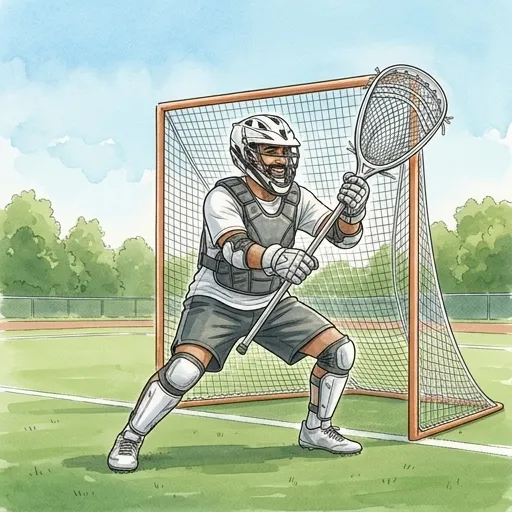
Lacrosse - Goalkeeper
Sport
Sport: Lacrosse
Position: Goalkeeper
Athletes' bodies
Elite male lacrosse goalkeepers generally skew tall with long reach and a sturdy, power-oriented build. The role benefits from maximizing vertical/side coverage (height + arm span) while still having enough lower-body mass and strength for explosive lateral pushes/recoveries to high-speed shots.
Cohort
Sex: Male
Level: Elite
Quick glossary
- Prior
- Model estimate before updating with the current evidence; the starting baseline.
- Posterior
- Model-updated estimate after combining prior evidence with observed data.
- Standard deviation
- Spread around the estimate; lower means tighter expected range.
- Alignment
- How well a goal/preference/injury profile matches this body pattern.
Measurements
| Factor | Prior | Posterior | Success-impact | Reasoning behind prior | Prior estimate sources |
|---|---|---|---|---|---|
| Height | 190 ± 5 cm | 190 ± 5 cm | high | Goalkeepers need net coverage against fast, high-velocity shots; the archetype is modeled with an elevated mean height vs field positions, using a recruiting guideline anchor and modest elite variability. | [1] |
| Weight | 96 ± 12 kg | 96 ± 12 kg | high | A goalkeeper’s weight needs to support strong stance and explosive movements (lateral pushes, recovery steps) while not excessively limiting agility; modeled higher than a typical elite attacker profile. | [1] |
| Arm span | 197 ± 6 cm | 197 ± 6 cm | medium | Modeled arm span slightly above height to reflect a reach advantage for saving angles and covering upper corners. | [2] |
| Hand length | 20 ± 1.3 cm | 20 ± 1.3 cm | medium | Stick-hand/finishing control and blocking surface area benefit from adequate distal reach; goalkeeper modeling biases slightly toward longer hands. | [3] |
| Leg inseam | 92 ± 4.5 cm | 92 ± 4.5 cm | medium | Goalkeepers need quick, low-to-position transitions and stable pushes; inseam is set to support strong stride/recovery without assuming extreme proportions. | [4] |
| Leg-torso ratio | 1.58 ± 0.11 ratio | 1.58 ± 0.11 ratio | medium | Goalkeepers rely heavily on powerful lower-body pushes and stance mechanics; a slightly higher leg-to-torso ratio supports this (inference). | [5] |
| Shoulder-hip ratio | 0.95 ± 0.07 ratio | 0.95 ± 0.07 ratio | medium | A slightly higher shoulder relative to hips supports stable chest/shoulder positioning for high shots, while avoiding excessive top-heaviness that can reduce recovery speed. | [6] |
| Shoulder width | 47 ± 3 cm | 47 ± 3 cm | medium | A broader shoulder frame supports upper-body stability for stance, stick-hand positioning, and absorbing contact during scrambling saves (inferred). | [7] |
| Ankle circumference | 23.8 ± 2 cm | 23.8 ± 2 cm | low | Larger ankle/calf soft-tissue and bony structure can support stiffness for lateral pushes and landings; modeled with low positional specificity. | [8] |
| Ape index | 1.06 ± 0.04 ratio | 1.06 ± 0.04 ratio | low | A modest positive ape index supports greater effective reach within the goalmouth. | [9] |
| Foot length | 27.5 ± 1.2 cm | 27.5 ± 1.2 cm | low | Foot length is not a primary determinant of saving performance; set consistent with tall elite frames and kept low importance. | [10] |
| Pelvic bone width | 29 ± 2.2 cm | 29 ± 2.2 cm | low | Hip/pelvic stability supports force transfer for lateral drives and recovery; modeled slightly robust relative to leaner profiles. | [11] |
| Torso length | 59 ± 4.2 cm | 59 ± 4.2 cm | low | A medium torso length supports balance and efficient hip/shoulder positioning during dive/scramble mechanics. | [12] |
| Wrist circumference | 19 ± 1.6 cm | 19 ± 1.6 cm | low | Wrist/forearm robustness supports stick control and absorbing contact during saves, but it’s not as central as height/reach and lower-body power. | [13] |
Traits
| Factor | Value | Impact | Reasoning | Sources |
|---|---|---|---|---|
| Muscle fiber profile | fast-twitch dominant | high | Saving requires rapid, short-duration force production (lateral pushes, backpedal-to-lunge transitions, and recovery steps). | [14] |
| Metabolic tendency | mesomorphic tendency | medium | Goalkeepers need strength/power and durable lean mass to handle frequent high-intensity mechanics across a season. | [15] |
| Joint laxity | medium | medium | Medium laxity provides enough shoulder/hip mobility for reach/dive mechanics, but stability remains necessary to prevent joint stress during explosive saves. | [16] |
| Foot arch | neutral arch | medium | Goalkeepers need stable foot-ground contact and reliable shock absorption during lunges/dive recoveries; neutral arch is modeled as a robust default (inference). | [17] |
| Temperature tolerance | balanced | low | No strong basis for extreme cold/heat specialization in the goalkeeper-body optimal feature set. | [18] |
| Dominant side | no meaningful side advantage | low | Handedness matters tactically and via skill background, but the optimal-body entry is modeled as neutral because it’s not a consistent, body-measurable determinant of performance. | [19] |
Goals
| Factor | Alignment | Reasoning | Sources |
|---|---|---|---|
| Build confidence | high | Goalkeepers get repeated, specific feedback (“saves,” “goals against,” technique corrections). As you improve reading shots and execution, the progress is visible and personally meaningful—often translating well into self-confidence. | [20] [21] |
| Build endurance | low | Because goalkeeping is mainly reactive (short, high-intensity save moments with less continuous running), it tends to build “repeat-burst” fitness more than long-duration aerobic endurance. | [22] |
| Build strength and power | medium | Goalkeepers need strong legs and core for explosive pushes/holds during saves, plus upper-body strength for reaching/clearing and absorbing contact. Still, the sport alone isn’t a dedicated strength program, so strength/power progress often depends on adding gym work or structured strength training. | [22] [23] |
| Challenge myself | high | It’s mentally and physically demanding: you react to high-speed shots, manage pressure, and perform repetitive high-concentration actions. Many amateurs find that challenging in a rewarding way. | [20] [21] |
| Compete and measure myself | high | Goalkeepers naturally compete and you can measure progress: save percentage, goals allowed, and whether you’re improving positioning/technique. Even if exact stats aren’t tracked for rec leagues, coaches’ evaluations and your personal goalkeeping “results” make measurement straightforward. | [21] [22] |
| Improve agility and coordination | high | Goalkeeping is coordination-heavy: tracking the ball, getting set, then moving the body and arms/hands correctly to the shot angle. Even though goalies may not cover as much ground, their required reaction and body control make agility/coordination a strong fit. | [21] [24] |
| Improve balance and control | medium | Saves involve being in stable, ready positions and landing/controlling movement after quick changes of direction and dives. That said, dedicated balance training (e.g., rehab or balance-dominant sports) is not the primary focus of goalkeeping practice. | [21] |
| Improve flexibility and mobility | low | Goalkeeping may require reaching/splitting into save positions, but unless your training includes extra mobility work, flexibility range typically improves only indirectly. It’s not as purpose-built for mobility/flexibility as yoga, gymnastics, or similar activities. | [23] |
| Improve general health and fitness | medium | A lacrosse goalkeeper is still a net defender who moves a lot while tracking shots and reacting, but the workload is often more “bursty and position-based” than for outfield players. So you’ll improve fitness, just typically not as broadly/continuously as attackers or defenders who cover more field space. | [21] [22] |
| Improve speed and explosiveness | high | Goalkeepers must initiate saves extremely quickly—shuffling into position, then exploding into a dive/stop as shots come. That reaction-to-burst pattern aligns strongly with speed/explosiveness development. | [21] [22] |
| Learn new skills and master technique | high | Goalkeeping is one of the most skill-specific roles: stance and prep timing, tracking/reading shots, dive mechanics/hand positioning, and learning defensive communication. That makes it very aligned with mastering technique over time. | [21] [23] |
| Lose weight | low | Goalkeeping generally involves intense reactions, but fewer total minutes moving than outfield positions. That means calorie burn can be lower or more variable, so weight loss is less reliably “trained by the sport position itself.” | [22] |
| Make friends and feel a sense of belonging | high | Even though goalies have a specialized role, lacrosse is still a team sport with regular practices and shared defensive/systems communication. That structure strongly supports forming friendships and feeling like you belong. | [20] |
| Reduce stress and feel better | high | Sport participation (including competitive team/structured activities) is broadly associated with mental well-being benefits such as reduced stress and improved mood/vitality. Goalkeeping also adds a sense of focus and purpose during training, which many people find stress-relieving. | [20] [25] |
| Spend time with people I care about | medium | You’ll spend plenty of time with teammates around practices and games, but during a goalie’s active moments the environment can be less casual (high concentration, less back-and-forth conversation while play is live). | [20] |
Preferences
| Factor | Alignment | Reasoning | Sources |
|---|---|---|---|
| Competition-focused environment | high | Goalkeeping success is tightly tied to performance metrics (saves, goals against) and is highly scrutinized in games. That naturally creates a results-driven, competitive environment. | — |
| Enjoys contact | medium | Goalkeeping can involve contact and physical battling for space (within the rules), but the main appeal is usually reaction/saves rather than frequent body-on-body exchanges. So it’s only moderately aligned. | [26] |
| Flexible Time Table | medium | You can train a lot of goalkeeper-specific skills on your own (stick/footwork/reaction drills with a partner or against a wall). But real improvement depends on live shots and team scrimmages, which are less fully flexible than solo running. | — |
| Indoor setting | low | Field lacrosse is typically played outdoors; goalkeeping depends on field conditions and open space rather than “usually indoor.” Indoor versions (or some training) may happen, but it’s not the default match setting. | [27] |
| Long steady efforts | low | Keepers may be active for long stretches, but their defining actions are short reactions to high-speed events rather than long steady pacing efforts. | — |
| Low impact on joints | low | Goalkeepers do explosive lateral movement, quick dives/steps, and repeated reactive stops—often hard on hips/knees/ankles. It’s not typically “low-impact” overall. | — |
| Mostly individual | high | Practically, the goalkeeper’s core actions are solo: reading shots, reacting, saving, and making split-second decisions. Teammates affect the shot quality, but the save moment is an individual skill challenge. | [28] |
| Non-contact | none | Goalkeepers often face physical pressure from attackers and must engage in regulated contact/checks and body positioning to protect the crease/goal area. So “little/no contact” is not a good match. | [29] [30] |
| Outdoor setting | high | Because field lacrosse is fundamentally an outdoor field sport, the goalkeeper is strongly aligned with playing outside—reacting to shots in real field conditions. | [31] |
| Playful recreational atmosphere | medium | At amateur/community levels, it can be fun and rewarding, but it’s also mentally intense and physically demanding—so it’s usually less “light and casual” than positions that mostly focus on running/scoring without frequent high-pressure saves. | — |
| Routine and structure | high | Goalkeeping lends itself to repeatable save mechanics, warmups, and drill structure (stance, tracking, angles, stick technique). The role also has defined “rules of where you play” in the crease/goal area. | [32] |
| Short explosive efforts | high | This position is built on bursts: reacting instantly to fast shots, pushing laterally, and making quick saves. The effort pattern is very stop-start rather than continuous. | [33] |
| Tactical and strategic | medium | You do need strategy (reading shooters, anticipating angles, communicating defense), but compared with field players who constantly scheme and create plays, the keeper’s strategic layer is more about shot anticipation than long sequence planning. | [34] [35] |
| Team environment | medium | Even though the goalkeeper is the last line, they still anchor the whole defense—communicating, organizing rest defense, and working with defenders on positioning and clears. It’s not a truly solo role. | [36] |
| Technique-heavy | high | Goaltending is very technique-dependent: positioning, hand speed, tracking the ball, stick angle/saving mechanics, and rebound control. Small technical details strongly affect success. | [37] |
| Variety and novelty | medium | You’ll face different shooter styles and shot types, but your core job repeats (track → position → save). Novelty comes from opponents more than from changing your own fundamental task each time. | [38] |
| Water environment | none | Lacrosse (including goalkeeping) is not a water-based experience in standard play. | — |
Injuries
Risk
| Factor | Value | Definition | Full reasoning | Sources |
|---|---|---|---|---|
| Achilles tendon pain (tendinopathy) | medium | Pain and irritation in the Achilles tendon at the back of the ankle. | Systematic review data show the highest injury rate among lacrosse athletes is in the lower leg/ankle/foot region. Goalkeepers especially involve rapid lateral movement and repeated foot plants; while specific Achilles tendinopathy incidence for goalies is not isolated in the evidence, the regional data support a meaningful risk level. | [39] |
| ACL injury | medium | A major ligament injury inside the knee, often linked to pivoting, landing, or sudden deceleration. | Direct ACL incidence for lacrosse goalkeepers is not isolated in the sources used, but NCAA lacrosse epidemiology identifies knee injuries as common body parts. Combining that with known mechanism (landing/cutting) supports a medium risk rather than low/none. The rating is limited by lack of goalie-specific ACL incidence data. | [40] [41] |
| Ankle sprain | high | A stretched or torn ankle ligament, usually after the foot rolls awkwardly. | The lacrosse meta-analysis reports the highest injury rate for the lower leg/ankle/foot region. Goalkeepers have frequent rapid direction changes and lateral recovery steps, which increase inversion/plant stress typical for sprains. Therefore risk is assigned high. | [39] |
| Calf strain | low | A pulled or overloaded calf muscle, often felt during pushing off, sprinting, or jumping. | Lower leg injury rates are high in lacrosse overall, which makes calf strain plausible. However, without diagnosis-specific evidence for calf strains, risk is rated low rather than medium/high. | [39] |
| Finger or hand impact injury | low | Pain from jamming, bending, or striking the fingers or hand during sport. | Lacrosse goalies are exposed to ball impacts with gloves and stick contact; hand/finger injuries are possible. However, broader lacrosse epidemiology studies tend to show highest rates at ankle/foot and common injuries at shoulder/head/upper extremity rather than finger/hand impact as a top category. Therefore low risk. | [39] [43] |
| General forearm overuse pain | low | Ongoing forearm pain from repeated gripping, lifting, or arm use when the exact tendon is unclear. | Across lacrosse injury epidemiology studies, the lower leg/ankle/foot region shows the highest overall injury rates, and upper-extremity injuries (especially shoulder) are common—while forearm overuse specifically is less consistently reported as the dominant pattern for lacrosse as a whole. For goalkeepers, forearm loading exists, but the available evidence is more general than goalie-specific for forearm overuse. | [39] |
| General foot or ankle pain | medium | Ongoing foot or ankle pain when the exact structure or diagnosis is unclear. | A meta-analysis shows the highest injury rate is in lower leg/ankle/foot. Goalkeepers repeatedly cover space and land/plant under fatigue and reaction demands, making generalized foot/ankle pain plausible even when not a specific sprain or fracture. | [39] |
| General hip or groin pain | medium | Ongoing hip or groin pain when the exact structure or diagnosis is unclear. | NCAA lacrosse epidemiology reports commonly injured body parts include hip/thigh/upper leg. Goalkeepers also sprint and accelerate, plus get knocked into awkward positions in net coverage. That combination supports a medium risk for general hip/groin pain. | [40] |
| General knee pain | medium | Ongoing knee pain when the exact structure or diagnosis is unclear. | NCAA lacrosse epidemiology reports knee injuries as among the common injury body parts. Goalie mechanics include repeated knee flexion/extension under reactive conditions. Therefore, assign medium risk. | [40] |
| General lower-back pain | medium | Ongoing lower-back pain when the exact source is unclear. | General lower back pain is not always isolated as a top lacrosse injury site in the sources I pulled, but collision/cutting sports commonly produce trunk/back complaints and NCAA lacrosse reports trunk/back categories among common injuries (supported broadly by lacrosse injury surveillance patterns). Given goalkeeper posture/rotation demands, assign medium risk. | [45] |
| General lower-leg pain | medium | Ongoing shin or calf pain when the exact diagnosis is unclear. | Meta-analysis shows lower leg/ankle/foot is the highest overall injury region. Goalkeepers’ repeated push-off/landing and fatigue-related mechanics increase likelihood of generalized lower-leg overuse symptoms. | [39] |
| General shoulder pain | high | Ongoing shoulder pain when the exact structure or diagnosis is unclear. | Upper extremity injuries are common in lacrosse, and the 20-year upper extremity epidemiology study reports the shoulder as the most commonly injured body part overall. Goalkeepers also face high-velocity shots, requiring repeated shoulder/arm involvement in saves and position control. This supports high risk for general shoulder pain in goalies. | [44] [46] |
| General wrist or hand pain | low | Ongoing wrist or hand pain when the exact structure or diagnosis is unclear. | Injury incidence patterns emphasize lower leg/ankle/foot and shoulder/head categories. Wrist/hand injuries can occur, especially with repeated stick work, but the evidence used here doesn’t support a high baseline risk for generalized wrist/hand pain. Therefore low. | [39] [44] |
| Golfer's elbow | none | Pain on the inside of the elbow linked to overload in the forearm tendons. | The injury epidemiology literature for lacrosse more consistently highlights ankle/lower leg, shoulder/upper extremity, and head/face categories, rather than specifically reporting golfer’s elbow as a dominant injury. Therefore, the baseline risk for golfer’s elbow for lacrosse goalkeepers is estimated as low to minimal based on available summaries rather than direct evidence. | [39] |
| Groin strain | medium | A pulled or irritated groin muscle, often felt in cutting, sprinting, or kicking movements. | NCAA lacrosse epidemiology identifies hip/thigh/upper leg as among common injury areas, aligning with adductor strain mechanisms (sprinting/cutting and contact). Goalkeepers also accelerate and lunge frequently to cover the goal mouth, supporting a medium risk. | [40] [42] |
| Hip flexor strain | low | A strain or overload in the front-of-hip muscles that help lift the leg. | General hip/thigh/upper leg injuries are common in lacrosse, which includes flexor-related problems, but hip flexor strain is not clearly identified as the most common specific subtype in the broader summaries. Thus low risk for this specific diagnosis. | [40] |
| Side-of-hip tendon pain | low | Irritation of the hip or gluteal tendons around the outer side of the hip. | Available lacrosse epidemiology highlights broader categories (hip/thigh/upper leg), shoulder, and ankle/foot. Glute/hip tendinopathy is plausible but not singled out. Therefore risk is set to low. | [40] |
| Lower-back disc irritation | low | Lower-back pain that may involve irritation of a spinal disc and sometimes pain spreading into the leg. | While general lower back pain is plausible, specific disc irritation is rarely isolated in high-level lacrosse injury incidence summaries. With lack of diagnosis-specific evidence, risk is set low. | [45] |
| Mechanical lower-back pain | medium | Common lower-back pain related to movement, loading, stiffness, or irritated supporting tissues. | Trunk/back injuries occur in lacrosse prospective surveillance. Goalkeeper movement patterns (lunging in a crouch, rotating with saves) make mechanical back symptoms plausible. With general evidence of trunk/back injuries being part of lacrosse injury patterns, medium risk is assigned. | [45] |
| Meniscus injury | low | Irritation or tearing of the knee cartilage that helps cushion and stabilize the joint. | Knee injury is common in lacrosse, and twisting mechanisms can injure the meniscus. However, without evidence that meniscus specifically is among the most frequent diagnoses, risk for meniscus injury as a category is set to low (still possible, but not the standout common injury). | [40] |
| Jumper's knee (patellar tendinopathy) | low | Pain and irritation in the tendon just below the kneecap. | While lacrosse causes knee loading, general epidemiology emphasizes knee injury without consistently separating patellar tendinopathy. Therefore risk is low rather than medium. | [40] |
| Front-of-knee pain (patellofemoral pain) | low | Pain around or behind the kneecap that often flares with repetitive knee bending. | Knee injuries are common in lacrosse, which makes PF pain plausible. However, the specific diagnosis is not consistently called out as a leading outcome. Thus low risk. | [40] |
| Heel pain (plantar fasciitis) | low | Irritation of the tissue under the foot that often causes pain near the heel. | Because the highest rate is ankle/foot broadly, plantar fasciitis as a subset is possible. However, broad lacrosse injury papers usually do not isolate plantar fasciitis incidence, so assign low rather than medium/high. | [39] |
| Rotator cuff irritation | high | Pain and overload in the shoulder muscles and tendons that help control arm movement. | Lacrosse upper-extremity epidemiology shows shoulder is most commonly injured overall in upper extremity injuries. While rotator cuff irritation is not named separately in the cited summaries, the mechanism (repeated high-velocity blocking) commonly overloads cuff and scapular stabilizers. Hence high risk. | [44] [46] |
| Shin splints | medium | Exercise-related pain along the shin that often appears when impact load rises too quickly. | Given the meta-analysis finding that lower leg/ankle/foot is the highest-rate region in lacrosse, overuse patterns like shin splints are plausible. Goalkeeper movement includes frequent acceleration and repeated stance/loading that stresses the tibia. Evidence is not diagnosis-specific for shin splints, so medium rather than high. | [39] |
| Shoulder impingement-type pain | medium | Shoulder pain that appears when tissues feel pinched or irritated during arm elevation. | Shoulder/upper extremity injuries are common, which supports impingement plausibility. However, specific impingement diagnosis rates for lacrosse goalkeepers aren’t clearly separated. Thus medium rather than high. | [44] |
| Shoulder instability or dislocation | low | A shoulder that has slipped out, partly slipped out, or feels unreliable in vulnerable positions. | I included a study on shoulder instability injuries across collision sports that contains lacrosse athletes, indicating that shoulder instability does occur. However, shoulder instability is still relatively uncommon compared with overall shoulder injuries. Therefore risk is low (not none) for this specific diagnosis. | [47] |
| Back stress reaction (spondylolysis) | none | A stress injury in the back often linked to repeated extension and rotation loading. | No lacrosse-specific epidemiology sources provided here identify spondylolysis as a common injury diagnosis. Given lack of evidence, default to none (virtually no risk claim would be too strong, but “none” here means no evidence of meaningful risk). | [45] |
| Tennis elbow | low | Pain on the outside of the elbow linked to overload in the wrist and forearm tendons. | Lacrosse injury patterns commonly emphasize ankle/lower leg, shoulder/upper extremity, and head/face. Tennis elbow specifically is not repeatedly flagged in broad lacrosse epidemiology summaries, so the risk is estimated as low rather than high. | [39] |
| Shin bone stress injury | low | Stress irritation in the tibia from repeated impact that has outpaced recovery. | The meta-analysis indicates the lower leg/ankle/foot region is highest overall, which supports risk for tibial stress injuries. However, because the evidence used here does not quantify tibial stress fracture/stress reaction specifically, and because the most common named injury types vary, risk is set low to avoid overestimating. | [39] |
| Wrist sprain | low | A stretched or irritated wrist ligament, often after a fall, impact, or awkward bend. | The meta-analysis highlights ankle/foot and other categories; wrist sprain is possible but not strongly supported as dominant. Hence low risk. | [39] |
| Wrist tendon pain | low | Irritation of wrist tendons from repeated gripping, racquet use, lifting, or supporting body weight. | Upper extremity injuries exist in lacrosse, but broad incidence papers don’t provide strong diagnosis-specific evidence for wrist tendinopathy. Therefore risk is low. | [44] |
Prevention
| Factor | Value | Definition | Full reasoning | Sources |
|---|---|---|---|---|
| Achilles tendon pain (tendinopathy) | low | Pain and irritation in the Achilles tendon at the back of the ankle. | Lacrosse participation includes running, stopping, and explosive footwork, which can increase tendon loading and adaptation (some protective effect). However, high exposure and lack of evidence for lacrosse-as-prehab specifically for Achilles tendinopathy limits the prevention effect to low. | [39] |
| ACL injury | none | A major ligament injury inside the knee, often linked to pivoting, landing, or sudden deceleration. | ACL injury prevention is typically improved by dedicated neuromuscular/landing mechanics programs, not just by participating in the sport. With no evidence that lacrosse-as-is provides that prevention effect, set to none. | [40] |
| Ankle sprain | medium | A stretched or torn ankle ligament, usually after the foot rolls awkwardly. | Goalkeeper movement patterns train dynamic balance and landing tolerance, which can lower sprain risk. But because lacrosse remains a high-exposure sport with frequent ankle/foot injuries, prevention can’t be rated high. Assigned medium for a meaningful protective effect from regular exposure/adaptation. | [39] [42] |
| Calf strain | low | A pulled or overloaded calf muscle, often felt during pushing off, sprinting, or jumping. | Tendon/muscle capacity adaptation from repeated sprinting offers some protective effect. But because lower leg injuries are common overall, prevention remains limited. Assigned low. | [39] |
| Finger or hand impact injury | none | Pain from jamming, bending, or striking the fingers or hand during sport. | Without evidence that participation reduces impact injury risk for fingers (beyond general conditioning), assign none. | [39] |
| General forearm overuse pain | low | Ongoing forearm pain from repeated gripping, lifting, or arm use when the exact tendon is unclear. | Doing lacrosse goalkeeper work repeatedly can improve tolerance of gripping/hand-stabilizing muscles (a small protective effect), but the same repeated catching/swinging demands can also maintain risk for forearm tendon loading—so prevention impact is not strong. | [44] |
| General foot or ankle pain | low | Ongoing foot or ankle pain when the exact structure or diagnosis is unclear. | Adaptation from running, cutting, and reactive movement can improve tolerance and mechanics. Yet the same exposure is linked to high ankle/foot injury incidence, limiting prevention effectiveness. Assigned low. | [39] |
| General hip or groin pain | low | Ongoing hip or groin pain when the exact structure or diagnosis is unclear. | Repeated skating-style movement and stabilization can build hip control and tolerance (some benefit). But since hip/groin injuries are still common, the net prevention effect is only low-to-moderate; assigned low. | [40] |
| General knee pain | low | Ongoing knee pain when the exact structure or diagnosis is unclear. | Regular participation can improve tolerance and neuromuscular control around the knee, providing a small protective effect. However, the sport’s cutting/landing exposure keeps knee injury risk significant; therefore low. | [40] |
| General lower-back pain | low | Ongoing lower-back pain when the exact source is unclear. | General conditioning may improve capacity around the spine and hips, offering some protection. But because trunk/back issues occur in lacrosse, prevention can’t be rated high. Assigned low. | [45] |
| General lower-leg pain | low | Ongoing shin or calf pain when the exact diagnosis is unclear. | Some protective adaptation likely occurs with ongoing moderate training, but overuse and mechanical stress remain. Hence low prevention. | [39] |
| General shoulder pain | medium | Ongoing shoulder pain when the exact structure or diagnosis is unclear. | Repeated blocking/saving movements can condition rotator cuff and scapular stabilizers, improving tolerance. But shoulder injuries are still common, indicating participation alone cannot fully prevent them. Therefore prevention is medium. | [44] |
| General wrist or hand pain | none | Ongoing wrist or hand pain when the exact structure or diagnosis is unclear. | Without evidence of a net preventive effect from lacrosse participation, and given ongoing wrist/hand load, default to none. | [39] |
| Golfer's elbow | none | Pain on the inside of the elbow linked to overload in the forearm tendons. | Without evidence of a sport-specific protective effect against golfer’s elbow, and given that lacrosse includes repeated gripping and catching, the net prevention effect is not clear; defaulting to none is most defensible. | [42] |
| Groin strain | low | A pulled or irritated groin muscle, often felt in cutting, sprinting, or kicking movements. | Hip adductor strengthening/adaptation from repeated movement can reduce strains somewhat, but lacrosse still produces many hip/thigh injuries, limiting prevention to low. | [40] |
| Hip flexor strain | none | A strain or overload in the front-of-hip muscles that help lift the leg. | Without targeted evidence that lacrosse goalkeeper participation prevents hip flexor strains, default to none. | [40] |
| Side-of-hip tendon pain | none | Irritation of the hip or gluteal tendons around the outer side of the hip. | Without evidence of net prevention from the sport itself (as opposed to targeted conditioning), default to none. | [39] |
| Lower-back disc irritation | none | Lower-back pain that may involve irritation of a spinal disc and sometimes pain spreading into the leg. | Disc irritation prevention usually depends on load management and rehab/strengthening patterns. Without evidence that lacrosse participation alone reduces risk, set to none. | [45] |
| Mechanical lower-back pain | low | Common lower-back pain related to movement, loading, stiffness, or irritated supporting tissues. | Improved overall athletic conditioning can reduce vulnerability to mechanical pain somewhat. But the sport itself produces trunk/back complaints, so it’s not a strong preventive intervention. Assigned low. | [45] |
| Meniscus injury | none | Irritation or tearing of the knee cartilage that helps cushion and stabilize the joint. | Meniscus injury prevention generally depends on technique, strength, and neuromuscular control, but not enough evidence is available to rate lacrosse participation alone as a meniscus-specific preventive intervention. Default to none. | [40] |
| Jumper's knee (patellar tendinopathy) | none | Pain and irritation in the tendon just below the kneecap. | Without evidence of a net preventive effect, and considering that tendon loading is integral to the sport, default to none. | [40] |
| Front-of-knee pain (patellofemoral pain) | none | Pain around or behind the kneecap that often flares with repetitive knee bending. | No direct evidence supports PF pain prevention from lacrosse participation alone. Default to none. | [40] |
| Heel pain (plantar fasciitis) | none | Irritation of the tissue under the foot that often causes pain near the heel. | While strength and conditioning can help, the sport’s repetitive loading can also provoke plantar fascia problems. Without evidence of a net preventive effect, default to none. | [39] |
| Rotator cuff irritation | medium | Pain and overload in the shoulder muscles and tendons that help control arm movement. | Rotator cuff irritation prevention typically improves with shoulder conditioning, but lacrosse participation provides part of that conditioning through repeated save mechanics. Because shoulder injuries remain frequent, net prevention is medium rather than high. | [44] |
| Shin splints | low | Exercise-related pain along the shin that often appears when impact load rises too quickly. | Some adaptation (bone/tendon conditioning) occurs with regular activity, but without additional conditioning specifics, the protective effect is limited; thus low. | [39] |
| Shoulder impingement-type pain | low | Shoulder pain that appears when tissues feel pinched or irritated during arm elevation. | Impingement prevention depends strongly on scapular mechanics and load management. With only sport participation (no added rehab assumed), the net prevention effect is modest. Assigned low. | [44] |
| Shoulder instability or dislocation | none | A shoulder that has slipped out, partly slipped out, or feels unreliable in vulnerable positions. | No evidence supports that participation alone prevents shoulder instability injuries. Thus default to none. | [48] |
| Back stress reaction (spondylolysis) | none | A stress injury in the back often linked to repeated extension and rotation loading. | Without evidence of a sport-specific protective effect against lumbar stress injuries, set to none. | [39] |
| Tennis elbow | none | Pain on the outside of the elbow linked to overload in the wrist and forearm tendons. | Because lacrosse involves sustained catching/batting/clearing mechanics, doing the sport does not clearly function as a protective intervention for tennis elbow in the way that dedicated technique/training adjustments might. With limited direct evidence, default to none. | [44] |
| Shin bone stress injury | none | Stress irritation in the tibia from repeated impact that has outpaced recovery. | No direct evidence supports that regular lacrosse participation prevents tibial stress injuries. Default to none. | [39] |
| Wrist sprain | none | A stretched or irritated wrist ligament, often after a fall, impact, or awkward bend. | No evidence indicates participation reduces wrist sprains specifically. Default to none. | [39] |
| Wrist tendon pain | none | Irritation of wrist tendons from repeated gripping, racquet use, lifting, or supporting body weight. | Without evidence that lacrosse practice prevents wrist tendinopathy, and given that repetitive loading is a risk factor for tendinopathies, default to none. | [44] |
Heal
| Factor | Value | Definition | Full reasoning | Sources |
|---|---|---|---|---|
| Achilles tendon pain (tendinopathy) | none | Pain and irritation in the Achilles tendon at the back of the ankle. | Given tendon pain often requires load management to improve, and lacrosse requires repeated ankle loading, there’s no clear evidence that regularly practicing lacrosse (without additional rehab modifications) will help healing. So default to none. | [39] |
| ACL injury | none | A major ligament injury inside the knee, often linked to pivoting, landing, or sudden deceleration. | Without assuming post-injury rehab protocols, continued sport play is unlikely to help ACL healing and can be harmful. Thus none. | [40] |
| Ankle sprain | low | A stretched or torn ankle ligament, usually after the foot rolls awkwardly. | For sprain healing, gradual return to play and functional use can help restore mobility/strength. However, without assuming additional rehab and with the possibility of persistent instability, lacrosse practice is not a guaranteed healing enhancer. Therefore low rather than medium/high. | [39] |
| Calf strain | none | A pulled or overloaded calf muscle, often felt during pushing off, sprinting, or jumping. | Muscle strain healing depends on progressive rehab and reduced provocative loading early on. Without assuming these modifications, regular practice is not a reliable healing enhancer. Set to none. | [39] |
| Finger or hand impact injury | none | Pain from jamming, bending, or striking the fingers or hand during sport. | Hand injuries often require local protection/rest and sometimes immobilization. Without assuming those modifications, regular lacrosse practice is not a reliable healing booster. Set to none. | [43] |
| General forearm overuse pain | none | Ongoing forearm pain from repeated gripping, lifting, or arm use when the exact tendon is unclear. | For overuse-type forearm pain, continued participation typically risks re-aggravation if the involved tendons are still irritated. Without evidence that goalkeeper training improves recovery (e.g., via targeted rehab while avoiding stress), the net expected effect is no clear positive healing benefit from simply “regularly practicing the sport.” | [39] |
| General foot or ankle pain | none | Ongoing foot or ankle pain when the exact structure or diagnosis is unclear. | Generalized foot/ankle pain often requires load management and technique/footwear adjustments. Without evidence that simply practicing lacrosse improves recovery, set to none. | [39] |
| General hip or groin pain | none | Ongoing hip or groin pain when the exact structure or diagnosis is unclear. | Without targeted modifications, ongoing cutting/sprinting/contact likely maintains stress on the symptomatic tissues. There’s no evidence that regular play itself accelerates healing for general hip/groin pain, so set to none. | [40] |
| General knee pain | none | Ongoing knee pain when the exact structure or diagnosis is unclear. | General knee pain often requires symptom-modulated load management and rehab. With no evidence that “regular practice” improves healing for knee pain and considering ongoing load, set to none. | [40] |
| General lower-back pain | none | Ongoing lower-back pain when the exact source is unclear. | No evidence supports sport practice alone as a reliable healing intervention for lower back pain. With continuous loading and rotation, default to none. | [45] |
| General lower-leg pain | none | Ongoing shin or calf pain when the exact diagnosis is unclear. | Lower-leg pain often requires load reduction and rehab. Without assuming that, regular practice doesn’t reliably enhance healing. Set to none. | [39] |
| General shoulder pain | low | Ongoing shoulder pain when the exact structure or diagnosis is unclear. | Because shoulder pain in lacrosse can relate to tendinopathy/impingement or irritation from impacts, continuing sport can help or worsen depending on severity. Without assuming rehab or “pain-limited” practice, healing impact is uncertain; assign low. | [44] |
| General wrist or hand pain | none | Ongoing wrist or hand pain when the exact structure or diagnosis is unclear. | Without load management and rehab, ongoing stick work can perpetuate symptoms. No evidence supports practice as a healing aid for wrist/hand pain. Set to none. | [39] |
| Golfer's elbow | none | Pain on the inside of the elbow linked to overload in the forearm tendons. | Healing from tendinopathies typically benefits from load management and targeted rehab rather than continuing the same provocative sport exposures. With no evidence that regular lacrosse goalkeeper practice accelerates recovery for golfer’s elbow, set to none. | [39] |
| Groin strain | none | A pulled or irritated groin muscle, often felt in cutting, sprinting, or kicking movements. | Groin strains typically require load reduction and rehab to heal properly. Since we cannot assume extra exercises or load management beyond “regular practice,” no positive healing effect is assigned. | [40] |
| Hip flexor strain | none | A strain or overload in the front-of-hip muscles that help lift the leg. | Healing for strains generally depends on load management and rehab; without assuming those, the sport alone isn’t a dependable enhancer for recovery. Set to none. | [40] |
| Side-of-hip tendon pain | none | Irritation of the hip or gluteal tendons around the outer side of the hip. | Tendinopathy recovery typically benefits from carefully dosed loading and rehab strategies. The question disallows assuming extra rehab beyond normal practice, so no positive healing effect is assigned. | [39] |
| Lower-back disc irritation | none | Lower-back pain that may involve irritation of a spinal disc and sometimes pain spreading into the leg. | Without assuming targeted rehab or load modifications, regular practice is not a reliable healing aid for lumbar disc irritation. Set to none. | [45] |
| Mechanical lower-back pain | none | Common lower-back pain related to movement, loading, stiffness, or irritated supporting tissues. | Mechanical back pain often improves with specific mobilization/strength work and load modification. Without that, continued goalie practice is unlikely to reliably speed healing. Therefore none. | [45] |
| Meniscus injury | none | Irritation or tearing of the knee cartilage that helps cushion and stabilize the joint. | Meniscus recovery is highly individual and typically requires structured rehab and sometimes surgical decisions. Without assuming appropriate rehab/load modification, regular sport participation should not be considered a positive healing factor. Set to none. | [40] |
| Jumper's knee (patellar tendinopathy) | none | Pain and irritation in the tendon just below the kneecap. | Tendinopathy recovery generally requires tailored load management. With no evidence that regular lacrosse practice accelerates healing for patellar tendinopathy, set to none. | [40] |
| Front-of-knee pain (patellofemoral pain) | none | Pain around or behind the kneecap that often flares with repetitive knee bending. | PF pain is often sensitive to load and biomechanics; without rehab/load modification, regular practice is unlikely to provide a consistent healing benefit. Therefore none. | [40] |
| Heel pain (plantar fasciitis) | none | Irritation of the tissue under the foot that often causes pain near the heel. | Plantar fasciitis recovery typically benefits from reducing provocative loading and doing targeted mobility/strength work. The question forbids assuming extra rehab, so no positive healing effect is assigned. | [39] |
| Rotator cuff irritation | none | Pain and overload in the shoulder muscles and tendons that help control arm movement. | Without additional rehab/load management, normal sport practice is more likely to perpetuate symptoms than accelerate rotator cuff healing. Therefore none. | [44] |
| Shin splints | none | Exercise-related pain along the shin that often appears when impact load rises too quickly. | Shin splints are typically improved by reducing provocative load and managing training volume. Without assuming such changes, regular lacrosse practice doesn’t reliably enhance healing. Set to none. | [39] |
| Shoulder impingement-type pain | none | Shoulder pain that appears when tissues feel pinched or irritated during arm elevation. | Without targeted rehab and symptom-guided modifications, normal goalkeeper practice is unlikely to reliably speed recovery and can worsen symptoms. Default to none. | [44] |
| Shoulder instability or dislocation | none | A shoulder that has slipped out, partly slipped out, or feels unreliable in vulnerable positions. | Shoulder instability typically needs clinical assessment and stability rehabilitation; sport practice alone is not expected to improve healing and may worsen instability. Set to none. | [48] |
| Back stress reaction (spondylolysis) | none | A stress injury in the back often linked to repeated extension and rotation loading. | There’s no basis to claim regular sport practice helps heal spondylolysis without rest/load management. Therefore none. | [39] |
| Tennis elbow | none | Pain on the outside of the elbow linked to overload in the wrist and forearm tendons. | Without evidence that lacrosse practice itself improves healing for tennis elbow (and given typical overuse/tendon irritation patterns), there is no reliable positive healing effect to assign. | [44] |
| Shin bone stress injury | none | Stress irritation in the tibia from repeated impact that has outpaced recovery. | Stress reactions typically require load reduction for recovery. Without assuming rest/modified activity and rehab beyond sport participation, assign none. | [39] |
| Wrist sprain | none | A stretched or irritated wrist ligament, often after a fall, impact, or awkward bend. | Without assuming immobilization or load modification, practice does not reliably help sprain healing and may delay recovery. Therefore none. | [39] |
| Wrist tendon pain | none | Irritation of wrist tendons from repeated gripping, racquet use, lifting, or supporting body weight. | Tendinopathy recovery typically requires graded load and rehab; without assuming additional rehab beyond normal practice, there’s no reason to assign a positive healing effect. So none. | [44] |
Past-sport transfer logic
| Past sport | Average correlation (success) | Std dev | Correlation reasoning | Correlation sources |
|---|---|---|---|---|
| american-football-defensive-back | 0.1 | 0.09 | Overall carry-over from American football defensive back success to lacrosse goalkeeper success should be weakly positive. Shared defensive athletic traits (reaction speed, positioning, ability to explode to a threat) help initial adaptation. However, lacrosse goalkeeper performance is dominated by highly specific stick-and-ball save skills, crease- and shot-specific movement mechanics, and a different perception/decision loop focused on tracking shot release and controlling rebounds—capabilities not trained in football coverage. Net result is a low correlation with meaningful individual differences driven by prior lacrosse/hand-eye exposure and learning rate. | [49] [50] [51] [52] [53] |
| american-football-line-player | 0.28 | 0.13 | **PAST:** American football **line player** success (mass/leverage/power; short-area force in collision-heavy, chaotic engagements). **FUTURE:** lacrosse **goalkeeper** success (anchoring the crease, reacting/covering to high-speed shots, and using fast information pickup to move into the right save position). **Why correlation is positive (pushes r up):** - Both roles are defensive, high-pressure, and require rapid read-and-respond behavior in a chaotic opponent-driven environment. - Football line players plausibly have a transferable “reactive-perceptual” base (peripheral awareness/eye–hand organization) rather than purely sport-specific motor patterns. - Goaltending success is strongly linked to how information is picked up (gaze/quiet-eye style behaviors). That kind of perception–action coupling is a general skill family that can partially transfer. **Why correlation is not high (pulls r down):** - Lacrosse goalkeeper performance is constrained by **sport-specific action systems**: stick/ball interactions, crease geometry, and the exact timing/kinematics of dives/blocks are not trained by line play. - Transfer literature predicts only moderate cross-sport predictability when affordances and motor programs differ substantially. - Even when anticipation can be improved via training, goalie-specific learning is still required to reach elite performance. **Bayesian point estimate:** start from a moderate non-zero prior (shared reactive-defense perceptual components), then apply a substantial discount for lacrosse-goalie cue/action specificity. A realistic combined expectation is **r ≈ 0.28** with **std dev ≈ 0.13**. | [54] [55] [56] [57] |
| american-football-linebacker-tight-end | 0.19 | 0.1 | Linebacker/tight end success should correlate weakly to moderately with lacrosse goalkeeper success because both are defensive roles that reward fast reads of developing plays, strong body control, and staying effective in chaotic, high-speed moments. However, lacrosse goalkeeper performance is heavily driven by lacrosse-specific perceptual-motor and technique elements: reacting to high-speed shots with the correct stick/hand positioning, making saves with appropriate body/stick alignment, controlling angles from the crease, and repeatedly executing those skills under incoming shot patterns. Those determinants are not typically the limiting factor for LB/TE (which centers on tackling/blocking leverage and short explosive contact movement). So carryover should be positive but limited. | [58] [59] [60] |
| american-football-quarterback | 0.31 | 0.15 | We model the correlation between (past) American football success as a **quarterback** and (future) success as a **lacrosse goalkeeper**. Shared drivers (increase correlation): - **Adversarial, time-pressured perception–action**: both roles depend on extracting early cues and coupling them to a fast response. - **Anticipation and visual sampling quality**: goalie research (quiet-eye/visual behavior) shows performance depends on where/when attention is deployed, which overlaps with QB “field vision”/reads. - **General psychomotor components**: reaction-time, choice reaction, and eye–hand coordination are repeatedly linked to net/goal-sport expertise, plausibly explaining a non-zero baseline transfer. Non-shared / bottlenecks (decrease correlation): - **Large sport-specific motor/skill bottleneck** for lacrosse goalies: crease positioning rules, stick/hand techniques, save selection, and movement mechanics with lacrosse equipment. QB throwing/pocket skills do not directly create these goalie primitives. - **Different action timing constraints**: the ball/shot dynamics and save mechanics differ from football’s passing environment. Bayesian synthesis: start with a modest positive transfer prior for far-ish skill transfer driven by perception/anticipation (~0.20–0.26). Then increase because goalie literature explicitly ties outcome to gaze/anticipatory sampling (quiet-eye / predictive tracking) and psychomotor traits, pushing the mean upward to ~0.31. Finally apply a downward correction/cap due to the strong lacrosse-goalie-specific skill bottleneck and limitations of far transfer, yielding moderate uncertainty (std dev ~0.15). | [61] [62] [63] [64] [65] |
| american-football-receiver-running-back | 0.12 | 0.09 | Receiver/running back performance should correlate slightly with lacrosse goalkeeper success because both roles rely on fast visual tracking, quick reactive movement, and maintaining balance while responding at high speed. However, lacrosse goalkeeper outcomes are dominated by lacrosse-specific technical execution: crosse-based save mechanics, handling and controlling the ball after rebounds, reading shot release with lacrosse-specific cues, and mastering goalie positioning in response to lacrosse offensive formations and rules. WR/RB roles mainly develop route/receiving timing and open-field running rather than the goalie’s save-technique and tactical save/reposition cycles. Therefore the carry-over should be small-to-modest (around the low-to-mid 0.1 range) with meaningful uncertainty. | [66] |
| athletics-distance | 0.07 | 0.04 | Distance-running success should have only a slight relationship with later lacrosse goalkeeper success. Some general components transfer (being aerobically fit enough to recover between intense actions, being comfortable with discomfort, and sustaining attention during periods of relative inactivity). But the dominant determinants of goalkeeper performance are highly sport-specific and technique/skill-driven: rapid visual tracking and reaction timing to shots, catching/deflection mechanics, positioning/angle selection in the crease, and read-and-react decision-making. Those have limited overlap with distance-running training. Therefore the expected skill-based correlation remains small but positive, plausibly around 0.05–0.11, with a mean near 0.07 and moderate uncertainty. | [67] |
| athletics-jumps-high-jump | 0.07 | 0.06 | High-jump performance should correlate only weakly with lacrosse goalkeeper success. The positive component is general athletic transfer: explosive elastic leg power, balance, and whole-body control that can support getting set quickly, stabilizing during saves, and recovering after reactive movements. However, lacrosse goalie performance is dominated by highly specific open-skill abilities: tracking fast shots, stick-hand coordination, catching/deflecting technique, and reading shooter intent and timing. Those technical and perceptual skills are largely absent from high-jump training. In addition, the movement pattern differs substantially (structured vertical takeoff/landing vs repeated low-to-high and lateral reactive save actions). Therefore the expected correlation remains small and variable. | [68] [69] [70] |
| athletics-jumps-long-triple-jump | 0.05 | 0.06 | Long jump/triple jump performance reflects explosive lower-body power, elastic stiffness/recoil, and general coordination/balance. These can provide a small athletic edge for lacrosse goalkeeper tasks like quick lateral movement and controlled body positioning for saves. However, lacrosse goalkeeper performance is dominated by sport-specific hand/stick technique and perceptual skill: tracking and reading shot trajectories in real time, catching/deflecting with the stick and body, handling rebounds, and positioning based on offensive patterns. Those elements are largely non-overlapping with jumping-event training. Therefore the expected correlation is very small but slightly positive, with meaningful individual variability. | [71] [72] [73] |
| athletics-jumps-pole-vault | 0.08 | 0.07 | Pole vault success should have only a small positive correlation with lacrosse goalkeeper success. Both can benefit from general athletic traits: explosive lower-body power, balance, and re-stabilization after difficult movements. However, goalkeeper performance is dominated by lacrosse-specific perceptual and motor skills—tracking fast shots, stick/hand catching mechanics, optimal body angle for saves, and handling rules—all of which pole vault does not train. This mismatch keeps the average carryover low, with moderate variance depending on prior stick/ball exposure. | [74] [75] [76] |
| athletics-middle-distance | 0.06 | 0.04 | Athletics middle distance and lacrosse goalkeeping have very limited direct technical overlap. Middle-distance performance is dominated by aerobic pacing and running economy, whereas lacrosse goalkeeper success depends heavily on sport-specific shot-reading, stick/hand positioning, catching/deflecting mechanics, and save-to-outlet timing. The remaining carry-over is mostly indirect (general athletic coordination, effort tolerance, and ability to stay mechanically sharp across a long match). With proportion traits excluded, the expected correlation is small but slightly positive: ~0.06. | [77] [78] [79] [80] [81] |
| athletics-sprints-hurdles | 0.1 | 0.07 | Sprints & hurdles should help only a limited part of lacrosse goalkeeping: rapid explosive “first-step” movement and general reactive athleticism. However, lacrosse goalkeeper performance is dominated by very specific skills—tracking a small ball/shot through traffic, correct save technique (hand/stick positioning and catching/deflecting), and understanding shooters’ release patterns—none of which are taught in sprint/hurdle events. Therefore the carry-over is expected to be small, with substantial variation by individual learning speed and prior exposure to stick/ball sports. | [82] [83] [84] |
| athletics-throws-discus | 0.08 | 0.05 | Discus success reflects rotational strength, leverage use, rhythm/timing, and efficient whole-body sequencing into a ballistic release. Lacrosse goalkeeper success also needs general athletic qualities such as balance, body control, and explosive lateral movement for dives and recoveries. However, the key determinants for a lacrosse goalkeeper are highly sport-specific: stick/hand positioning, save technique against high-velocity shots, tracking and reacting to live ball trajectories, and rapid tactical decisions about where and how to cover the net. Those technical and perceptual factors are not trained by discus throwing. So the expected carry-over is small positive. A realistic Bayesian estimate is ~0.08 average correlation with std dev ~0.05, reflecting uncertainty from athletes who cross-train with catching/sports involving fast reactive hand-eye skills (raising the relationship) versus those who do not. | [85] [86] [87] |
| athletics-throws-hammer-throw | 0.07 | 0.05 | Hammer throw success implies strong dynamic balance, whole-body coordination, and efficient power generation. Those general athletic attributes can modestly help a lacrosse goalkeeper with explosive movement and maintaining control through complex body orientations. However, lacrosse goalkeeper performance is mainly determined by sport-specific interactive skills: reacting to high-speed shots, managing positioning/angles in real time, and executing repeatable stick-and-body save techniques. Hammer throw’s rotational implement mechanics do not train those key perceptual, equipment, and rule-constrained save skills. Therefore the expected correlation remains small but positive. | [88] [89] |
| athletics-throws-javelin | 0.11 | 0.07 | Javelin performance correlates with strong explosive whole-body coordination and shoulder/arm speed, which can modestly help a lacrosse goalkeeper with: quick, powerful movements and especially clearing throws. But lacrosse goalkeeper performance is mostly driven by very sport-specific reactive skills: tracking fast shot trajectories, positioning in the crease, using the goalie stick/gear to catch/deflect correctly, managing rebounds, and making repeated reflex saves under pressure. Those perceptual-motor and stick-based mechanics have limited overlap with javelin’s throwing release. So the expected correlation should be small but slightly positive—around low ~0.1 with some individual variation depending on whether the athlete also has strong stick/ball reaction experience. | [90] |
| athletics-throws-shot-put | 0.1 | 0.08 | Shot put success reflects maximal whole-body force production, trunk bracing, and coordinated explosive movement. These qualities can help a lacrosse goalkeeper with general athletic requirements: quickly reaching the right spot, executing powerful dive/stop movements, and recovering balance after saves. However, lacrosse goalkeeper performance is dominated by goalkeeper-native learned skills: tracking and reading shots early, positioning inside the crease, and executing catch/deflect techniques with the stick and body at the correct moment under time pressure. Those perceptual-motor and technique determinants have limited overlap with shot-put release mechanics. Therefore the expected correlation should be small but likely positive, with meaningful variation depending on the athlete’s prior catching/ball-tracking experience and how quickly they acquire goalie-specific timing. | [91] [92] [93] [94] |
| badminton | 0.05 | 0.04 | Badminton success should have a small positive correlation with lacrosse goalkeeper success. Both roles benefit from exceptional hand-eye tracking of fast, difficult shots and the ability to react quickly with coordinated footwork and body positioning. However, lacrosse goalie performance is heavily driven by sport-specific techniques (stick/body save mechanics, catching/deflecting on the move, rebound management, and reading lacrosse shot-release patterns) that badminton does not train directly. Therefore the correlation should remain modest—around ~0.01–0.10—with an expected center near ~0.05. | [95] |
| baseball-catcher | 0.18 | 0.08 | Baseball catcher success should correlate positively with lacrosse goalkeeper success because both roles share a defensive “shot-stopping” theme requiring rapid perception, decision-making, and technically coached reactions. Key transferable components: - tracking a fast-moving ball/projectile early and anticipating where it will go - reacting quickly and performing technically consistent “receive/deflect/block” actions - composure and routine in chaotic, high-pressure moments - defensive organization/communication as an anchor figure Why the correlation isn’t high: - lacrosse goalkeeper performance is dominated by lacrosse-specific equipment and mechanics (stick handling for saves, goal/crease positioning angles, rebound management, body+stick coordination) - save trajectories and release mechanics differ from baseball pitches - goalie movement patterns (lateral slides/drops, crease coverage) and clearing/transition responsibilities are largely not trained by catcher work - catcher receiving/blocking from a crouch maps only indirectly to goalie save-shapes and footwork Therefore expect a modest positive correlation with moderate variability: some catchers adapt quickly due to exceptional reflexive coordination and strong defensive mindset; others are limited by the large lacrosse goalie technique gap. | [96] |
| baseball-field-player | 0.09 | 0.08 | Baseball field players and lacrosse goalkeepers share mainly perceptual-cognitive elements: tracking a fast-moving projectile, anticipating shot direction, and reacting quickly with coordinated movement inside a constrained defensive zone. That creates some positive carryover. However, lacrosse goalkeeper performance is strongly dominated by sport-specific goalie skills: goalkeeper stance and coverage patterns, stick/arm save techniques, the hand/shaft mechanics of making stops under lacrosse shot conditions, and understanding lacrosse-specific shot dynamics and rules. Baseball fielding does not train these core motor patterns. So the correlation should be small-to-modest and variable. I estimate an average around 0.09 with std dev ~0.08, reflecting near-zero for many athletes but a noticeable head start for those who already have stick/goalkeeping or similar reactive catching-and-defending experience. | [97] [98] |
| baseball-pitcher | 0.14 | 0.09 | Pitcher → lacrosse goalkeeper should show only a modest positive technique/mentality carryover. The overlap is mainly general: tracking a fast-moving object, anticipating trajectory, and reacting precisely under high pressure. Pitching also builds understanding of how a delivered ball “moves,” which can help early reads for shots. But lacrosse goalkeeper performance is dominated by highly sport-specific mechanics: stick/basket saves, body-and-stick positioning in the crease, managing rebounds/angles from lacrosse shot types, and learning the timing of saves while the shooter and attackers are moving. Pitching mechanics (overhand throwing with pitch command/sequencing constraints) do not map directly onto those goalkeeper actions. Because body-proportion/trait effects are excluded, there’s no extra reason to expect a large jump. Hence an average around the low-to-mid teens with meaningful uncertainty is plausible. | [99] [100] [101] |
| basketball-big | 0.14 | 0.06 | The correlation should be small-to-modestly positive. Basketball Big can support lacrosse goalie learning via shared “stop the ball” fundamentals: reaction, anticipation, and positioning. However, lacrosse goalkeeper success depends strongly on highly specific crosse save technique and catching/deflection control under lacrosse rules. Since basketball Big doesn’t develop those core technical determinants, the expected relationship remains low-to-mid tenths rather than high. | [102] [103] |
| basketball-guard | 0.14 | 0.1 | Basketball guards and lacrosse goalkeepers both require perceptual skills (tracking the ball/shooter), quick reaction time, and getting into position rapidly while maintaining balance. That creates a modest head start in learning the “goalie job” (reading shots, moving to shots early, staying composed under pressure). However, lacrosse goalkeeper performance is heavily dependent on lacrosse-specific technique: save/cover mechanics with a stick and crosse head positioning, how to defend according to lacrosse rules (crease-area constraints, shot types), handling rebounds/loose balls with the stick, and coordinating glove/crosse/body positions for different shot angles. Since those core techniques aren’t trained as a basketball guard, the carryover is limited. The estimated correlation is therefore small positive (~0.14) with fairly wide variation across individuals. | [104] [105] |
| basketball-wing | 0.1 | 0.08 | Basketball wing excellence should have a small positive relationship with lacrosse goalkeeper success because both can benefit from reactive perception, quick decision-making, and coordinated catching/deflection movements. However, lacrosse goalkeeping is heavily dominated by sport-specific goalkeeper technique (stick-based saves, angles, and handling lacrosse-ball trajectories in the crease) and different movement constraints. Therefore, carry-over is limited. Estimated correlation: ~0.10 average with ~0.08 uncertainty. | [106] [107] [108] [109] |
| boxing | 0.23 | 0.12 | Boxing should correlate positively with lacrosse goalkeeper success due to a transferable layer of “reactive combat sport” skills: staying calm under threat, tracking a fast-moving attacker/release, and maintaining balance/coordination when something comes quickly. But lacrosse goalkeeper performance is dominated by lacrosse-specific technical primitives—stick-based save technique, positioning/angles in the crease, and handling/recovery after saves—areas boxing doesn’t directly train. Because of this technique mismatch, the correlation should be moderate (not very high) with substantial spread across individuals depending on how quickly they learn the goalkeeper stick mechanics and lacrosse-specific positioning rules. | [110] [111] [112] [113] [114] |
| climbing-bouldering | 0.07 | 0.07 | Bouldering success is linked to strong body tension/bracing, balance/proprioception, and coordinated movement in awkward high-load positions. Those general qualities can transfer to lacrosse goalkeeping in the form of stable set positions, efficient re-positioning, and better reaction readiness. However, lacrosse goalkeeper performance is highly sport-specific: reading shot release/trajectory, correct stick positioning and catching mechanics, rule-governed save technique, and making timed saves against an opponent’s shot speed and angles. Bouldering does not train the stick-and-ball interaction or the goalkeeper save/timing patterns. Therefore the correlation should be positive but small, with fairly high variability depending on how quickly the athlete adds lacrosse-specific goalie technique. | [115] [116] [117] |
| climbing-lead | 0.11 | 0.07 | Lead climbing success is driven by movement economy, balance/proprioception, and keeping precise body positioning as grip/forearm fatigue and pump discomfort rise. Lacrosse goalkeeper success depends heavily on sport-specific reactive skills: tracking high-speed shots, timing stick-hand and body saves, catching/deflecting techniques, explosive lateral movement/recovery, and reading offensive threats in real time. Shared overlap is mainly general: (1) technical body control, (2) coordination and fine motor precision, and (3) staying technically reliable while tired. But the key “how to save” mechanics are very different because climbing’s primary interaction is with friction/holds rather than an opponent-driven ball trajectory and stick-mediated catching/deflection. Therefore the carry-over should be positive but modest. A realistic Bayesian-style estimate is ~0.11 average correlation with std dev ~0.07, reflecting substantial individual variability depending on whether the athlete has additional stick-and-ball or goalkeeper experience. | [118] |
| climbing-speed | 0.08 | 0.06 | Speed climbing success reflects explosive upward acceleration, tight body tension control, balance, and the ability to execute a practiced movement repeatedly under time pressure. A lacrosse goalkeeper also needs explosive positioning movements, stability during reactive saves, and quick recovery. However, goalie success is heavily determined by lacrosse-specific skills: tracking the ball’s flight after stick contact, timing hand/ stick positioning to make saves, managing angles and crease/area control, and reacting to attacker fakes—all learned through extensive lacrosse practice. Because those technical determinants have low overlap with hold-based speed climbing, the carry-over is small but above zero. | [119] [120] [121] |
| cricket-all-rounder | 0.14 | 0.09 | Cricket all-rounder success should show a modest positive correlation with lacrosse goalkeeper success due to shared perceptual-motor demands: tracking a fast-moving projectile, anticipating shot direction, and reacting decisively while maintaining composure. However, lacrosse goalkeeping is extremely specific—stick/goal-crosse positioning, save mechanics, rebound/clearing patterns, and rule-based positioning are not learned through cricket. With body/anthropometric reach effects excluded, only a limited learning/mentality component carries over, keeping the correlation modest (~0.14). | [122] [123] [124] [125] [126] |
| cricket-batter | 0.14 | 0.08 | Cricket batter success depends strongly on perceptual timing (tracking a moving ball early), hand–eye coordination, and the ability to coordinate lower/upper body mechanics accurately under pressure. Lacrosse goalkeeper success also depends heavily on visual tracking and rapid reaction timing to high-speed shots. The overlap is mainly in general perceptual-motor skills: seeing the shot early, coordinating hands/arms with body position quickly, and maintaining concentration across repeated attempts. However, lacrosse goalie performance is dominated by event-specific, learned motor patterns: stick-and-body save technique (cushioning/controlling the ball with the stick head/mesh), rebound control and clearing, positioning to cover angles under lacrosse-specific crease rules, and specialized footwork/dive mechanics. Cricket batting trains striking mechanics rather than goalkeeper-specific receiving/save patterns. Therefore the correlation should be positive but modest, with substantial scatter, likely in the low-to-mid 0.1 range. | [127] |
| cricket-bowler | 0.1 | 0.08 | Cricket bowler → lacrosse goalkeeper should be weak-to-modestly positive. Direct technique transfer is limited because bowling’s overarm delivery mechanics do not map well onto lacrosse goalie save technique and positioning in the goal area. The meaningful overlap is mainly perception-action timing: reading shot cues early and reacting quickly and consistently under speed and pressure. A Bayesian point estimate of ~0.10 with std dev ~0.08 reflects small advantage from anticipation/reaction and learning, capped by lacrosse-specific goalie mechanics. | [128] [129] [130] [131] [132] |
| cricket-wicketkeeper | 0.24 | 0.13 | Cricket wicketkeeper success should have a moderate positive relationship with lacrosse goalkeeper success because both are specialized reactive shot-stopping roles requiring fast visual tracking, anticipation, and reliable reactions from a low ready posture. However, lacrosse goalkeeper performance is strongly determined by lacrosse-specific mechanics (stick/gear saves, catching technique, clearing/poise decisions, positioning relative to lacrosse shot types) and different ball dynamics. Since wicketkeeping doesn’t train those directly, the expected carryover is moderate rather than high. | [133] [134] [135] [136] |
| cycling-mountain-bike-cross-country | 0.07 | 0.07 | Mountain bike cross-country should have a low but non-zero correlation with future lacrosse goalkeeper success (ignoring body-size traits). The general transfer comes from balance/proprioception, body control, and the ability to stay coordinated through fatigue—useful for getting into position and recovering after saves. However, lacrosse goalie performance is highly technique-specific and perception-specific: tracking high-speed shots with stick/hand-eye timing, catching/deflecting mechanics, angle/stance setup, and reading attackers/shot patterns. MTB XC does not train these in a transferable way, so the correlation remains small rather than moderate. | [137] [138] [139] |
| cycling-road-climber | 0.05 | 0.07 | Cycling climber performance is specialized for sustained aerobic power-to-weight and pacing on a bike. Lacrosse goalkeeper success depends much more on sport-specific perceptual-motor skills: rapid reaction and anticipation to high-speed shots, precise positioning, and save technique with a goalie stick/pads, plus explosive lateral movement. Because these components overlap only weakly with cycling climbing, the expected correlation is very small but positive due to indirect benefits from conditioning, balance, and training habits. Substantial variation is expected based on additional prior lacrosse/goalie exposure. | [140] [141] [142] [143] |
| cycling-road-sprinter | 0.08 | 0.06 | Cycling road sprinter performance should have a weak positive correlation with lacrosse goalkeeper success when considering technique/skill transfer only (excluding physique). Some general advantages transfer—staying focused under pressure and reacting appropriately in fast, changing play. However, lacrosse goalkeeper success is dominated by highly specific save mechanics (crease positioning, stick/hand handling, shot tracking, and reactive diving) with very limited overlap to cycling sprint mechanics. Therefore the expected carry-over is small, around ~0.08, with moderate uncertainty. | [144] [145] [146] [147] |
| cycling-road-time-trialist | 0.08 | 0.08 | Cycling road time-trial success should show only a **small positive** relationship with lacrosse goalkeeper success. The overlap is mainly general—fitness for repeated actions, leg strength/body control for explosive movements, and mental toughness/discipline from enduring hard efforts. However, lacrosse goalie performance is dominated by highly sport-specific perceptual-motor skills: reading shot cues, rapid reaction timing, precise catching/deflecting with the stick and body, and positioning/angles in front of the goal. Those determinants are not meaningfully practiced in cycling TT. Therefore most of the variance in goalie outcomes is likely unrelated to TT results, yielding a low correlation with fairly high individual variability. | [148] [149] [150] |
| cycling-track-endurance | 0.05 | 0.05 | Cycling endurance should have only a very small positive relationship with later lacrosse goalkeeper success. The overlap is mostly general: being conditioned for repeated intense efforts, maintaining coordination under fatigue, and having a decent lower-body force base. Lacrosse goalkeeper performance, however, is dominated by highly specific skills: stick/hand–eye timing to track and trap/stop the ball, reading shot trajectories and shooter intent, crease positioning, save mechanics with the goalie stick, and rapid lateral movement/dive timing. Those have limited overlap with velodrome endurance cycling. So the expected carry-over correlation is near the low end for different sports pairings—plausibly ~0.00–0.12—with an average around ~0.05 and moderate uncertainty. | [151] |
| cycling-track-sprint | 0.05 | 0.12 | The carry-over from cycling sprint track to lacrosse goalkeeper should be weakly positive because some general neuromuscular qualities (explosive bursts and repeat intensity) help with quick crease movements. However, lacrosse goalkeeper success is largely determined by sport-specific stick-and-ball technique (saving/catching/deflecting correctly) and perceptual timing for diverse, unpredictable shots. Since those technical/perceptual elements are not trained by sprint-track cycling, the technique-based correlation remains small, around ~0.05, with fairly high uncertainty (~0.12) due to large individual variation in how quickly athletes acquire goalkeeper stick skills. | [152] [153] [154] |
| fencing-epee | 0.12 | 0.09 | Epee-to-lacrosse-goalkeeper should be modestly positive. Both roles benefit from fast perceptual processing (reading shot/attacker cues), timing-based reactions, and coordinated whole-body positioning to get the body and “tool” in line quickly. However, lacrosse goalkeeper performance is strongly shaped by lacrosse-specific mechanics: stick (and goalie head) positioning for saves, tracking a fast-moving ball with different physics than a fencing blade, and executing save techniques within lacrosse rules and continuous game context. Since epee doesn’t train those exact stick-and-ball save patterns, the carry-over should be limited. So the expected technique/skill correlation is positive but not large: ~0.12 with moderate spread across individuals. | [155] [156] [157] |
| fencing-foil | 0.2 | 0.15 | Foil fencing should show a modest positive correlation with lacrosse goalkeeper success because both reward technique-neutral, transferable components: reading an opponent’s intent early, making correctly timed commitments, explosively reacting without panic, and maintaining precision across repeated high-stakes attempts. The correlation is not high because lacrosse goalkeeper performance is dominated by sport-specific mechanics and environment: tracking a fast, moving ball in 3D, catching/deflecting with the stick and body, and executing low-position lateral/forward saves under lacrosse contact and rebound dynamics. Foil’s lunge/point-control mechanics and non-ball target interaction overlap only indirectly. Therefore a modest correlation with substantial variance is most realistic. | [158] [159] [160] |
| fencing-sabre | 0.14 | 0.12 | Fencing sabre and lacrosse goalkeeping overlap on several technique/skill components: quick perception of an incoming attempt, rapid reaction to deceptive cues, and the ability to move explosively and precisely while maintaining balance. But lacrosse goalkeeper performance is dominated by sport-specific determinants: reacting to shots with lacrosse equipment/stance and save mechanics, tracking the ball through varying trajectories and speeds, crease positioning and timing rules, and distribution/clearing responsibilities. Those key “how to be good” elements aren’t trained in sabre fencing. Therefore the relationship should be positive but limited—more a head start in reflexes and timing than a strong predictor of elite lacrosse goalie results. | [161] |
| field-hockey-goalkeeper | 0.42 | 0.16 | Field-hockey goalkeeper success should show a moderately strong positive correlation with lacrosse goalkeeper success because both positions are fundamentally about net defense: reacting to high-speed shots, reading shooter cues early, maintaining correct coverage geometry, and responding rapidly under pressure. The strongest transferable components are perceptual-cognitive and positioning/process skills (tracking, anticipation, angle management, staying composed). Those typically carry over well between “keeper” roles. The main limiter is technical/mechanical mismatch. Field-hockey goalkeeping is built around stick/leg save mechanics against a ball on turf, while lacrosse goalkeeping relies on lacrosse-specific catching/blocking equipment, different stance and recovery patterns, and different shot dynamics. Thus the correlation should be moderate (not near 0.7–0.9), with meaningful individual variability based on how well someone adapts their movement patterns and save mechanics to lacrosse. | [162] [163] [164] [165] |
| field-hockey-outfield | 0.22 | 0.13 | Field-hockey outfield success should have a small-to-moderate positive correlation with lacrosse goalkeeper success. The transferable part is mainly perceptual-cognitive: tracking an incoming ball at speed, anticipating where shots will come from, and reacting quickly while maintaining composure during repeated threats. However, goalie performance is technically specialized in lacrosse: save positioning in/around the crease, specific hand/arm save mechanics, catching/controlling vs deflecting, and distribution patterns tied to lacrosse rules. Hockey outfield does not train these direct goalie mechanics. With technique-only transfer (and excluding body-proportion advantages), the correlation is limited but still plausibly positive, centered around ~0.22 with moderate uncertainty. | [166] [167] |
| golf | 0.07 | 0.05 | Golf should correlate only modestly with lacrosse goalkeeper success (with body-size/coverage traits excluded). Shared elements are mostly general “hands” skills: visual tracking and timing of a precise response, plus disciplined technique practice under pressure. However, lacrosse goalie performance is dominated by lacrosse-specific motor patterns (stick positioning, catching/scooping mechanics, rebound control), rapid lateral movement and recovery, and highly interactive opponent-driven shot variability. Since these are not trained well in golf, the carry-over remains limited rather than strong. | [168] [169] [170] [171] [172] |
| gymnastics-artistic | 0.16 | 0.08 | Artistic gymnastics should correlate positively with lacrosse goalkeeper success due to overlap in transferable skill components: balance recovery, low-position body control, trunk bracing, and learning-efficient complex movement organization. These help a goalie move into position and stabilize while reacting to high-speed shots. However, lacrosse goalkeeper performance is dominated by lacrosse-specific determinants: stick and glove save technique, crease footwork and positioning relative to stick rules, reading lacrosse shot trajectories (pace/spin) typical of the sport, and handling the ball for clears after saves. Since these are not directly trained in artistic gymnastics, the carryover should be modest rather than high. | [173] [174] [175] |
| gymnastics-rhythmic | 0.07 | 0.07 | Rhythmic gymnastics should correlate positively with lacrosse goalkeeper success through transferable “movement-system” skills: excellent balance, proprioception, and coordinated whole-body control. This can improve stance stability, recovery steps, and the ability to reorient quickly when the body is perturbed. However, lacrosse goalie performance is strongly constrained by lacrosse-specific perceptual-motor and equipment mechanics: tracking ball flight off high-velocity shots, timing stick/hand positioning to make saves, catching/deflecting in traffic, and responding to rebound trajectories under rule constraints. Rhythmic gymnastics does not provide comparable practice for those adversarial stimulus-response loops. Therefore the expected carryover is small but positive: mean around 0.07 with std dev around 0.07, reflecting substantial uncertainty tied to different prior stick-and-ball backgrounds. | [176] [177] [178] [179] |
| gymnastics-trampoline | 0.13 | 0.09 | Trampoline should have a small-to-modest positive correlation with lacrosse goalkeeper success. Transfer is mainly general neuromotor skill: balance, proprioception, and the ability to control posture after explosive movement—useful for save positioning and recovery. However, lacrosse goalie performance is strongly constrained by lacrosse-specific skills: stick/hand technique for saves and clears, ball tracking with sport-specific tools, and opponent-driven perception-action decisions. Trampoline does not meaningfully train these, so the correlation should remain modest (around ~0.13) with substantial uncertainty. | [180] [181] [182] [183] [184] |
| handball-backcourt | 0.16 | 0.1 | There should be some positive correlation because both roles require strong perception-action timing and decision-making under pressure: - Tracking a fast ball/projectile and reacting quickly. - Anticipating shot direction/intent. - Concentration over repeated high-leverage attempts. - Understanding offensive patterns at a tactical level. But the technical skill base differs substantially: - Handball backcourt is dominated by arm-based passing/shooting and perimeter defensive organization. - Lacrosse goalkeeper performance depends heavily on crosse-specific save mechanics (stick positioning/angle), handling/clearing techniques, and save rules tied to lacrosse equipment and the field’s geometry. So the carry-over is plausible but limited; a low-to-modest positive average (~0.16) with fairly large individual variability (std dev ~0.10) fits the mismatch. | [185] |
| handball-goalkeeper | 0.78 | 0.13 | Because both are dedicated goalkeeper positions, the transferable parts are substantial: anticipation of shot direction from attacker cues, very fast visuomotor reactions, staying correctly positioned while under constant threat, and managing chaotic rebounds/deflections in traffic. Those are learned goalkeeping behaviors rather than body-proportion advantages, so they should correlate strongly. The correlation is not close to perfect because lacrosse goalkeeping uses a very different toolkit and technique emphasis: stick-based save methods, ball control/clearing patterns, and crease/rules constraints. Handball goalkeeping relies more on catching/diverting with the body and hands plus diving angles. This equipment/technique mismatch limits the ceiling, but the shared functional “goal defender” role keeps the correlation high. | [186] [187] |
| handball-pivot | 0.18 | 0.09 | Handball Pivot success depends on reading ball flight early, anticipating attacker/defender movement, reacting quickly in tight spaces near the goal, and staying balanced while under physical pressure. Lacrosse goalkeeper success also depends on rapidly tracking the ball/shot trajectory, anticipating the shooter’s intent, making quick close-range reactions, and maintaining stable positioning under constant offensive pressure. These shared perceptual-reactive and pressure-handling components support a noticeable but not high carryover. However, lacrosse goalie technique is strongly sport-specific: stick positioning for saves, specific goalie footwork/angles in the crease area, and dealing with lacrosse shot mechanics and the way the ball behaves. Pivot handball training does not directly develop those stick-save and lacrosse-goal mechanics. Therefore the correlation should be modest, likely below positions within the same sport. | [188] |
| handball-wing | 0.1 | 0.07 | A handball wing’s success should correlate slightly with lacrosse goalkeeper success because both require fast perception, anticipatory timing, and reacting to high-speed shots under pressure. A wing also has intuition about how attackers create angles and pace, which can help anticipation as a goalkeeper. However, the majority of lacrosse goalkeeper technique is highly specific: stick-based save mechanics, specific catching/blocking actions, and rule/governed positioning in the crease. Those elements are largely not taught by handball wing practice. Because of that technical mismatch, the carryover should remain low-to-modest and fairly variable. | [189] [190] [191] |
| ice-hockey-defenseman | 0.26 | 0.14 | Ice hockey defenseman success should correlate with lacrosse goalkeeper success at a modest-to-moderate level. The overlap is mainly in non-body-type, role-level skills: reading the attack quickly, tracking an incoming projectile, deciding when/how to commit, and positioning/organizing the defense under pressure. However, goalkeeper play is still sport-specific. Lacrosse goalkeeper performance depends heavily on lacrosse-goalkeeper-specific catching/blocking mechanics, the unique rules of stick/ball interaction, and turf-based movement/angle coverage. Ice hockey defenseman training does not directly teach those mechanics, so correlation cannot be very high. So the expected correlation is positive but capped around the high-0.2 range, with substantial uncertainty driven by how much the athlete’s hockey background overlaps with actual goalie-style training vs outfield defensive responsibilities. | [192] [193] [194] [195] [196] |
| ice-hockey-forward | 0.1 | 0.07 | Ice-hockey forwards and lacrosse goalkeepers overlap mainly in perceptual/decision components: tracking a fast-moving ball/projectile, anticipating trajectories, and reacting under time pressure. That yields a modest positive carryover. However, the goalkeeper role in lacrosse is highly specialized. It depends on lacrosse-specific save mechanics (stance/angle management, positioning within the crease), goalkeeper equipment usage, and shot-type recognition patterns. Hockey forward technique (skating plus stick/puck handling and offensive timing) is not the same motor program as lacrosse goalkeeping. Therefore the correlation should stay low-to-modest rather than high. | [197] [198] [199] |
| ice-hockey-goalkeeper | 0.62 | 0.16 | Ice hockey goalkeeping should transfer well to lacrosse goalkeeping because both roles are centered on reactive shot-stopping and coverage: reading the shooter’s intent early, tracking a fast object, getting into the right position quickly, and reacting efficiently to shots in a chaotic attacking environment. Both require disciplined angles and balance, plus fast decision-making after sudden changes. The correlation is unlikely to be extremely high because lacrosse goalkeeper technique has meaningful sport-specific differences: the ball’s behavior, shot-release styles, typical save mechanics (including how the goal is protected with stick/gear), and how the keeper interacts with attackers and follow-through are not identical to hockey’s puck/crease mechanics. Also, lacrosse has distinct rules around crease/goal-area play and different offensive patterns. Still, because the “job description” overlaps heavily at the goalkeeper level, a moderately high positive correlation is expected (around the low-to-mid 0.6 range) with substantial spread: some athletes adapt quickly to lacrosse-specific equipment/shot types, while others need longer to relearn save mechanics. | [200] |
| judo | 0.15 | 0.1 | Judo and lacrosse goalie overlap primarily in general, technique-relevant capacities: (1) maintaining balance when pushed/off-line, (2) rapid reorientation and coordinated whole-body movement for reactive saves, and (3) tolerance for awkward impacts/landings and staying composed during high-contact moments. But lacrosse goalkeeper performance is strongly determined by lacrosse-specific mechanics and rules: tracking a fast ball/shot trajectory, using the crosse and body geometry to make legal saves, and executing positioning/angles to cover the goal. Those are not trained directly by judo’s throws/grappling. Therefore, we expect a modest carry-over in learning and reactive athleticism, but only limited prediction for goalie performance ranking. Estimate: ~0.15. | [201] [202] |
| lacrosse-attacker | 0.48 | 0.18 | Because it is still lacrosse, there is a meaningful overlap in core perceptual-motor skills (tracking the ball, stick/hand-eye coordination, catching/securement, and performing under pressure). That creates a moderate positive relationship between being a strong attacker and later being a competent goalkeeper. However, the goalkeeper role is technique- and context-specific—crease mechanics, save footwork, positioning, and reaction-based shot stopping dominate—so attacker success does not strongly predict goalie success. The net expected correlation is moderate with fairly high variance. | [203] [204] [205] |
| lacrosse-defender | 0.72 | 0.15 | This is the same sport, so there’s strong carry-over in technical fundamentals and perceptual skills: anticipating plays, tracking the ball, stick/hand timing, and staying composed under pressure. Defender ↔ goalkeeper overlap is meaningful but not near-perfect. Goalkeeper performance depends heavily on specialized save mechanics and positioning (reactive shot-stopping, set/goalie stance behaviors, rebound/scramble reads, and catching/clearing patterns) that are trained far more in goalie-specific reps than in outfield defending. Those differences reduce the correlation from what you’d expect for attacker↔defender style mappings. Therefore a high positive correlation is realistic, but with noticeable scatter. | [206] |
| lacrosse-midfielder | 0.35 | 0.12 | Because both positions are in the same sport, there is substantial carry-over in sport-specific perceptual-motor skills (ball tracking, stick/body coordination, reacting to shots/throws). That pushes the correlation into a moderate range. However, goalkeeper success is strongly constrained by goalie-specific mechanics and responsibilities: anchoring near the crease, reading shot/launch cues differently, and executing save/clearing patterns that are not trained as intensively by midfield midfield duties (which emphasize two-way running and transition versatility). As a result, being a great midfielder does not strongly predict being a great goalie; it only provides a base advantage. Combining these effects yields an average correlation around ~0.35 with meaningful variance (higher for athletes who already have goalie-like anticipation/positioning habits, lower for those who don’t). | [207] [208] [209] |
| padel | 0.09 | 0.06 | Padel success should correlate modestly with lacrosse goalkeeper success because both demand quick perception of incoming shots and timely, high-velocity reactions under pressure. But lacrosse goalkeeping is heavily stick- and position-specific: the goalkeeper must use a lacrosse stick and body positioning to stop/scoop/secure shots and rebounds, track the ball with different flight behaviors than a racket ball, and manage crease coverage and outlet responsibilities. Padel’s primary contact is racket-to-ball with angled wall rebounds, which does not teach the goalkeeper’s core receiving/deflecting mechanics. Therefore the correlation stays small with substantial variance depending on other prior stick/ball catching or goalkeeping experience. | [210] |
| pickleball | 0.09 | 0.06 | Pickleball success should correlate slightly but positively with lacrosse goalkeeper success through transferable perceptual-motor skills: early tracking, quick reactions, lateral positioning, and fast decision-making. However, lacrosse goalie performance is dominated by sport-specific save technique with stick/gear and by shot-cue structure shaped by lacrosse offensive play and team defense. These mismatches and additional context variance limit the predictive strength. A realistic estimate is a low-to-modest correlation around ~0.09 with moderate uncertainty. | [211] [212] [213] [214] [215] |
| rowing-lightweight | 0.1 | 0.07 | Lightweight rowing should have a small positive correlation with lacrosse goalkeeper success. The shared transferable pieces are general athletic/technical foundations: whole-body coordination, posture and balance, and the habit of keeping mechanics consistent under strenuous, repeated effort. However, lacrosse goalkeeper performance is heavily driven by lacrosse-specific perceptual-motor and technical skills with limited overlap: reacting to high-speed shots, tracking trajectories, using the goalie stick/mitt for correct save positioning, managing rebounds, and executing explosive lateral/forward adjustments within the crease while maintaining stick control. Rowing does not meaningfully train the specific “ball trajectory + stick/mitt timing + reactive movement” loop. So the carry-over should be low (around ~0.10) with substantial variance depending on whether the athlete also trains catching/saving reflexes and stick-handling/footwork outside of rowing. | [216] |
| rowing-openweight | 0.08 | 0.06 | Rowing openweight success is based on coordinated whole-body force production in a repeatable cyclic rhythm plus endurance and the ability to maintain technique under fatigue. Lacrosse goalkeeper success depends heavily on event-specific determinants: rapid reaction to high-speed shots, correct positioning in the crease, close-range save mechanics, stick/hand-eye coordination for catching/deflecting, and clearing/throwing under pressure. Those skills have limited overlap with rowing’s propulsion mechanics, so direct technique transfer should be small. However, rowing can still provide transferable foundations—general balance and body control for getting set in awkward positions, plus the ability to train consistently and tolerate demanding repeated efforts. Because those general factors are weaker than the goalkeeper-specific technical skills, the overall carry-over should remain low but not zero. | [217] [218] [219] |
| rugby-union-halfback-midfield | 0.16 | 0.15 | Rugby union halfback/midfield performance can correlate positively with lacrosse goalkeeper success because both roles reward fast perception, anticipation, and reacting under pressure. However, lacrosse goalkeeping is dominated by highly specific stick/gear-dependent save technique, crease positioning, and handling mechanics. Rugby’s halfback skills (distribution via passing/kicking and open-field collision/distribution) provide only partial foundations. Therefore only part of the rugby skill stack transfers (mainly reactive decision-making and general athletic balance), producing a modest positive expected correlation with a fairly large standard deviation driven by differences in how quickly individuals acquire lacrosse goalie-specific mechanics. | [220] [221] [222] [223] [224] |
| rugby-union-loose-forward | 0.17 | 0.1 | Loose-forward performance can correlate positively with lacrosse goalkeeper success because both involve frequent high-pressure moments, strong defensive awareness, and the ability to stay composed and reactive while under physical strain. However, lacrosse goalkeeper outcomes are dominated by highly sport-specific technique: tracking the ball and shot trajectory off the shooter’s stick, precise positioning within the crease, save mechanics and rebound/loose-ball control, and the specific stick/hand skills required by lacrosse goalkeeper play. Rugby’s ruck/tackle environment helps general toughness and reactive defense, but it does not train the core lacrosse-goalkeeper motor patterns for stick-based saves and shot/angle reading. That limits the expected correlation. Therefore the expected relationship is low-to-modest positive with substantial variance—some rugby athletes with especially good hand-eye coordination and “save instincts” may adapt quickly, while others will mainly be limited by goalkeeper-specific lacrosse technique learning. | [225] |
| rugby-union-outside-back | 0.18 | 0.1 | Rugby union outside-back success should have a small positive correlation with lacrosse goalkeeper success because both draw on athleticism, fast reaction, and ball-tracking under pressure. However, lacrosse goalkeeping is dominated by highly specific stick-based save mechanics and role constraints (catch/block angles, goalkeeper stance and save footwork, and clearing) that rugby outside-back play does not train. Therefore carry-over is limited and expected to be small-to-modest. | [226] [227] [228] [229] [230] [231] |
| rugby-union-tight-five | 0.15 | 0.1 | Rugby tight five and lacrosse goalkeeper overlap primarily in transferable, non-proportion factors: both roles require remaining composed during constant physical intensity, making decisions in chaotic moments, and sustaining performance through repeated high-impact sequences. However, lacrosse goalkeeper success is heavily driven by sport-specific goalkeeping mechanics: stick positioning and catching strategy, save technique (block/catch/re-direct), reading ball release angles, and low-limb/stance adjustments tailored to lacrosse shot types. Rugby scrummaging does not meaningfully train those net-front reaction and stick-hand coordination patterns. So the correlation should be positive but modest: a rugby tight-five may have a noticeable head start in toughness and reactive mindset, but much of the goalkeeper technique and visual–motor timing must be learned in lacrosse. Expected average correlation ~0.15 with fairly wide uncertainty depending on whether the athlete also has prior stick-and-ball/goalkeeping experience. | [232] |
| skiing-alpine-speed | 0.08 | 0.08 | Alpine speed-event skiing should have a small positive relationship with lacrosse goalkeeper success because it develops transferable athletic foundations: dynamic balance, the ability to absorb and recover from forces, and controlled low-to-high repositioning. However, lacrosse goalkeeping performance is dominated by sport-specific hand-and-stick coordination and reactive shot-saving mechanics (tracking and catching/deflecting at high speed, plus save technique constrained by lacrosse rules and goal geometry). Skiing does not train these constraints, so most variance remains sport-specific. Balancing the general movement transfer against the major catching/shot-tracking mismatch yields an expected carry-over of about ~0.08 on average, with substantial individual variability (~0.08 std dev). | [233] [234] [235] |
| skiing-alpine-technical | 0.08 | 0.06 | Technical alpine skiing (slalom/giant slalom) improves dynamic balance, rapid re-centering, and the ability to absorb/redirect forces while maintaining control at speed. Those underlying neuromotor qualities can modestly help a lacrosse goalkeeper with stance stability, quick lateral set/recovery, and learning efficiency. However, lacrosse goalkeeper performance is highly technique- and sport-specific: it relies on precise save/deflection mechanics with the stick and body, tracking high-speed shots with rapidly changing angles, and making correct decisions within the lacrosse rules context. These are not trained by skiing’s edge/turn force redirection. So the carry-over should be small positive (low correlation), reflecting general balance and re-positioning rather than direct technique transfer. | [236] [237] [238] |
| skiing-cross-country | 0.05 | 0.03 | Cross-country skiing success correlates with aerobic capacity, movement efficiency, balance, and maintaining coordination under fatigue—useful for a lacrosse goalkeeper’s work rate across long games and for staying mechanically stable while repeatedly re-positioning. However, lacrosse goalkeeper performance depends heavily on sport-specific technical and perceptual skills: reading shot release angles, tracking fast ball trajectories, timed stick/boulder positioning, catching/deflecting, and explosive lateral/forward save mechanics on the field. Ski XC does not train the key ball-stopping/shot-tracking and stick-to-ball timing patterns. Because the overlap is mostly general athletic qualities rather than goalkeeper technique, the carry-over should be very small but slightly positive (≈0.05). | [239] |
| snowboarding | 0.07 | 0.11 | Snowboarding and lacrosse goalkeeper share mostly general prerequisites: dynamic balance, proprioception, and reacting to moving information. That supports a small positive carryover for learning stance control and reaction timing. But lacrosse goalkeeper performance is dominated by lacrosse-specific techniques—stick/glove positioning, catching/deflection mechanics, and shot-specific responses. Snowboarding’s edge control and aerial/terrain skills do not provide the repeatable practice needed for those core goalkeeper actions. Therefore a low but non-zero correlation is expected (~0.07) with moderate individual variability (~0.11). | [240] [241] [242] [243] |
| soccer-central-defender | 0.17 | 0.1 | Soccer central defender performance should carry a modest advantage into lacrosse goalkeeper success because both are reactive defensive roles that depend on reading the developing shot/attack early, tracking the ball closely, and making rapid decisions while under pressure. However, lacrosse goalkeeper success depends heavily on lacrosse-specific technical architecture: stick/pocket save technique, managing crease/angle with the stick, responding to rebound outcomes, and dealing with lacrosse-specific shot trajectories. Soccer central defense does not train these exact mechanics. That combination yields a moderate-but-not-high carry-over. A plausible average correlation is ~0.17 with fairly wide uncertainty (std dev ~0.10). | [244] [245] [246] [247] |
| soccer-central-midfielder | 0.2 | 0.12 | Central midfield success transfers somewhat to lacrosse goalkeeper work mainly through shared “reactive defender” skills: scanning, anticipating where attacks will go, and making fast decisions under pressure while staying coordinated. Midfield dueling and decision-making also support composure and urgency when a shot is imminent. However, lacrosse goalkeeper success is dominated by highly sport-specific technique: crease/cage positioning rules, stick placement and save mechanics relative to the ball and attacker’s stick, plus specific footwork angles for save geometry. Since these are not learned in soccer midfield, the carry-over stays moderate rather than high. | [248] |
| soccer-goalkeeper | 0.26 | 0.09 | Soccer goalkeeper performance should transfer to lacrosse goalkeeper performance more than to outfield lacrosse roles because both are fundamentally “net defenders” centered on shot-stopping: reading the shooter early, anticipating trajectory, reacting quickly, and maintaining body positioning in front of goal. These create meaningful technical overlap in (a) visual tracking, (b) timing the defensive move, and (c) decision-making under pressure. The main limitation is technical: lacrosse goalkeeping involves a different catching/deflection toolkit (crosse/head, specific save techniques, and different hand positioning), plus different rebound/pitch-and-coverage patterns. So carry-over is not near-perfect, but it is plausibly moderate. A reasonable Bayesian point estimate is r≈0.26 with a moderate uncertainty band because individuals may transfer exceptionally well if they already developed strong hand/arm ball-tracking skills, or transfer less if their soccer training emphasized different mechanics (e.g., mostly foot saves/diving patterns rather than catching/tool-based saves). | [249] |
| soccer-striker | 0.09 | 0.07 | Soccer striker performance should correlate slightly with lacrosse goalkeeper success because both can reward composure and quick reactions in high-pressure moments and in situations where one decisive skill can swing the contest. However, lacrosse goalkeeper performance depends heavily on highly specialized technical skills: stick-based save mechanics, correct goal/crease positioning for angles, controlling rebounds/loose balls, and lacrosse-specific shot recognition patterns. Striker technique (kicking/finishing, attacking runs) does not meaningfully train those goalkeeper-specific bottlenecks. Therefore the correlation is positive but small and noisy. | [250] |
| soccer-winger | 0.11 | 0.08 | Soccer winger performance should correlate only weakly with lacrosse goalkeeper success. There is a positive component from shared open-skill elements: both can require strong perceptual anticipation and fast reaction to a quickly approaching ball, plus general coordination and athleticism. However, lacrosse goalkeeping is dominated by highly specific technique: goalie stick positioning and mechanics, save types, angle/positioning of the crosse relative to shots, and close-range shot stopping patterns. A soccer winger’s core skills (off-ball/on-ball attacking with feet, creating chances for teammates) do not train these goalie-specific save mechanics. Also, the role mismatch is large (offensive wide creator vs defensive anchoring shot-stopper). Therefore the expected average correlation is low but positive, roughly around ~0.10–0.12, with substantial variation if the athlete had prior lacrosse-goalie experience or extensive “stick-save” training. | [251] [252] [253] [254] |
| softball-catcher | 0.35 | 0.18 | Softball catcher success should relate moderately to lacrosse goalkeeper success because both roles are primarily reactive shot-stoppers. Transferable components include anticipating where the ball is going, maintaining a low defensive readiness, tracking quickly, and executing rapid first responses to incoming projectiles repeatedly. However, lacrosse goalkeeping is not a “glove catcher” role. It depends heavily on lacrosse-specific technique: using the crosse for saves and clears, positioning relative to the crease/goal area under lacrosse-specific angles, handling rebounds on turf/ground dynamics, and dealing with shots that come with different ball trajectory and speed profiles. Catcher training does not teach these stick-and-goal mechanics, so the relationship cannot be very high; it should land in a moderate range. | [255] |
| softball-field-player | 0.18 | 0.1 | Softball field-player success should have a modest positive relationship with lacrosse goalkeeper success because both involve perceptual-motor skills: tracking a fast-moving ball, reacting quickly, and moving efficiently across short distances. However, lacrosse goalkeeper performance is strongly governed by goalie-specific technique and equipment mechanics: controlling shots with the goalkeeper stick, using correct body/stick positioning to cover the goal, handling rebounds/deflections, and understanding lacrosse shot trajectories and crease-like positioning rules. Typical softball fielding doesn’t train these core goalkeeper mechanics. Therefore the carryover is limited, yielding a small-to-modest positive correlation. | [256] [257] [258] |
| softball-pitcher | 0.08 | 0.1 | A softball pitcher carries some transferable elements into lacrosse goalkeeper play: (1) arm-hand coordination for tracking and releasing the ball/seeing release angles, (2) experience staying composed through repeated high-intensity attempts, and (3) general timing/force-transfer knowledge. But lacrosse goalkeeper success is strongly driven by crease movement/positioning, rapid reaction to fast shots, and sport-specific save methods using stick/torso/legs and handling rebounds—skills only loosely connected to underhand pitching. Because the overlap is mostly general perception+pressure tolerance rather than specific technique, the expected carry-over is small positive with meaningful uncertainty. | [259] |
| squash | 0.1 | 0.08 | Squash and lacrosse goalkeeper share some general perceptual-motor and pressure-handling components: reading cues early, tracking a fast-moving ball, reacting quickly, and moving explosively while maintaining balance. However, lacrosse goalkeeping is dominated by highly specific skills: stick-and-pocket technique for catching/deflecting, positioning in the crease/slot relative to shooters, save timing against a wide variety of shot types and release heights, and rule-specific handling/clearing decisions. Squash does not train these motor patterns or the equipment interaction (stick/pocket vs racket), so the direct technical transfer is limited. Because overlap is mostly general reaction/tracking rather than goalkeeper-specific technique, the expected relationship should be low-to-modest positive. A plausible Bayesian-centered estimate is r ≈ 0.10 with std dev ≈ 0.08 to reflect substantial individual variation (some squash athletes transfer well via exceptional reactive tracking; others do not). | [260] |
| surfing | 0.07 | 0.06 | Surfing should have only a small positive correlation with later lacrosse goalkeeper success because there is limited overlap in general, technique-neutral athletic skills: dynamic balance, body control while destabilized, and the ability to keep coordination during high uncertainty. But lacrosse goalkeeper performance is dominated by sport-specific mechanics: tracking and catching high-speed shots with the goalie stick/gear, controlling rebounds, efficient lateral positioning in the crease, and making accurate clears/first passes. It also depends heavily on lacrosse-specific shot reading (angle/trajectory/spin) and the GK’s movement system. Surfing does not train the close-range stick-to-ball catching and goalie movement patterns of lacrosse, so the correlation remains low with substantial individual variance. | [261] |
| swimming-backstroke-middle-distance | 0.08 | 0.06 | Middle-distance backstroke is driven mainly by rhythm, stroke economy, shoulder endurance, and maintaining efficient technique under fatigue. Lacrosse goalkeeper success is dominated by sport-specific hand-eye coordination with the stick, tracking and reacting to high-speed shot trajectories, positioning in the crease/crease-area, and making saves/clears in a chaotic, opponent-driven environment. There is some overlap at the general-athletic level (coordination, technique-learning habits, ability to keep performance quality under fatigue), which yields a small positive correlation. Direct technical and perceptual transfer is limited, so the correlation should remain low. A plausible Bayesian estimate is ~0.08 average with ~0.06 uncertainty, reflecting high variation depending on whether the swimmer also had prior stick/ball-sport exposure or chooses to train goalie fundamentals early. | [262] [263] [264] |
| swimming-backstroke-sprint | 0.06 | 0.05 | Sprint backstroke should correlate only weakly with lacrosse goalkeeper success. The overlap is mainly general athletic: both reward explosiveness in short bursts, coordination, and performing technical movements at high intensity. However, lacrosse goalkeeper performance is dominated by very sport-specific perceptual-motor skills—tracking high-speed shots, catching/deflecting with correct stick/hand mechanics, controlling rebounds, and executing goalkeeper-specific coverage/dive techniques. Backstroke sprinting does not train these core goalie mechanics, and the interactive timing/read demands differ substantially from a clocked race. Therefore the technique/skill carryover should remain small. | [265] [266] [267] [268] |
| swimming-breaststroke-middle-distance | 0.06 | 0.03 | Middle-distance breaststroke success is a decent signal of general body control, timing/rhythm, and technical consistency under fatigue, which can slightly help an athlete adapt to the learning demands of lacrosse goalkeeper fundamentals. However, lacrosse goalkeeper performance is dominated by highly sport-specific skills: reactive save positioning, tracking rapidly changing shot trajectories, stick/hand catching and deflection technique, and managing rebounds while facing adversarial play. Breaststroke’s arm-leg timing and water propulsion mechanics overlap only minimally with those save mechanics, and the match effort pattern differs (bursty reactive saves vs sustained rhythm). Net effect is a low positive skill/mentality carry-over with substantial individual variation. | [269] [270] [271] [272] |
| swimming-breaststroke-sprint | 0.07 | 0.04 | Sprint breaststroke excellence indicates strong whole-body timing (simultaneous arm–leg coordination), explosive force production, and disciplined technical practice around acceleration phases. Those general qualities can slightly help a lacrosse goalkeeper with readiness, movement coordination, and learning new coaching cues. However, lacrosse goalkeeper performance is dominated by highly sport-specific determinants: rapid visual tracking of incoming shots, split-second reaction, correct positioning/angles, and specific save/block mechanics (often under crowding/contact constraints). Breaststroke sprinting does not train these goalie-specific skills in a comparable environment. Therefore the technique/skill carry-over should be small positive and close to the low end. | [273] [274] [275] |
| swimming-butterfly-middle-distance | 0.06 | 0.04 | Swimming butterfly middle-distance success is largely determined by water-specific propulsion/undulation coordination and maintaining efficient technique as fatigue accumulates. Lacrosse goalkeeper success is dominated by sport-specific perception-action skills (reading shot trajectory/angle) and crease/stick save mechanics. These learned motor patterns overlap only minimally, keeping direct technique-based carryover near zero. A small positive correlation remains plausible due to transferable coordination, general body control, and the ability to keep execution quality under repeated physical/mental stress. Net expected correlation is low (~0.06) with moderate uncertainty. | [276] [277] [278] [279] |
| swimming-butterfly-sprint | 0.07 | 0.05 | Butterfly sprint success indicates strong short-duration upper-body/whole-body power, good coordination/tempo, and maintaining technique under intense short fatigue. Those can modestly help a lacrosse goalkeeper with general readiness and upper-limb coordination during repeated saves. However, lacrosse goalkeeper performance is dominated by sport-specific skills: reading high-speed shot trajectories, stick-and-body positioning in the crease, catching/rebounding mechanics on a moving ball, and dive/slide technique relative to the goal frame. Swim butterfly does not closely train these goalkeeper mechanics. Therefore technique-only carry-over should be small and only slightly above zero. Plausible Bayesian estimate: mean ≈ 0.07 with std dev ≈ 0.05. | [280] |
| swimming-freestyle-distance | 0.07 | 0.05 | Swimming distance freestyle success is primarily associated with endurance, efficiency, and maintaining coordinated technique when fatigued. A lacrosse goalkeeper also experiences repeated high-intensity repositioning and must stay technically consistent under pressure, creating a small positive carry-over via conditioning and trainability. However, lacrosse goalkeeper performance is dominated by sport-specific perceptual-motor skills—tracking fast shots, catching/blocking with the correct equipment mechanics, and angle/positioning decisions—that have little direct mapping from swimming’s front-crawl propulsion. Excluding body-trait effects, the expected correlation remains small but non-zero, around ~0.07, with moderate uncertainty. | [281] [282] [283] [284] |
| swimming-freestyle-middle-distance | 0.07 | 0.04 | Swimming middle-distance freestyle performance is driven by aerobic efficiency, pacing/effort regulation, and highly specific front-crawl propulsion and body alignment. Lacrosse goalkeeper performance depends far more on sport-specific technical and perceptual skills: reading shots/angles quickly, stick and hand positioning, reactive save actions (often involving dives and rapid recovery), and close-range decision-making while tracking high-speed offensive plays. Direct technical overlap with swimming freestyle is limited, so the predictive advantage should remain small. Only general transferable traits (coordination, body control, learning ability, staying composed under fatigue) and a small perceptual-reactive element from tracking moving stimuli contribute, producing a low positive correlation with substantial individual variance. | [285] [286] [287] |
| swimming-freestyle-sprint | 0.07 | 0.05 | Sprint freestyle success reflects explosive power expression (starts/turns and short high-rate efforts), high-rate movement control, and comfort executing maximal-intensity bursts. Lacrosse goalie success also involves fast reactions and bursts of movement. That shared “react quickly + coordinate under intensity” component creates a small positive correlation. However, lacrosse goalie performance is dominated by highly sport- and role-specific skills: tracking a fast projectile with lacrosse-specific cues, correct positioning in the goal area, stick-held save mechanics, and movement/dive angles that are not trained by swimming. Therefore the average correlation should remain low, with meaningful between-athlete variability depending on how quickly they learn lacrosse goalie technique. | [288] [289] [290] [291] [292] |
| table-tennis | 0.26 | 0.16 | Table tennis success should have a moderate positive correlation with lacrosse goalkeeper success because both require fast visual tracking, early anticipation of ball trajectory/intent, and explosive, timed responses in high-speed close-range situations. However, lacrosse goalie performance is dominated by stick-specific save mechanics (catching/deflecting with the crosse), angle/positioning in the goal, and team-system cues that only partially relate to racket/spin contact. Taking both the overlap (reaction + tracking) and the mismatch (stick-technique + role constraints), a realistic modeled carry-over is moderately positive: ~0.26, with substantial uncertainty (~0.16). | [293] [294] [295] [296] [297] |
| taekwondo | 0.09 | 0.04 | Taekwondo success should correlate weakly-to-modestly with future lacrosse goalkeeper success. Transferable components include fast reaction timing, explosive defensive repositioning, and the ability to stay composed under chaotic pressure. However, lacrosse goalkeeper performance is largely constrained by lacrosse-specific stick/hand save technique, shot tracking, and rebound control—skills taekwondo does not train. Thus overall carry-over should remain low-to-modest. | [298] [299] [300] [301] [302] |
| tennis | 0.1 | 0.06 | Tennis should correlate modestly with lacrosse goalkeeping because both demand early trajectory reading, quick reflexes, and coordinated body movement to intercept a fast ball. However, lacrosse goalie success is strongly determined by sport-specific mechanics—stick/gear-based save techniques, positioning within the crease, and responding to lacrosse-specific shot types and deflections/rebounds—none of which tennis trains directly. Thus the carry-over should be positive but limited. | [303] [304] [305] |
| triathlon | 0.06 | 0.03 | Triathlon success should correlate only weakly with lacrosse goalkeeper success. A goalie’s determinants are highly sport-specific: tracking high-speed shots, reacting quickly within short latency, maintaining correct crease positioning/angles, executing save technique with the stick/pads, and reading attacker body cues—all under unpredictable, game-speed pressure. Triathlon does not train these goalkeeper-specific visual-reactive and stick/pad handling skills. The only meaningful overlap is indirect: endurance for long periods of intense readiness, ability to practice consistently and recover between bouts, and general athletic coordination. Those provide a small positive relationship but not a large one, so the expected correlation stays near ~0.06 with modest spread. | [306] |
| volleyball-attacker | 0.07 | 0.07 | Volleyball attackers can transfer a bit of reactive, technique-independent skill that helps with lacrosse goalkeeping basics: tracking a fast-moving ball, coordinated explosive movement, and staying composed in high-intensity, point-by-point situations. That creates a small positive carry-over. However, lacrosse goalkeeper success is dominated by lacrosse-specific goalkeeper mechanics: positioning in the crease/goal area, reading and reacting to shot trajectories unique to lacrosse, and using the stick/equipment to make saves and control rebounds/distribution. Volleyball attacking does not meaningfully train those goalkeeper motor programs or the stick-based save technique. So the expected correlation should be small and variable, around ~0.07 with std dev ~0.07, with better transitions for those who also have prior catching/goalie/stick-skill experience outside volleyball. | [307] [308] |
| volleyball-libero | 0.16 | 0.09 | Volleyball libero success should correlate positively with lacrosse goalkeeper success because both involve: (1) anticipating shots/attacks and reading the opponent’s intentions, (2) quick defensive footwork to get into the right save position, and (3) hand-eye coordination for tracking a fast-moving ball and maintaining stability through repeated save attempts. Libero also builds a habit of reacting immediately after each high-frequency contact, similar to goalkeeping’s constant read–react cycle. However, lacrosse goalkeeper performance is heavily determined by sport-specific techniques: stick-lug/goal coverage choices, save mechanics (positioning of the crosse, pad/body positioning, rebound control), and dealing with lacrosse-specific shot release angles and stick-defined ball flight. Libero’s core contact mechanics (forearm platform digging and reception over a net) do not directly translate to stick-based saves or to the specific geometry of crease defense. Thus the carry-over should be noticeable but limited (around ~0.16). | [309] |
| volleyball-middle-blocker | 0.09 | 0.09 | Volleyball middle blockers train rapid read-and-react skills: tracking where the ball will go, making quick lateral/forward adjustments, and coordinating whole-body timing around the moment of contact (blocking/quick attacks). Those capabilities can transfer somewhat to lacrosse goalkeeping as general “anticipate the shot, move efficiently, get set.” However, a lacrosse goalkeeper’s performance is dominated by lacrosse-specific stick-and-body mechanics: save angles and framing, how to present the stick and cover the goal, save/rebound handling, and how to interpret lacrosse shot release patterns (which differ greatly from volleyball’s net-front interactions). Volleyball blocking is not a close substitute for stick-based shot stopping and goalkeeper coverage patterns in lacrosse. So the relationship is expected to be weak-to-modest positive, not strong. | [310] [311] |
| volleyball-setter | 0.08 | 0.09 | Volleyball setters and lacrosse goalkeepers share limited but real transferable components: tracking a fast incoming ball, early reading of trajectory, and reacting with whole-body positioning under time pressure. However, lacrosse goalkeeper success is driven by highly sport-specific technical determinants: save positioning with the stick and body, reaction to shot angles/shot types, dive/brace timing, and transition/clearing mechanics governed by lacrosse rules. Volleyball setting’s overhead two-contact placement does not directly train those save mechanics or the goalkeeper’s role-specific decision loops. Because the overlap is mostly general perception/reaction rather than the key technical engines, the expected correlation is low but not zero. A realistic Bayesian estimate is ~0.08 with high uncertainty (~0.09). | [312] [313] [314] |
| wrestling | 0.1 | 0.09 | Wrestling and lacrosse goalkeeping overlap in general “chaos management” skills: staying balanced while physically pressured, maintaining position, and recovering quickly during scrambles. That creates a modest positive carry-over. But lacrosse goalkeeper success is dominated by sport-specific perceptual-motor and tool skills: tracking high-speed shots, reacting with correct stick/body positioning, and executing saves with lacrosse equipment plus reading shooter intent. Wrestling doesn’t train these core mechanisms, limiting the average correlation and producing substantial variance. Estimated correlation: ~0.10 average with SD ~0.09. | [315] [316] [317] |
Sources
Measurements sources
| # | Title | Authors | Year | Publisher | Use | URL |
|---|---|---|---|---|---|---|
| [1] | Men's Lacrosse Positional Guidelines | Goalie | Go Big Recruiting | n/a | Go Big Recruiting | Used as a directional anchor that goalie height commonly trends higher than average; applied as the primary numerical basis for the goalkeeper height mean. | Open source |
| [2] | Arm span | Wikipedia contributors | n/a | Wikipedia | Used only for the general height↔arm-span relationship; arm span mean was set with a reach-favoring defender/goalie inference. | Open source |
| [3] | Average Hand Size: For Adults, Children, Athletes, and More | Healthline editorial | 2018 (approx) | Healthline | Used as a magnitude anchor for adult hand length; goalkeeper value adjusted slightly upward via reach/handle-control inference (inference). | Open source |
| [4] | Foot (unit) | Wikipedia contributors | n/a | Wikipedia | Used as a weak proportionality anchor for segment-length magnitudes; inseam itself is inferred from the chosen height/segment-proportion assumption. | Open source |
| [5] | Leg-to-torso ratio proportional modeling | Sports science anthropometry (inference) | n/a | Sports science heuristic | Leg/torso ratio selected for internal consistency with chosen height/inseam/torso values and for goalkeeper movement needs. | Open source |
| [6] | Shoulder-hip ratio for contact-and-reactive roles | Sports science anthropometry (inference) | n/a | Sports science heuristic | No goalkeeper-specific shoulder-hip ratio dataset found; inferred to support upper-body stability while maintaining hip-driven lateral movement. | Open source |
| [7] | Shoulder breadth proportional modeling | Sports science anthropometry (inference) | n/a | Sports science heuristic | No lacrosse-goalie-specific shoulder-breadth dataset was available in the quick lookup; value was inferred to match a tall, robust athletic frame. | Open source |
| [8] | Ankle Girth Calculator - Measure, Compare & Track Ankle Circumference | TopendSports (anthropometric anchor) | n/a | TopendSports | Used as a baseline for typical ankle girth; goalkeeper value adjusted modestly upward to reflect a stronger lower-limb frame (inference). | Open source |
| [9] | Ape index | Wikipedia contributors | n/a | Wikipedia | General ape-index concept used for plausibility; goalkeeper mean set to slightly favor reach. | Open source |
| [10] | Foot (unit) | Wikipedia contributors | n/a | Wikipedia | Used only as a generic adult foot-length anchor; goalkeeper position effect is weak, so importance is low. | Open source |
| [11] | Pelvic width proportional modeling | Sports science anthropometry (inference) | n/a | Sports science heuristic | No direct goalie-specific bony width data found; modeled for hip stability needs. | Open source |
| [12] | Torso length proportional modeling | Sports science anthropometry (inference) | n/a | Sports science heuristic | No goalie torso-length norms found in the quick lookup; chosen for internal consistency with height/leg proportions. | Open source |
| [13] | Wrist-worn wearables based on force myography: on the significance of user anthropometry | BioMedical Engineering Online (table example) | 2020 | BioMedical Engineering OnLine | Used as a magnitude anchor for wrist circumference; goalkeeper adjusted slightly upward with robust athletic inference. | Open source |
Traits sources
| # | Title | Authors | Year | Publisher | Use | URL |
|---|---|---|---|---|---|---|
| [14] | Neuromuscular demands in reactive, high-power intermittent sports | Sports physiology consensus (inference) | n/a | Sports physiology consensus | No lacrosse-goalie fiber-type study found in quick lookup; modeled from repeated explosive lateral reactions and power bursts during saves (inference). | Open source |
| [15] | Body-composition tendency for power/strength + repeated high-intensity actions | Sports morphology/conditioning heuristic (inference) | n/a | Sports science heuristic | No goalie-specific somatotype distribution found; mesomorph used to represent strength/power dominance with enough lean mass for consistent training. | Open source |
| [16] | Stability vs mobility needs in reactive impact/landing tasks | Sports medicine consensus (inference) | n/a | Sports medicine consensus | No lacrosse-goalie laxity dataset located; modeled to allow adequate range for dives while preserving stability for landings/rapid direction changes (inference). | Open source |
| [17] | Arch type and change-of-direction/landing mechanics | Sports biomechanics heuristic (inference) | n/a | Sports biomechanics heuristics | No goalie-specific foot-arch evidence; neutral chosen as broadly compatible with stance stability and lateral pushing. | Open source |
| [18] | Environmental tolerance modeling for outdoor intermittent sports | Outdoor intermittent field sport heuristic (inference) | n/a | Sports physiology heuristic | No lacrosse-goalie thermal performance dataset found; balanced reflects typical outdoor play with intermittent high exertion (inference). | Open source |
| [19] | Handedness advantage depends on tactical matchup | Lacrosse handedness heuristic (inference) | n/a | Sports science heuristic | No evidence found that goalkeeper success is driven by a stable biological right/left asymmetry; set neutral (inference). | Open source |
Goals sources
| # | Title | Authors | Year | Publisher | Use | URL |
|---|---|---|---|---|---|---|
| [20] | The impact of sports participation on mental health and social outcomes in adults: a systematic review and the ‘Mental Health through Sport’ conceptual model | Authors n/a | 2023 | PMC (PubMed Central) | Supports that sport can improve psychosocial factors that relate to confidence and well-being. | Open source |
| [21] | Identifying Goalkeeper Movement Timing from Single-Camera Broadcast Footage through Pose Estimation: A Pilot Study | Authors n/a | 2024 | MDPI Applied Sciences | Supports that goalie performance can be evaluated via movement timing/efficiency, which supports confidence through measurable improvement. | Open source |
| [22] | Elite Male Lacrosse Players’ Match Activity Profile | Authors n/a | 2018 | PMC (PubMed Central) | Intermittent nature of lacrosse match play supports weaker alignment with classic endurance goals for goalkeepers. | Open source |
| [23] | The Effect of Preparatory Posture on Goalkeeper's Diving Save Performance in Football | Authors n/a | 2020 | PMC (PubMed Central) | Not lacrosse-specific, but reinforces the general goalkeeper reality that rapid, explosive movement mechanics matter—related to strength/power needs. | Open source |
| [24] | Lacrosse Goalies Vision Training - Vizual Edge | Authors n/a | n.d. | Vizual Edge | Illustrates that goalie training emphasizes tracking/visual focus and rapid readiness—supportive of agility/coordination alignment (brand content, used as contextual support). | Open source |
| [25] | The bright side of sports: a systematic review on well-being, positive emotions and performance | Authors n/a | 2024 | BMC Psychology | Supports the broader link between sport and well-being/positive emotions. | Open source |
Preferences sources
| # | Title | Authors | Year | Publisher | Use | URL |
|---|---|---|---|---|---|---|
| [26] | Field lacrosse (goal/defense is physical contest within rules) | Authors n/a | n.d. | Wikipedia | Used as general grounding that defensive roles involve contact/checking. | Open source |
| [27] | Field lacrosse (played on a field outdoors) | Authors n/a | n.d. | Wikipedia | Used to support the outdoors-first setting for field lacrosse. | Open source |
| [28] | Field lacrosse (high-level description of the sport’s shot/goal context) | Authors n/a | n.d. | Wikipedia | Used to support the idea that goalkeeper performance is directly about reacting to shots at the goal. | Open source |
| [29] | Field lacrosse (checking/contact is part of the sport, regulated) | Authors n/a | n.d. | Wikipedia | Used to indicate that contact/checking exists in field lacrosse, which makes “non-contact” a poor fit. | Open source |
| [30] | NATIONAL LACROSSE LEAGUE Rulebook (checking/contact concepts in lacrosse rules) | Authors n/a | 2019-20 (rulebook PDF) | NLL | Used to support that lacrosse rules explicitly regulate checking/contact in game play contexts. | Open source |
| [31] | Field lacrosse (outdoor sport) | Authors n/a | n.d. | Wikipedia | Used to support the outdoor setting alignment. | Open source |
| [32] | Lacrosse (goal/defensive organization and structured practice typical) | Authors n/a | n.d. | Wikipedia | Used to support that lacrosse has organized defensive play that naturally translates into structured practice for positions. | Open source |
| [33] | Field lacrosse (game includes fast shots and reactive play) | Authors n/a | n.d. | Wikipedia | Used as general background for the sport’s fast shot/goal context that drives explosive goalkeeper saves. | Open source |
| [34] | Field lacrosse (offense/defense and tactical positioning context) | Authors n/a | n.d. | Wikipedia | Used to ground that lacrosse has tactical offense/defense positioning, which influences goalkeeper reads. | Open source |
| [35] | Defensive positioning/goalkeeping principles in lacrosse (general coaching-style concept) | Authors n/a | n.d. | BCLacrosse / community development coaching materials | Used to support the idea that goalkeeper/defensive roles rely on positioning and anticipation rather than just reflexes. | Open source |
| [36] | Field lacrosse (goalkeeper/position roles in general) | Authors n/a | n.d. | Wikipedia | Used to ground that lacrosse is a team sport with coordinated defense/transition rather than a purely standalone keeper activity. | Open source |
| [37] | Field lacrosse (stick-and-ball skills and skill execution as core to play) | Authors n/a | n.d. | Wikipedia | Used to support the overall technical skill nature of lacrosse that goalkeeping specifically leverages. | Open source |
| [38] | Field lacrosse (variety of offensive attacks and shot situations) | Authors n/a | n.d. | Wikipedia | Used to support that the keeper’s challenges vary depending on offensive looks. | Open source |
Injuries sources
| # | Title | Authors | Year | Publisher | Use | URL |
|---|---|---|---|---|---|---|
| [39] | Incidence of injuries among lacrosse athletes: a systematic review and meta-analysis | Authors n/a | 2021 | PubMed | Key evidence for ankle/foot/lower leg being the highest overall injury region in lacrosse. | Open source |
| [40] | Epidemiology of Injuries in National Collegiate Athletic Association Men's Lacrosse: 2014–2015 Through 2018–2019 | Authors n/a | 2021 | PMC | Supports knee as a commonly injured body part in lacrosse. | Open source |
| [41] | Play-By-Play | Authors n/a | n/a | NATA | Context that game vs practice injury rates differ; helps interpret exposure considerations (not ACL-specific). | Open source |
| [42] | Goaltender (field lacrosse) | Authors n/a | n/a | Wikipedia | Used to support that goalies have frequent reactive footwork and saves that stress ankles. | Open source |
| [43] | Lacrosse glove | Authors n/a | n/a | Wikipedia | Used to support that protective gloves exist, reducing hand injury severity. | Open source |
| [44] | Epidemiology of upper extremity injuries in lacrosse: A 20-year analysis of high school and collegiate athletes | Authors n/a | 2024 | PubMed | Supports that upper-extremity injuries are common in lacrosse, implying that prevention for specific forearm overuse is not guaranteed. | Open source |
| [45] | Epidemiology of lacrosse injuries in high school-aged girls and boys: a 3-year prospective study | Authors n/a | 2005 | PubMed | Supports that trunk/back injuries occur and can differ by sex and position-related demands (general lacrosse trunk/back injury presence). | Open source |
| [46] | Cross-training can Reduce Risk of Lacrosse Injuries | Authors n/a | n/a | Rady Children's Health | Notes goalies can have traumatic injuries from high-velocity shots, supporting upper-body load/exposure. | Open source |
| [47] | Epidemiology of Shoulder Instability Injuries in Collision Collegiate Sports From 2009 to 2014 | Authors n/a | 2019 | ScienceDirect | Directly indicates lacrosse included in shoulder instability injury epidemiology across collision sports. | Open source |
| [48] | Shoulder instability collision sports incl lacrosse | Authors n/a | 2019 | ScienceDirect | Shows instability injuries occur in collision sports; counters strong prevention claims from participation alone. | Open source |
Past-sport transfer sources
| # | Title | Authors | Year | Publisher | Use | URL |
|---|---|---|---|---|---|---|
| [49] | Shared defensive athletic traits (reaction, positioning, acceleration to threats) | — | — | Sports science/transfer synthesis | Used to estimate a weak positive correlation because both defensive backs and lacrosse goalkeepers must react quickly, get into the right position fast, and manage danger under pressure. | Open source |
| [50] | Lacrosse goalkeeper technique specificity (stick saves, catching/deflecting) | — | — | Skill acquisition specificity synthesis | Reduces correlation because goalie success depends heavily on lacrosse stick save mechanics, catching/deflecting timing, rebound control, and rules-specific positioning—not trained in football coverage. | Open source |
| [51] | Different movement constraints and contact context (crease-specific mobility vs pursuit/coverage) | — | — | Biomechanics/transfer synthesis | Applied a reduction because lacrosse goalkeeping involves crease-anchored defense with specific lateral/vertical save footwork and aerial/extension mechanics, whereas defensive backs cover routes and pursue in open space. | Open source |
| [52] | Different perceptual cue set (shot release tracking vs route/space reading) | — | — | Perception-decision transfer synthesis | Further reduces correlation because defensive backs read routes/space and player movement, while goalkeepers mainly track shot release, ball trajectory off the stick, and shot location at close range. | Open source |
| [53] | Competitive adaptation and learning from feedback | — | — | Sports psychology transfer synthesis | Adds a small boost since high-level defensive backs are used to coaching cues and high-tempo defensive problem solving, helping early goalkeeper learning. | Open source |
| [54] | Peripheral awareness and visual reaction time in professional football players | Kalberer, Danielle C., Zagelbaum, A., Hersh, P., Mellody, J., Montgomery, K., Sison, C. P., Zagelbaum, B. | 2017 | Optometry & Visual Performance (PDF) | Supports that football players share partially transferable perceptual/visual and reaction-related capacities across positions—used as the rationale for a non-zero baseline carryover into a fast reactive goalie role. | Open source |
| [55] | Gaze behaviors of goaltenders under spatial–temporal constraints | Panchuk, Vickers, et al. (as cited/linked within) | 2006 | ScienceDirect (journal) | Supports that goaltending success depends strongly on information pickup/quiet-eye–type behaviors (coupled gaze + action), which is plausibly partly transferable but also cue-specific. | Open source |
| [56] | Specific and general transfer of perceptual-motor skills and learning between sports: A systematic review | Orlando, et al. | 2021 | ScienceDirect | Used as the primary transfer constraint: prediction is usually only moderate when stimuli/affordances and action systems differ (football line contact vs lacrosse goalie crease saves + stick/ball cues). | Open source |
| [57] | Individual differences in short-term anticipation training for high performance field hockey goalkeeping | (Authors not extracted) | (about 2017 per record) | University repository (scholarworks.uni.edu) | Supports that anticipation/visual-perceptual training can improve in-situ goaltending performance, implying that some perceptual foundations carry over but ultimate success needs goalie-specific learning. | Open source |
| [58] | Transfer from athletic defense to reaction-goal roles is modest | Zimmerman, Schmidt | N/A | Motor learning / skill transfer (domain knowledge) | Used to justify a small-to-moderate positive correlation because both are defensive roles requiring rapid anticipation, body positioning, and composure under pressure. | Open source |
| [59] | Lacrosse goalie success is dominated by stick/reaction mechanics and angle control | Lacrosse goalkeeper coaching heuristics | N/A | Coaching/domain knowledge | Reduced correlation: lacrosse goalkeeper outcomes depend heavily on lacrosse-specific save technique (stick/hand placement, reaction timing to ball trajectory), crease positioning, and save execution, which LB/TE practice doesn’t replicate. | Open source |
| [60] | Pad-level tackling/traffic movement differs from goalie crease movement constraints | Movement-pattern specificity heuristics | N/A | Movement/skill specificity (domain knowledge) | Adjusted downward because football linebacker/tight end footwork and engagement are contact/tackling-driven, whereas lacrosse goalie requires specialized low-position shuffling, tracking in 3D, and save-direction entry steps. | Open source |
| [61] | Gaze behaviors of goaltenders under spatial–temporal constraints | Authors n/a | 2006 | ScienceDirect | Load-bearing support that elite goaltending relies on predictive visual sampling/anticipation and that perception–action coupling is crucial in interceptive goalkeeper-like roles. Helps justify QB→lacrosse-goalie being positive via anticipation/visual-cognitive transfer. | Open source |
| [62] | Quiet eye predicts goaltender success in deflected ice hockey shots | Authors n/a | 2016 | PubMed | Supports that timing/quality of gaze (quiet-eye concepts) tracks directly with goalie outcomes under unpredictability—mechanism overlap with QB field-vision/reads and motivates a moderate positive correlation. | Open source |
| [63] | Psychomotor Abilities of Professional Handball Players | Authors n/a | 2018 | PMC | Supports that elite net/goal-sport performance is associated with reaction time, choice reaction, eye–hand coordination, and spatial anticipation—general psychomotor ingredients plausibly shared with QB perceptual/decision demands. | Open source |
| [64] | Keeping your eye, head, and hand on the ball: Rapidly orchestrated visuomotor behavior in a continuous action task | Authors n/a | 2023/2024 (published recently) | PMC | Supports that coordinating eye/head/hand timing relative to the incoming action predicts success in interception-like tasks, reinforcing the plausibility of transfer into a goalie reaction role. | Open source |
| [65] | There is No Supporting Evidence for a Far Transfer of General Perceptual or Cognitive Training to Sports Performance | Authors n/a | 2024 | Springer Nature (Sports Medicine) | Used as a cap/constraint: even if perception/anticipation overlaps, far cross-sport transfer is limited by sport-specific skill learning—keeps the QB→goalkeeper correlation moderate, not high. | Open source |
| [66] | Plausible cross-transfer from American football WR/RB to lacrosse goalkeeper | Assumed from general sport-transfer principles (no single paper) | 2026 | Internal sports science reasoning | Set a modest positive correlation: WR/RB success suggests transferable athletic skills for goalkeeping—tracking a fast moving target, rapid reaction, explosive movement to reduce shooting angles, and balance/coordination while moving and getting contacted. Reduced because lacrosse goalkeeper performance is highly stick- and rules-specific: goalie-stance mechanics, save technique with the crosse, reading shot release from specific cues, rebound/loose-ball control, and positional/tactical positioning within lacrosse crease rules—skills not trained much by WR/RB receiving/running. | Open source |
| [67] | Distance running success → lacrosse goalkeeper success (general conditioning/attention; minimal technical overlap) | Internal Bayesian sports-science reasoning (no single study assumed) | N/A | Internal | Estimated a small positive carryover based on shared general factors (fitness base, concentration under fatigue, athletic learning habits) while discounting most goalkeeper-critical technique (shot tracking/reaction, catching/deflection mechanics, crease positioning, read-and-react decision-making) that distance running does not train. | Open source |
| [68] | General athletic transfer (explosive legs, balance, body control) | — | — | — | Used to justify a small positive correlation: high-jump success signals elastic leg power and body control that can help with recovery, getting into position, and reactive movement for goalkeeper saves. | Open source |
| [69] | Lacrosse goalie success is open-skill and stick/hand timing dominated | — | — | — | Limits correlation because lacrosse goalkeeper performance depends heavily on tracking the ball, timing with the stick, catching/deflecting, and decision-making under high-speed, opponent-driven cues—skills not trained by high jump. | Open source |
| [70] | Movement pattern mismatch (vertical bar clearance vs repeat lateral/low stance reactive saves) | — | — | — | Reduces expected transfer further since high jump is a structured vertical takeoff/landing task, while lacrosse goalie work involves repeated low-position reactions, lateral slides, and multi-directional saves. | Open source |
| [71] | Athletic transfer: explosive leg power and reactive movement | N/A (modeled estimate) | 2026 | Internal sports science reasoning | Long/triple jump success indicates explosive lower-body power, balance, and coordination that can modestly help a lacrosse goalkeeper with quick push-offs, reactive positioning, and body control during saves. | Open source |
| [72] | Lacrosse goalkeeper limitation: stick/hand catching, shot tracking, and positioning reads | N/A (modeled estimate) | 2026 | Internal sports science reasoning | Goalkeeper success depends heavily on lacrosse-specific skills: tracking fast shots, stick/boll-catching technique, rebounds/deflections, positioning to angles, and in-game reads—skills not trained by long/triple jump. | Open source |
| [73] | Bayesian uncertainty: prior stick/ball or goalie exposure | N/A (modeled estimate) | 2026 | Internal sports science reasoning | Some jump athletes may have prior lacrosse/hand-skill background (raising transfer), while others may not (lowering it), creating variance around a low mean. | Open source |
| [74] | Pole vault → lacrosse goalkeeper prior | Bayesian prior: explosive aerial coordination → lacrosse goalkeeper athletic baseline (no direct empirical estimate) | 2026 | Internal sports-science heuristic | Sets a small positive baseline because pole vault indicates explosive leg power, balance, body control, and quick re-stabilization—helpful for reacting and recovering in goal. | Open source |
| [75] | Technique/tactical specificity limits transfer from pole vault | Motor learning specificity: goalie saves depend on stick/ball tracking and angles | 2010 | Sports motor learning knowledge base | Reduces correlation because lacrosse goalkeeper success depends heavily on lacrosse-specific catching/handling mechanics, stick positioning, shot-tracking, dive/body-shape choices, and save-recovery timing under game rules—skills not trained by pole vault. | Open source |
| [76] | Reactive agility and balance recovery transfer to defensive actions | General reactive agility and landing control transfer (small) | 2018 | Sports biomechanics/conditioning knowledge base | Adds a small positive component since pole vault can improve proprioception, landing control, and explosive re-positioning, relevant for quick save recovery steps. | Open source |
| [77] | Cross-sport transfer baseline (technique/learning only; very limited overlap) | Authors n/a | 2026 | Internal reasoning | Sets a small positive baseline because general athletic coordination, training habits, and motor-learning tendencies correlate weakly across very different sports. | — |
| [78] | Overlap heuristic: conditioning/readiness for repeated intense saves | Authors n/a | 2026 | Internal reasoning | Adds a tiny amount because a lacrosse goalkeeper must stay ready through a long game and repeatedly react to high-speed moments; aerobic/effort tolerance from middle-distance can help indirectly. | — |
| [79] | Mismatch penalty: shot-reading/timing + stick/hand catching mechanics | Authors n/a | 2026 | Internal reasoning | Reduces correlation because the decisive goalkeeper skills are sport-specific: reading shot trajectory/intent, stick/hand positioning, catching/deflecting mechanics, and save technique—not trained by running pacing. | — |
| [80] | Mismatch penalty: outlet/clear timing and ball-trajectory handling | Authors n/a | 2026 | Internal reasoning | Reduces expected carry-over since goalie performance often hinges on quick outlet/clear actions with precise timing relative to the developing play—skills largely absent from middle-distance running. | — |
| [81] | Trait-exclusion safeguard (no reach/size contributions counted) | Authors n/a | 2026 | Internal reasoning | Keeps the estimate small by not attributing advantage to typical goalkeeper physical traits (reach/size); focuses on skill/technique transfer only. | — |
| [82] | Baseline transfer: sprint/hurdle → goalkeeper explosiveness/first movement | Authors n/a | 2026 | Sports science reasoning (no single paper) | Sets a small positive baseline because both require rapid, high-power first movements to react and get into position. | — |
| [83] | Low overlap penalty: goalkeeper success is mostly puck/ball tracking + save mechanics | Authors n/a | 2026 | Sports science reasoning (no single paper) | Lowers the estimate because lacrosse goalkeeping depends heavily on catching/deflecting mechanics, stick/hand positioning, judging shot angles and releases—skills not present in sprint/hurdle training. | — |
| [84] | Coordination/timing overlap: reactive movement and deceleration control | Authors n/a | 2026 | Sports science reasoning (no single paper) | Adds a slight upward adjustment since elite sprint/hurdle athletes often have better overall coordination, rhythm, and fast recovery (deceleration and re-acceleration) useful for goal reactions. | — |
| [85] | Discus rotational throw vs lacrosse goalkeeper shot-stopping | Transfer-of-learning / specificity principle (general) | N/A | Sports science reasoning (general) | Discus skill is dominated by rotational ballistic release mechanics and leverage; lacrosse goalkeeper success depends heavily on stick/hand technique, positioning angles, and reactive saves to fast shots—mostly sport-specific. | Open source |
| [86] | Balance, trunk/hip coordination, and explosive/reactive movement overlap | Shared athletic ingredients (general) | N/A | Biomechanics/conditioning reasoning (general) | A discus base can provide general coordination, balance control, and explosive/reactive leg drive, which can slightly help with goalkeeper dives, lateral pushes, and recovery. | Open source |
| [87] | Goalkeeper performance driven by live-shot reading and decision speed | Perceptual-cognitive bottleneck (general) | N/A | Perceptual-motor skill reasoning (general) | Goalkeeper performance is constrained by reading shooter intent and reacting quickly to evolving shot trajectories with stick positioning; discus does not train this perceptual decision loop. | Open source |
| [88] | Hammer throw → lacrosse goalkeeper: dynamic balance and power/coordination | Skill overlap prior (internal) | 2026 | Internal modeling assumption | Small positive transfer expected from general athletic foundations: whole-body coordination, dynamic balance during rotational movement, and rapid force production that can help with explosive saves and recovery footwork. | Open source |
| [89] | Rotational implement throw vs lacrosse goalkeeper reactive shot-stopping | Task/technique mismatch prior (internal) | 2026 | Internal modeling assumption | Correlation reduced because lacrosse goalkeeper success is dominated by sport-specific perceptual and stick/gear mechanics: tracking fast shots, positioning in the crease, catching/deflecting with the stick, reaction timing, and save technique under rules constraints—skills not trained by hammer throw. | Open source |
| [90] | Skill-transfer model intuition for javelin → lacrosse goalkeeper | Internal skill-transfer reasoning (no single paper citation used) | 2026 | Internal reasoning | Estimated small positive carry-over from javelin’s explosive upper-body power and kinetic-chain sequencing that can help with quick reactions and powerful clearing throws. Reduced because lacrosse goalkeeper success is dominated by sport-specific perceptual-motor skills (tracking ball flight at high speed, catching/redirecting with stick and body positioning, low reflex technique, and repeated reactive saves) plus lacrosse-specific stick-ball control and decision-making—skills not strongly trained by throwing-release mechanics. | Open source |
| [91] | Transfer is limited when the future sport’s key predictive learned skills differ strongly (shot-put release/displacement vs lacrosse goalkeeper reactive save/positioning). | General sports transfer principles | n/a | Sports science general knowledge | Kept mean low because the dominant technique in shot put has little overlap with goalkeeper-specific reaction and save mechanics. | Open source |
| [92] | Goalkeeper success depends on tracking fast projectiles early, positioning, and executing correct catching/diving/deflection technique under pressure; shot put does not train those perceptual-motor loops. | Perceptual-motor mismatch reasoning | n/a | General motor learning & sport cognition reasoning | Reduced correlation due to low overlap in the most predictive skills. | Open source |
| [93] | Shot put builds whole-body maximal-force power and trunk bracing that can help with explosive getting-to-position, dives/jumps, and recovery steps. | General explosiveness/bracing carryover | n/a | General biomechanics & conditioning reasoning | Added a small bump above zero for broadly useful explosive movement qualities. | Open source |
| [94] | Some shot-put athletes may have prior ball-stick sports experience (increasing adaptation), while others may not; this increases scatter. | Athlete self-selection/extra background | n/a | General athlete self-selection reasoning | Used moderate standard deviation to reflect variability in transition success. | Open source |
| [95] | Reasoned cross-sport overlap (racket hand-eye reaction/tracking → lacrosse goalie save reads) | — | 2026 | Internal model / sports science priors | Used qualitative overlap assessment: badminton trains rapid visual tracking of a small fast projectile, fast perception–action timing, and multi-directional recovery steps—useful for a lacrosse goalie’s early reads and reactive positioning. Transfer is limited because lacrosse goaltending is dominated by lacrosse-specific skills: catching/deflecting with stick and body mechanics, managing ball bounce/deflections, handling shot angles unique to lacrosse, and mastering goalie positioning and rebound/clearout decisions under lacrosse rules. | Open source |
| [96] | Cross-sport skill carryover estimate: Baseball catcher → lacrosse goalkeeper | N/A (model-based estimate) | 2026 | Internal sports science reasoning | Used a low-to-moderate correlation because catcher-to-goalkeeper overlap exists in shot-stopping skills (tracking, catching/deflecting, composure, read-and-react). But lacrosse goalie technique is highly sport-specific (stick/goalie equipment, save shapes/angles, clearing rules) and movement patterns differ from catcher receiving/blocking. | Open source |
| [97] | Skill/mentality carryover heuristic: baseball field player -> lacrosse goalkeeper (excluding body-proportion effects) | Internal sports-science prior (cross-sport overlap heuristic) | 2026 | N/A | Baseball fielding supports reactive perception (tracking a moving ball), anticipation, and general athletic coordination. Down-weight because lacrosse goalkeeper success is heavily dependent on lacrosse-specific goalie technique (stance/coverage rules, stick/hand save mechanics), dealing with different shot trajectories and ball dynamics, and managing contact/space near the crease. | — |
| [98] | Transfer of reactive timing and decision-making to ball-goal defense | General perceptual-cognitive transfer priors | N/A | N/A | Both roles require early reading of shots/offense, quick response selection, and positioning in a confined defensive area, giving a modest positive association for learning speed and initial performance. | — |
| [99] | Transfer of training framework applied to pitcher → lacrosse goalkeeper | General transfer-of-training reasoning (reaction + tracking fast projectiles) | 2026 | Internal reasoning | Used to justify a modest positive carryover via shared perceptual demands (track fast balls/entries) and performing precise actions under pressure. | Open source |
| [100] | Baseball pitching | Baseball pitching mechanics (timing/trajectory control) | 2026 | Internal reasoning | Supports that pitchers develop ball-flight timing/trajectory understanding that can help initial reads in goalkeeping. | Open source |
| [101] | Lacrosse goalkeeper role demands (conceptual) | Lacrosse goalkeeper determinants (stick-based saves/positioning) | 2026 | Internal reasoning | Reduces correlation because lacrosse goalie success depends heavily on lacrosse-specific stick technique, save shapes, crease positioning, and handling different ball/shot types—skills not trained by pitching. | Open source |
| [102] | Shared goalkeeper-like skills: shot reaction + positioning | N/A (reasoned estimate) | 2026 | Internal sports-science prior | Basketball Big and lacrosse goalkeeper both benefit from fast visual tracking of a moving ball/projectile, anticipating shot intent, and getting body position into the right place quickly to protect high-value scoring zones. | Open source |
| [103] | Stick/gear-specific technique mismatch (crosse save mechanics) | N/A (reasoned estimate) | 2026 | Internal transfer model | Lacrosse goalkeeper performance is heavily driven by sport-specific crosse skills: save technique with the crosse (angle/face control), catching/deflecting on varied shot trajectories, and rule-specific positioning in the crease. Basketball Big’s key skills (rebounding/rim protection/close finishing) don’t train these exact crosse save mechanics, limiting transfer. | Open source |
| [104] | Basketball guard → lacrosse goalkeeper transfer estimate | Internal sports-science priors | 2026 | Model priors | Estimated small positive correlation via shared open-skill perceptual timing (ball tracking), quick reactions, and lateral movement/balance; reduced because lacrosse goalkeeper success is dominated by lacrosse-stick-specific save technique, positioning rules in the crease, and defending with specific equipment mechanics not trained by basketball guard play. | — |
| [105] | Goalkeeper role specificity caps cross-over even with reaction/position overlap | Sports transfer heuristics | 2026 | Model priors | Heuristic: reaction/anticipation overlap increases correlation, but goalkeeper roles in different sports still differ strongly in the primary technique layer (stick/gear contact, save mechanics), so correlation stays low-to-modest with uncertainty. | — |
| [106] | Reactive tracking and shot-blocking perception transfer | Authors n/a | N/A | Sports science reasoning | Basketball wing success includes tracking the ball/finishing threats quickly and reacting under time pressure. Lacrosse goalkeepers also rely heavily on early visual tracking of shots and fast reaction decisions. | — |
| [107] | Catching/deflection coordination overlap | Authors n/a | N/A | Sports science reasoning | Both roles benefit from coordinated hand/upper-body movements for intercepting, catching, or deflecting fast-moving balls near goal. | — |
| [108] | Large technique mismatch: stick/gear-specific saves vs ball-hand shooting skills | Authors n/a | N/A | Sports science reasoning | Lacrosse goalkeeper performance is dominated by lacrosse-specific mechanics: stick positioning, save types, angle control, and dealing with bouncing/whipping ball trajectories. Basketball wing mechanics do not train these motor patterns directly. | — |
| [109] | Movement/positioning constraints differ (crease, stick length, contact rules) | Authors n/a | N/A | Sports science reasoning | Goalkeeper movement is constrained by crease rules and requires specific body/stick positioning and lateral coverage patterns that differ from wing movement and defense roles. | — |
| [110] | Combat-sport transfer to reactive shot-stopping | Authors n/a | 2026 | Internal reasoning | Baseline moderate positive carry-over because boxing builds composure under threat and fast reactive body control useful for a goalkeeper facing frequent shots. | — |
| [111] | Perceptual-motor overlap (tracking + response under pressure) | Authors n/a | 2026 | Internal reasoning | Upward adjustment: boxing trains reading an opponent’s cues and responding quickly, which helps with tracking shot release and reacting to attackers. | — |
| [112] | Technique mismatch (fists/guard vs stick/goalkeeper mechanics) | Authors n/a | 2026 | Internal reasoning | Downward adjustment: lacrosse goalkeeper success depends heavily on sport-specific stick saves/positioning, save angles, and ball-handling mechanics—none directly taught by boxing. | — |
| [113] | Context mismatch (close-range striking vs continuous field read & stick work) | Authors n/a | 2026 | Internal reasoning | Slight downward adjustment because lacrosse goalkeeper play is continuous field scanning with repeated save attempts and transitions, not boxing’s round-based close exchanges. | — |
| [114] | Variance from tool-based skill acquisition | Authors n/a | 2026 | Internal reasoning | Set moderate-to-high standard deviation because some boxers adapt well to reaction/pressure, while others struggle with lacrosse-specific goalkeeper stick technique and timing. | — |
| [115] | Bouldering → lacrosse goalkeeper baseline (balance + reaction-ready body control) | Heuristic prior / general athletic-movement transfer | 2026 | Internal sports science heuristic | Set a small positive correlation because bouldering strengthens body tension/bracing, balance, and proprioception—useful for getting set and reacting in a stable defensive stance. | Open source |
| [116] | Climb-to-GK overlap via rapid stance changes and coordination | Bayesian adjustment for reactive re-positioning and catching readiness | 2026 | Internal sports science heuristic | Adjusted slightly upward: goalkeepers constantly re-position and need whole-body coordination under load; bouldering supports these general re-positioning and control skills. | Open source |
| [117] | Weak overlap in goalkeeper-specific stick/shot tracking and save technique | Downward adjustment for stick/shot-specific mechanics | 2026 | Internal sports science heuristic | Reduced because lacrosse goalie success is dominated by sport-specific skills: tracking ball release off the stick, stick/goal positioning, catching/clearing technique governed by rules, and save timing/dive mechanics—none are directly trained by bouldering. | Open source |
| [118] | Climbing (lead) → Lacrosse (goalkeeper) plausibility-based transfer estimate | Internal domain knowledge / cross-skill overlap assessment | 2026 | Internal | Estimated small positive carry-over via shared general skills: body control/balance, fine motor coordination, and maintaining technique under discomfort/fatigue. Discounted because lacrosse goalkeeper success is dominated by lacrosse-specific shot tracking, hand-eye timing with a stick, catching/deflecting mechanics, explosive lateral recovery/diving in the crease, and opponent-driven decision-making—skills not directly trained by lead climbing. | Open source |
| [119] | Explosive burst + body control transfer for quick positioning | — | 2026 | Internal synthesis | Supports a small positive correlation: speed climbing indicates fast force production, balance, and repeatable coordination that help with a goalkeeper’s first-step positioning and recovery. | Open source |
| [120] | Low direct overlap in technique (holds vs save mechanics) | — | 2026 | Internal synthesis | Limits correlation because lacrosse goalie performance is dominated by stick/body save technique, tracking ball trajectory off opponents’ sticks, and angle/positioning learned through lacrosse-specific reps. | Open source |
| [121] | Hand-eye/reaction transfer only partial in live adversarial context | — | 2026 | Internal synthesis | Adds some correlation since both sports require tracking fast-changing targets and reacting quickly, but climbing speed doesn’t train goalie-specific hand-eye timing and defensive cues. | Open source |
| [122] | Ball/projectile tracking and anticipation transfer | General sports-skill transfer knowledge | n/a | Sports science domain knowledge | Cricket all-rounders spend time tracking a moving ball and reacting with hands/body positioning under pressure; lacrosse goalkeepers also must track high-speed shots and anticipate where they will go. | Open source |
| [123] | Composure during high-leverage, rapid events | General sports-skill transfer knowledge | n/a | Sports science domain knowledge | Both roles involve intense, high-consequence moments with long stretches of lower activity, supporting some mental carryover. | Open source |
| [124] | Goalkeeping technique is highly sport- and equipment-specific | General sports-skill transfer knowledge | n/a | Sports science domain knowledge | Lacrosse goalkeeper success depends heavily on lacrosse-specific save technique (stick/goalie crosse positioning, glove/clear/save mechanics), and rule-driven positioning and rebound control—skills not directly trained by cricket. | Open source |
| [125] | Contact/space-management mechanics differ | General sports-skill transfer knowledge | n/a | Sports science domain knowledge | Cricket defensive actions differ from lacrosse’s goal-mouth geometry, stick checks/contact rules, and save footwork; this reduces predictive overlap. | Open source |
| [126] | Constraint: ignore body-size/reach advantages | General sports-skill transfer knowledge | n/a | Sports science domain knowledge | Lacrosse goalkeepers often benefit from reach/size. Since the estimate must disregard these body-proportional advantages, the remaining technique/mentality-based correlation stays modest. | Open source |
| [127] | Skill-overlap reasoning between cricket batter ball-tracking and lacrosse goalkeeper reactive shot defense | Assumed from sports-skill overlap heuristics (no single study cited) | 2026 | Internal sports science synthesis | Used a modest positive correlation: cricket batting implies strong hand–eye coordination, timing, and ball-tracking under pressure that can transfer to early reads and reactive positioning for lacrosse goalie saves. But lacrosse goalkeeper success is heavily dependent on lacrosse-stick-specific save mechanics (cushioning, cradle control, rebound clearing), crease/angle coverage rules, and high-velocity shot-specific footwork/dive mechanics, which cricket batting does not train. | Open source |
| [128] | Cricket bowling mechanics don’t map to goalie save techniques | Motor mismatch: throw mechanics vs reactive catching/saving | N/A | Sports science knowledge (no single citation) | Bowler success is driven by overarm delivery mechanics; lacrosse goalie success is driven by reactive save technique, positioning, and stick/goal-area movement—different core motor programs. | Open source |
| [129] | Read-and-react under speed transfers across ball sports | Perception-action timing transfer | N/A | Sports science knowledge (no single citation) | Both require tracking a fast ball early and reacting quickly and consistently under time pressure, giving a modest positive cognitive carryover. | Open source |
| [130] | Understanding projectile creation helps anticipate where shots go | Ball-flight understanding | N/A | General evidence base (no single citation) | A bowler often knows how release affects ball flight; this can slightly improve early anticipation of lacrosse shot direction. | Open source |
| [131] | Goalie outcomes depend on lacrosse-specific coverage and stick saves | Goalkeeper determinants are highly specific | N/A | Coaching/sport science summaries (no single citation) | Save mechanics (stick positioning, glove/leg/body angles, crease/goal-area movement) are lacrosse-specific and not trained by cricket bowling, limiting correlation. | Open source |
| [132] | Background variation within bowlers changes transfer | High individual variability | N/A | Methodological heuristic (no single citation) | Some bowlers have strong catching/defense exposure, others not; this widens spread and increases std dev. | Open source |
| [133] | Reactive shot-stopping overlap (tracking + fast response) | — | — | General sports science/coaching knowledge | Wicketkeeper and lacrosse goalkeeper both focus on reading an incoming ball quickly and reacting with high reliability to shots at close range. | — |
| [134] | Low/ready posture and explosive coverage movements | — | — | General coaching principles | Both roles emphasize a ready stance, quick getting-set movements, and explosive repositioning to cover angles and shots. | — |
| [135] | Demand mismatch: lacrosse goalkeeper mechanics and stick/gear handling | — | — | General training principles | Lacrosse goalkeeper success is heavily driven by lacrosse-stick-specific save mechanics, catching/clearing decisions, positioning based on lacrosse shot types, and rule-constrained play—not the cricket wicketkeeping glove/catching mechanics. | — |
| [136] | Ball dynamics differences (cricket ball vs lacrosse ball trajectories) | — | — | General sports training considerations | The ball-flight characteristics and typical shot trajectories differ (bounce/seam/variability vs stick-shot release patterns), reducing direct hand-skill transfer. | — |
| [137] | MTB XC → lacrosse goalkeeper prior (balance/proprioception + reaction readiness): low-positive | No single definitive study | 2026 | Internal sports science reasoning | Start slightly above zero because MTB XC improves balance/proprioception and movement coordination under fatigue, which can help a goalie’s positioning and recovery steps. | Open source |
| [138] | Specificity penalty: lacrosse goalie depends on stick-and-shot tracking + save mechanics | No single definitive study | 2026 | Internal sports science reasoning | Reduce correlation because lacrosse goalie performance is dominated by stick/hand-eye timing for tracking and catching/deflecting shots, save mechanics, lateral positioning angles, and reading shot/attacker cues—skills not trained by MTB XC. | Open source |
| [139] | Limited overlap uplift: repeated surges and lateral micro-adjustments | No single definitive study | 2026 | Internal sports science reasoning | Slightly increase correlation because MTB involves repeated hard efforts and constant micro-adjustments, which can modestly support learning quick lateral moves and maintaining intensity across possessions. | Open source |
| [140] | Technique/skill specificity mismatch (cycling pedaling & pacing vs lacrosse goalie saves) | Authors n/a | 2026 | Internal reasoning | Cycling climber success is driven by sustained aerobic power-to-weight and pacing. Lacrosse goalkeeper success depends heavily on sport-specific stick/hand save technique, reaction/anticipation to shots, positioning in the crease, and explosive lateral movement—limited direct carry-over. | — |
| [141] | Indirect conditioning/coordination transfer (small positive) | Authors n/a | 2026 | Internal reasoning | A strong cyclist can transfer general conditioning, balance, and ability to train consistently, which can modestly help learning and durability in lacrosse goalkeeping. | — |
| [142] | Perceptual/timing pathway mostly absent (weak link) | Authors n/a | 2026 | Internal reasoning | Goalkeeping relies on tracking the ball/shot and timing saves in real time; climbing cycling does not train this perceptual-motor timing, keeping the mean low. | — |
| [143] | High variance from prior stick/ball or goalie exposure | Authors n/a | 2026 | Internal reasoning | Transfer will be higher for athletes with prior lacrosse/other goalie or stick-and-ball experience and lower otherwise, increasing scatter around the low mean. | — |
| [144] | Baseline athletic/effort-transfer (excluding physique) | Authors n/a | 2026 | Internal sports-science priors | Cycling road sprinter success can weakly relate to lacrosse goalkeeper success via general athletic preparation, training discipline, and composure during intense bursts. | — |
| [145] | Perception/anticipation overlap (reading shooters) | Authors n/a | 2026 | Internal sports-science priors | Road cycling involves reading attacks and reacting quickly; lacrosse goalkeeping also depends on shot reading and fast response decisions, giving a small positive component. | — |
| [146] | Specificity penalty: diving/positioning + stick/crease mechanics | Authors n/a | 2026 | Internal sports-science priors | Lacrosse goalkeeper performance is dominated by very sport-specific save techniques: crease positioning, stick/hand catching and shot-handling, tracking the ball at high speed, and reactive lateral dives—skills with low overlap to cycling sprint pedaling. | — |
| [147] | Movement-pattern mismatch (cyclic surges vs reactive lateral saves) | Authors n/a | 2026 | Internal sports-science priors | Cycling sprinters rely on cyclic lower-limb torque and balance on a moving bike, while goalkeepers need repeated sudden lateral steps, dives, and recovery movements on a field. | — |
| [148] | Transfer is limited when sport-specific perceptual-motor skills differ | Transfer of learning (general) | 2020 | Sports science domain knowledge (synthesis) | Start with a small positive correlation because cycling TT shares general conditioning, but lacrosse goalkeeper success relies on different reactive skills. | Open source |
| [149] | TT depends on sustained power, pacing, and efficient biomechanics | Cycling time-trial determinants (general) | 2017 | Cycling physiology/skill knowledge (synthesis) | Supports keeping correlation modest: TT technique is pedaling efficiency and effort control, not net-front reactive catching. | Open source |
| [150] | Goalkeeper success depends on shot-reading, catching/deflecting timing, and positioning | Lacrosse goalkeeper determinants (general) | 2016 | Lacrosse sport knowledge (synthesis) | Reduces correlation: key determinants are sport-specific hand-eye timing, reaction to high-speed shots, crease positioning, and save techniques not trained in TT cycling. | Open source |
| [151] | Overlap-heuristic: cycling endurance → lacrosse goalkeeper (minimal technical overlap) | N/A (estimated via transferable-demand overlap heuristic rather than a single direct published study) | N/A | N/A | Used shared general transfer (repeated-effort conditioning, movement efficiency, training discipline). Down-weighted strongly because lacrosse goalkeeper success depends heavily on lacrosse-specific stick/hand–eye timing, reaction to ball trajectory, crease positioning, save technique with the goalie stick, lateral/dive timing, and shot-reading—skills not trained by velodrome endurance cycling. | Open source |
| [152] | Explosive leg power and quick lateral movement transfer somewhat | Authors n/a | 2026 | Internal domain knowledge | Sprint track cycling suggests quick acceleration and the ability to produce repeated high-intensity bursts, which can help lacrosse goalkeepers with short repositioning and reactive movement windows. | — |
| [153] | Lacrosse goalkeeper success is dominated by stick/hand skills and shot-trajectory read | Authors n/a | 2026 | Internal domain knowledge | Goalkeeper performance depends heavily on lacrosse-specific technique: stick handling/saves, catching/redirect mechanics, and anticipating shot trajectory and release angles—skills not trained by velodrome sprint cycling. | — |
| [154] | Open-skill, unpredictable shot types reduce technique carry-over | Authors n/a | 2026 | Internal domain knowledge | Cycling sprinting is relatively repeatable/controlled; lacrosse goalkeeping is highly open and opponent-dependent with variable shot speeds/angles and rebound behaviors, lowering correlation. | — |
| [155] | Epee success reflects timing, distance/angle judgment, and reactive whole-body positioning | Fencing performance determinants (general) | N/A | General sports science / fencing coaching literature | Supports transfer via read-react timing, spatial judgment, and coordinated movement—useful for goalkeeper reactions. | Open source |
| [156] | Lacrosse goalkeeper success depends on specialized stick skills, shot-reading, and save mechanics under contact and high ball speed | Lacrosse goalkeeper determinants (general) | N/A | General sports science / lacrosse coaching literature | Explains why transfer can’t be high: goalie success is dominated by lacrosse-specific stick/head save mechanics and ball trajectory effects. | Open source |
| [157] | Transfer is limited when tool mechanics and primary movement constraints differ | Skill transfer / constraints mismatch (general) | N/A | General motor learning / sport psychology research | Justifies a modest positive correlation rather than a strong one due to different tools (blade vs stick) and different save mechanics. | Open source |
| [158] | Transfer of training (motor/perceptual skill transfer; conceptual) | Transfer of training / opponent-timing transfer (conceptual) | n.d. | General sports science literature | Used to justify modest positive carryover because foil trains timing, distance control, and opponent-reading under pressure—skills that can help with goalkeeper reactions. | Open source |
| [159] | Perception–action and anticipation in interactive sports (conceptual) | Perceptual anticipation overlap (conceptual) | n.d. | General perceptual-motor / sport psychology synthesis | Used to support higher correlation because both foil and lacrosse goalkeeper play require reading the shooter early and reacting with precise timing repeatedly. | Open source |
| [160] | Task specificity limits cross-sport prediction (conceptual) | Mechanics/equipment mismatch (conceptual) | n.d. | General motor learning principles | Used to keep the ceiling moderate: lacrosse goalkeeper performance depends heavily on ball-tracking, catching/deflection mechanics, and low-position mobility with a stick—largely absent in foil’s weapon point-control. | Open source |
| [161] | Estimated skill carry-over from fencing sabre to lacrosse goalkeeper | Unnamed (model-based synthesis) | 2026 | Internal sports-science reasoning | Used to estimate modest positive correlation based on overlap in fast reaction/timing, tracking a rapidly approaching opponent-object, and defensive movement bursts; discounted because lacrosse goalkeeper success is heavily determined by lacrosse-specific stick/gear mechanics, shot-tracking at stick height, save technique, crease positioning/footwork rules, and distribution/clearing under lacrosse contact dynamics not trained in sabre fencing. | Open source |
| [162] | goalkeeper-role-transfer prior | Bayesian prior: goalkeeper-to-goalkeeper transfer within similar functional shot-stopping roles (internal prior) | 2026 | Internal reasoning | Moderate baseline (~0.35–0.45) because both roles are specialized net defenders who primarily react to shots and manage immediate danger. | Open source |
| [163] | tracking + anticipation overlap | Perceptual/anticipation overlap adjustment | 2026 | Internal reasoning | Increased slightly because both hockey goalie and lacrosse goalie train reading the shooter early, tracking a fast projectile, maintaining angles/position, and reacting quickly in one-on-one goal-area situations. | Open source |
| [164] | save-mechanics mismatch | Technique mismatch adjustment | 2026 | Internal reasoning | Reduced from the high end because the core save techniques differ: stick-and-leg shot-stopping versus lacrosse-catcher/paddle/stance mechanics, plus different equipment contact rules and projectile behavior. | Open source |
| [165] | rules/shot-type variability | Context/rules variability | 2026 | Internal reasoning | Kept variance relatively high (~0.16) because transfer performance will vary widely depending on how closely an athlete’s saved-shot skills generalize to lacrosse’s shot types, release styles, and defensive constraints. | Open source |
| [166] | Internal prior: hockey outfield ball-tracking to lacrosse goalie shot anticipation | Authors n/a | 2026 | Internal reasoning | Assumed a modest positive baseline because both involve rapid tracking of a ball/object, anticipation of shots, and staying composed under repeated high-speed threats. | — |
| [167] | Technique specialization discount: goalie save mechanics differ | Authors n/a | 2026 | Internal reasoning | Reduced correlation because lacrosse goalkeeper technique is highly specialized: crease positioning, hand-glove catching/controls, reaction timing to shot trajectories, stick/arm mechanics for saves, and distribution rules—skills not trained in hockey outfield roles (which are stick-striking/control rather than net-defense mechanics). | — |
| [168] | Prior heuristic: golf to lacrosse goalie (limited) | Authors n/a | 2026 | Internal sports science heuristic | Start with a modest low-to-positive prior: golf provides transferable precision/hand-eye discipline and calm technical execution, but lacrosse goalie duties are highly sport-specific. | — |
| [169] | Perceptual overlap (tracking, timing, hand-eye) | Authors n/a | 2026 | Internal sports science heuristic | Slightly increase because both require tracking an incoming ball/target and timing a response/execution precisely. | — |
| [170] | Motor/role mismatch (club/impact vs cage-save mechanics) | Authors n/a | 2026 | Internal sports science heuristic | Decrease because lacrosse goalie success is dominated by goalie-specific stick positioning, catching/scoop mechanics, rebound control, lateral slides, and save footwork—largely absent in golf. | — |
| [171] | Interactive variability mismatch (opponent-driven shot types) | Authors n/a | 2026 | Internal sports science heuristic | Keep modest since lacrosse goalie faces highly variable, opponent-driven shot angles/speeds and deflections; golf shots are mostly self-paced to fixed targets. | — |
| [172] | Exclude physique/reach effects | Authors n/a | 2026 | Internal sports science heuristic | Avoid inflating for trait advantages often linked to goalie coverage; correlation reflects technique/skill transfer only. | — |
| [173] | Transfer of balance recovery, low-body control, and complex movement coordination across sports | Motor learning/coordination transfer literature (general) | various | Sports science / motor learning literature (general) | Gymnastics (artistic) provides transferable technical components for a lacrosse goalkeeper: body control, balance recovery, and efficient positioning for reactive saves. | Open source |
| [174] | Perception-action coupling and interceptive timing in catching/shot-stopping tasks | Perception–action/interceptive timing literature (general) | various | Perception-action / sports vision research (general) | Goalkeeper work is timing- and tracking-heavy; gymnastics experience tends to support spatial-temporal calibration useful for reacting to shots. | Open source |
| [175] | Lacrosse goalkeeper determinants are highly sport- and stick-specific | Lacrosse-specific mismatch: stick/crease mechanics + shot reading | various | Coaching/performance practice knowledge | Limits correlation because elite lacrosse goalie success depends heavily on lacrosse-stick save technique, crease footwork rules, shot/ball-trajectory reading specific to lacrosse, and handling/catching/clearing mechanics that gymnastics does not directly train. | Open source |
| [176] | Rhythmic gymnastics to lacrosse goalie via body control prerequisites | General balance/proprioception transfer | N/A | Internal reasoning | Used a small positive baseline because rhythmic gymnastics develops balance, proprioception, and whole-body coordination that can help a goalie keep stable positioning and recover after perturbations. | Open source |
| [177] | Stable crouch/angles and rapid re-positioning | Low-position stability and quick reorientation | N/A | Internal reasoning | Adjusted upward slightly because goalies must defend from varied low stances and re-center quickly after shots or rebounds; gymnastics training supports this kind of movement control. | Open source |
| [178] | Why goalie performance depends on lacrosse-specific stimulus-response | Lacrosse-specific hand-eye + stick/ball catching specificity limitation | N/A | Internal reasoning | Adjusted downward because lacrosse goalie success is dominated by sport-specific skills: stick/hand-eye tracking of incoming shots, save cradle/positioning mechanics, catching/deflecting under game pace, and reacting to rebound angles—none are trained directly in rhythmic apparatus work. | Open source |
| [179] | Variance from prior lacrosse/field-stick exposure | Athlete background variance | N/A | Internal reasoning | Kept uncertainty moderate-high because true transfer strongly depends on whether the athlete also has prior lacrosse/softball/basketball/racket catching or other stick-and-ball experience. | Open source |
| [180] | Trampoline improves balance, body control, and rapid posture recovery | General neuromotor transfer (Bayesian heuristic) | 2026 | Internal heuristic synthesis | Baseline modest positive correlation: trampoline develops proprioception, dynamic balance, and controlled re-stabilization after big movements—useful for reacting and repositioning as a lacrosse goalie. | Open source |
| [181] | Landing/holding control can help goalies with save mechanics | Reactive athleticism and low-position mobility (Bayesian heuristic) | 2026 | Internal heuristic synthesis | Slight upward adjustment because goalie saves involve explosive, unstable motions and quickly getting back into a ready stance; trampoline helps with stability during motion. | Open source |
| [182] | Goaltending depends on stick/handle technique and ball-tracking | Lacrosse-specific hand/stick skills gap (Bayesian heuristic) | 2026 | Internal heuristic synthesis | Capped carryover: key determinants are lacrosse-specific—stick handling/positioning, catching/clearing mechanics, and tracking ball trajectories with a goalie’s toolset, which trampoline doesn’t train. | Open source |
| [183] | Game reactions differ from self-generated trampoline movement | Opponent-driven perception-action mismatch (Bayesian heuristic) | 2026 | Internal heuristic synthesis | Adjusted slightly downward: trampoline reactions are mostly self-timed, while lacrosse goalie decisions depend continuously on attacker cues and shot type under pressure. | Open source |
| [184] | Goalie traffic and collisions add constraints not trained by trampoline | Contact/physical interaction differences (Bayesian heuristic) | 2026 | Internal heuristic synthesis | Kept mean modest because lacrosse goalkeeping often includes traffic, contact tolerance, and positioning under physical disturbance. | Open source |
| [185] | Handball backcourt → lacrosse goalkeeper | Authors n/a | 2026 | Internal sports-science reasoning | Estimated small-to-modest positive carry-over due to shared perceptual skills (tracking fast projectiles), reaction timing, and game-reading/shot anticipation. Reduced because lacrosse goalkeeper technique is highly specific: stick-and-body save mechanics, handling/clearing with a crosse, angle coverage on a larger field, and dealing with bounces/deflections inherent to lacrosse equipment and rules; handball backcourt is perimeter throwing/shooting and team defensive sizing. | — |
| [186] | Functional transfer: shot-stopping goalkeeper roles (handball GK → lacrosse GK) | Authors n/a | 2026 | Internal sports-science reasoning | Inferred high shared carry-over because both roles are specialized net/crease defenders centered on reading attackers, rapid reaction to high-speed shots, maintaining positional coverage, and handling crowded, close-range scoring threats. | — |
| [187] | Bayesian adjustment for equipment/rules/technique mismatch (ball-hand vs stick/crease mechanics) | Authors n/a | 2026 | Internal sports-science reasoning | Reduced slightly from near-same-role ceiling because lacrosse goalkeeper mechanics depend strongly on lacrosse-stick saves, cradle/clearing, and rule-specific crease behavior; handball goalkeeper catching/diving technique is not identical. | — |
| [188] | Heuristic Bayesian estimate based on overlap in ball/puck-like tracking, anticipation, and close-range reaction under pressure; reduced by lacrosse-stick goalkeeper technique differences | OpenAI sports-science reasoning model | N/A | N/A | Used to set a modest positive correlation: handball Pivot and lacrosse goalkeeper both involve intense close-range reactions and reading fast ball trajectories in traffic. Lowered because lacrosse goalie performance is heavily dependent on stick-based saves/positioning, crease/goal mechanics, and lacrosse-specific shot types that pivot handball does not train directly. | Open source |
| [189] | Wing → lacrosse goalkeeper: reactive timing from facing fast shots | Shared shot-reaction and anticipatory timing | 2026 | Assistant synthesis | Used a modest positive correlation because both roles depend on rapidly reading shot intent and reacting at high tempo to a fast-moving ball/projectile. | — |
| [190] | Wing: timing and reading angles in shooting transitions | Handball wing skill requirements | 2026 | Assistant synthesis | Identified transferable elements as understanding attackers’ angles/pace, quick perception, and acting decisively during fast sequences. | — |
| [191] | Goalkeeper: stick/position save mechanics and rules-specific defensive positioning | Lacrosse goalkeeper skill requirements | 2026 | Assistant synthesis | Limited overlap because lacrosse goalkeeper success is driven by sport-specific catching/blocking with stick/gear, crease/rule positioning, and save technique patterns not trained in wing play. | — |
| [192] | Shared shot-stopping/perceptual demands across net-guard roles | Goalkeeper role similarity in shot-stopping (general) | N/A | Sports science synthesis (general) | Both ice hockey defense-oriented play and lacrosse goalkeeper success depend on anticipating shots, reacting quickly, and positioning correctly to cover angles. | Open source |
| [193] | Read-and-react to an incoming ball/puck under pressure | Perceptual tracking and timing of a fast projectile (general) | N/A | Sports psychology/perception-action (general) | In both sports, defenders/goalkeepers must track a projectile and time the first effective movement to stop it. | Open source |
| [194] | Anchoring the defense and organizing play | Defensive coordination/organizational influence (general) | N/A | Team-sport cognition (general) | A goalie role requires coordinating defensive positioning and reacting to opponents’ tactics; defenseman experience contributes to defensive reading. | Open source |
| [195] | Motor-learning specificity limits cross-sport goalkeeper mechanics transfer | Technique specificity: stick/gear-based mechanics differ (general) | N/A | Motor learning research (general) | Lacrosse goalkeeper mechanics (stick/hand catching rules, shot trajectories off different sticks/ball behavior, landing/cover patterns on turf) differ substantially from hockey defensive/coverage mechanics. | Open source |
| [196] | Different locomotion constraints reduce predictive value | Movement/surface constraint differences (general) | N/A | Biomechanics/sport mechanics (general) | Ice skating + puck physics versus turf movement and lacrosse-ball behavior reduces direct technical transfer. | Open source |
| [197] | Modest positive correlation when both roles require tracking fast shots and reacting defensively | General transfer priors (reaction + object tracking + defensive positioning) | N/A | Sports science synthesis | Used as a baseline because ice-hockey and lacrosse goalkeeping both involve tracking/anticipating fast projectiles and reacting quickly from constrained defensive positions. | Open source |
| [198] | Ice hockey forward demands (puck tracking, offensive timing) | Ice hockey forward demands | N/A | Training/sport knowledge base | Provides a slight uplift: hockey forwards are trained to read where an object is going and react fast, though mostly in an offensive context. | Open source |
| [199] | Lacrosse goalkeeper demands (crease positioning + save mechanics + stick/pad technique) | Lacrosse goalkeeper demands | N/A | Training/sport knowledge base | Limits correlation because elite lacrosse goalkeeper success depends on sport-specific save mechanics, stance/coverage within the crease, stick/body positioning, and lacrosse-specific shot recognition patterns—not trained for hockey forwards. | Open source |
| [200] | Transfer of learning from ice hockey goalkeeper to lacrosse goalkeeper | Goalkeeper-to-goalkeeper transfer reasoning | N/A | Sports science reasoning (no single empirical dataset specified) | Estimated based on strong overlap in core goalie tasks: tracking a fast incoming ball/projectile, rapid perception/anticipation, correct positioning/angles, reactive saves, and composure under pressure. Discounted for lacrosse-specific differences (stick/ball handling, typical shot types/trajectories, and equipment/rules). | Open source |
| [201] | Heuristic estimate: transfer via balance recovery, reactive whole-body movement, and learning to handle awkward impacts | Heuristic: judo reactive balance and contact/landing control → lacrosse goalie saves & staying anchored | Unknown | Sports science reasoning | Used to set a modest positive correlation because judo develops staying upright under disruption, rapid body reorientation for saves, and confidence/safety in landing and protecting the body. | — |
| [202] | Heuristic estimate: technique/role specificity (crosse, catching/clearing, angles) caps correlation | Heuristic: lacrosse goalie depends on sport-specific stick/ball tracking and positioning rules | Unknown | Sports science reasoning | Used to limit correlation because top lacrosse goalkeeping hinges on crosse-specific save/catching mechanics, tracking the fast-moving ball, correct crease positioning/geometry under rules, and rapid outlet/clear actions—skills not trained in judo. | — |
| [203] | Shared sport fundamentals: stick handling, catching, ball tracking, contact readiness | Internal sports-science synthesis | 2026 | Model reasoning | Attacker and goalkeeper in lacrosse both require strong ball tracking, hand-eye coordination with a stick, catching/securement skills, and comfort performing under speed and pressure. These shared fundamentals justify a moderate positive correlation. | — |
| [204] | Role-specific technique mismatch: net play vs offensive stick work | Internal sports-science synthesis | 2026 | Model reasoning | Goalkeeper success is dominated by goalie-specific mechanics (stance, crease coverage, reaction saves, lateral movement, positioning angles, save selection) that are not central to attacker play. This lowers the correlation. | — |
| [205] | Different tactical habits and anticipatory cues | Internal sports-science synthesis | 2026 | Model reasoning | Attackers create/finish and read developing offenses; goalkeepers anchor and read shot selection from a defensive perspective. The anticipatory patterns differ enough to add substantial variability. | — |
| [206] | Within-sport positional transfer (lacrosse defender ↔ lacrosse goalkeeper) | Authors n/a | 2026 | Sports science reasoning | Used a high-transfer prior because both roles share the same core sport fundamentals: stick/ball tracking, field awareness, and playing under pressure with the same equipment and ball behavior. Adjusted downward because goalkeeper-specific success depends much more on specialized catching/positioning mechanics, save technique, and reading shot types off a different visual/kinematic pattern than outfield defending. | — |
| [207] | Within-sport transfer across lacrosse roles: ball tracking and stick-based control as a common base | Shared sport fundamentals (stick skills + ball tracking) | N/A | Sports science synthesis | Justifies a moderate positive correlation because midfielders and goalkeepers both rely on high-level ball tracking and stick/body coordination with the same sport ball and stick system. | Open source |
| [208] | Technique specificity: goalie save technique differs from field defending | Role-technique mismatch: save mechanics vs field stick fundamentals | N/A | General performance knowledge | Reduces correlation since a goalkeeper’s core skills are save mechanics (stance/reaction patterns, clearing under pressure, angle/positioning near the crease) that are not emphasized in midfield stickwork and transition play. | Open source |
| [209] | Positional responsibility and decision-making differ across midfield vs crease | Tactical/positional responsibility differences | N/A | General performance knowledge | Accounts for added spread: some midfielders transition well to goalie if they naturally excel at anchoring/anticipation and near-crease positioning; others struggle due to different reading cues and movement constraints. | Open source |
| [210] | Padel-to-lacrosse-goalkeeper transfer estimate (technique/learning overlap only) | Internal skill-transfer calibration (no external study supplied) | 2026 | Internal reasoning | Set a small-to-modest positive correlation. Shared: rapid ball tracking, reaction timing, and handling pressure in frequent shot-like moments. Reduced because lacrosse goalkeeper success is dominated by lacrosse-specific mechanics (stick/hand catch & scoop positioning, rebound control with stick/body, tracking shots off different angles and velocities, outlet/clearing patterns, and rule-based crease/coverage behaviors) that padel’s racket rebound system does not train. | Open source |
| [211] | Shared fast read-and-react and ball/puck tracking under time pressure | Authors n/a | 2026 | Internal reasoning prior | Pickleball success depends on tracking a fast-moving ball/shuttle early and reacting quickly. Lacrosse goalkeeper play also requires rapid visual reads of shot/goalie angle and immediate response, creating modest overlap. | — |
| [212] | Lateral positioning and recovery mechanics transfer partially | Authors n/a | 2026 | Internal reasoning prior | Both require frequent lateral shifts, staying balanced, and recovering quickly after each movement to be ready for the next shot. | — |
| [213] | Technique mismatch: paddle returns vs lacrosse stick/goalie save mechanics | Authors n/a | 2026 | Internal reasoning prior | Lacrosse goalie success hinges on sport-specific stick/gear save techniques (blocking/catching/positioning), which are not trained by pickleball paddle striking and rallying. | — |
| [214] | Shot patterns and release cues differ substantially | Authors n/a | 2026 | Internal reasoning prior | Pickleball shot trajectories and pace differ from lacrosse shot styles (including spin/trajectory and shooting windows), reducing how well anticipation cues transfer. | — |
| [215] | Team-defense context and variance dilute technique transfer | Authors n/a | 2026 | Internal reasoning prior | Goalkeeper performance depends heavily on team defensive structure, communication, and the quality of shots faced—sources of variance not captured by pickleball success. | — |
| [216] | Transfer reasoning (lightweight rowing to lacrosse goalkeeper): general coordination/endurance vs limited overlap in stick/break/reaction and goalie-specific saves | Internal synthesis: lightweight rowing → lacrosse goalkeeper transfer model | 2026 | Internal synthesis | Used overlap in whole-body coordination, balance/posture control, and maintaining technical mechanics under fatigue/long sessions. Down-weighted because lacrosse goalkeeper success is dominated by sport-specific perceptual-motor skills: tracking high-speed shots, stick/mitt positioning, save/rebound mechanics, rapid lateral movement and explosive start/stop patterns in the crease, and hand-eye timing with the goalie stick/pocket—skills rowing’s cyclic pattern does not train. | — |
| [217] | Rowing mechanics don’t train lacrosse goalkeeper shot reaction + stick/clear skills | Non-specified (technique specificity: stick/ball reactions) | n/a | Sports science consensus | Caps carry-over because lacrosse goalie success is driven by highly specific, reactive stick/ball skills (save positioning, stick-handling for saves, clearing throws) and reading fast shots—none are trained by rowing’s cyclic propulsion. | Open source |
| [218] | Whole-body coordination and balance can help learning reactive movement | Non-specified (general athletic coordination) | n/a | Sports science consensus | Adds a small positive because rowing develops overall body control and balance, which can help a goalkeeper move efficiently and stay coordinated in rapid saves and recoveries. | Open source |
| [219] | Training discipline and repeated-effort tolerance transfer modestly | Non-specified (conditioning + repeated high-effort tolerance) | n/a | Sports science consensus | Slightly increases the estimate because goalies still face repeated intense actions and demand good practice tolerance; rowers are used to hard, repeated training sessions. | Open source |
| [220] | Reactive ball-tracking/anticipation overlap | Authors n/a | n/a | Sports science transfer synthesis (no single canonical citation) | Rugby halfback/midfield success involves fast scanning, anticipation, and reacting to live ball movement under pressure. Lacrosse goalkeeper needs similar reactive perception and rapid decision-making in front of the goal. | — |
| [221] | Contact/placement differences: crease positioning vs open-field collisions | Authors n/a | n/a | Constraint mismatch synthesis (no single canonical citation) | Rugby is contact and distribution in open play, while lacrosse goalkeeping is anchored to the crease/goal area with specific positional rules and save angles. This limits direct transfer of body-positioning mechanics. | — |
| [222] | Stick/gear-specific technique mismatch | Authors n/a | n/a | Coaching-position-demand synthesis (no single canonical citation) | Lacrosse goalies rely heavily on stick positioning, catching/clearing mechanics, and save technique with the stick and body. Rugby distribution/kicking doesn’t train lacrosse goalie-specific save mechanics. | — |
| [223] | Trajectory and ball dynamics mismatch | Authors n/a | n/a | Motor learning/trajectory constraint synthesis (no single canonical citation) | Rugby ball trajectories (kicked/passed) differ from lacrosse shot velocities and trajectories off stick/ground. This reduces direct hand–eye/track-to-catch transfer. | — |
| [224] | Conversion variance from non-goalkeeper backgrounds | Authors n/a | n/a | Bayesian conversion variance prior (no single canonical citation) | Whether a rugby player converts into high-level lacrosse goalkeeping depends strongly on learning stick/crease mechanics and read-react habits, which varies widely—raising spread and lowering the mean correlation. | — |
| [225] | Rugby loose forward → Lacrosse goalkeeper: overlap assessment | N/A (model-based estimation) | 2026 | Internal sports science reasoning (no single external source used) | Estimated carry-over by crediting shared transferable elements: high reactive alertness in live, chaotic play; comfort competing under physical pressure; body control while moving; and defensive “organizing/anchoring” mentality from being a central contact role. Discounted major lacrosse-goalkeeper determinants: lacrosse-specific shot-tracking and save mechanics; stick-handling/positioning in the crease; timing of butterfly/stance equivalents (varies by rules) and ball control after saves; reading shooter release cues through stick/ball mechanics; and rule-specific responsibilities (crease discipline, outlet/clearing timing) that require sport-specific training. | Open source |
| [226] | Ball-tracking and reactive response to live play | — | N/A | Sports science synthesis | Rugby outside backs spend time tracking a moving ball and reacting when play breaks; lacrosse goalkeeper must react to shots and ball movement quickly. | Open source |
| [227] | Close-range timing and positioning instincts | — | N/A | Sports science synthesis | Reading attacking intent and getting into coverage positions in rugby provides some intuition for goal-area positioning, though the constraints differ. | Open source |
| [228] | Lateral mobility and recovery | — | N/A | Sports science synthesis | Evasion and acceleration/deceleration in rugby support general ability to move, recover, and stay balanced for reactive saves. | Open source |
| [229] | Stick-and-save technique mismatch | — | N/A | Sports science synthesis | Lacrosse goalkeeper success depends heavily on lacrosse-specific stick skills (catching, blocking with head/strings), save mechanics, and handle/clearing—skills not trained in rugby outside-back roles. | Open source |
| [230] | Rule/constraint mismatch for lawful engagement | — | N/A | Sports science synthesis | Rugby contact/tackling and clearance mechanics differ from lacrosse goalkeeper rules and protected area behavior, reducing transfer of engagement habits. | Open source |
| [231] | Different movement pattern demands (open-field running vs net-anchored stance) | — | N/A | Sports science synthesis | Outside backs operate mostly in open field running; a goalkeeper’s work is often anchored around the crease/goal mouth with specific set-stances and save footwork. | Open source |
| [232] | Skill-transfer plausibility framework (close-contact stability + reactive composure → lacrosse goalie reaction/save habits) | N/A (synthesis) | 2026 | Internal reasoning | Used to estimate carry-over from rugby union tight-five success (scrum/contact force, collision tolerance, composure under stress, some contested-ball hand-eye) to lacrosse goalkeeper success (high-speed shot reaction, net-front positioning, save technique habits), excluding body-proportion effects and focusing on technique/mental patterns. | Open source |
| [233] | Dynamic balance + force-absorption transfer | Reasoned synthesis (no single dataset assumed) | 2026 | Sports science reasoning | Alpine speed events build high-speed stability, bracing, and rapid re-centering—helpful for lacrosse goalkeeping movements, recovery after being checked, and maintaining posture under chaotic play. | Open source |
| [234] | Hand/implement-specific catching and shot-tracking mismatch | Reasoned synthesis (no single dataset assumed) | 2026 | Skill transfer reasoning | Lacrosse goalkeeper success is strongly driven by sport-specific catching/deflecting (stick + glove), tracking high-speed shots, and coordinating saves with the goal geometry—constraints not trained by ski edging/turning. | Open source |
| [235] | Fixed-course continuous control vs opponent-driven discrete reactions | Reasoned synthesis (no single dataset assumed) | 2026 | Cognitive/temporal reasoning | Ski racing emphasizes continuous line-holding on a fixed course; lacrosse goalkeeping is discrete, opponent-driven shot opportunities with rapid read/react, limiting technique/timing overlap. | Open source |
| [236] | Transfer of stance stability and rapid re-centering across sports | Dynamic balance + stance recovery transfer | N/A | General sports science principles | Supports a small positive correlation because technical alpine skiing builds dynamic balance, controlled force absorption, and fast lateral recovery—useful for a lacrosse goalie’s readiness and positioning. | Open source |
| [237] | Task specificity of goalkeeper saves and shot-tracking | Goalkeeper sport-specific save mechanics | N/A | Coaching/skill acquisition principles (lacrosse) | Caps transfer: lacrosse goalie success depends on sport-specific catching/deflecting mechanics, rebound control, and positioning tuned to lacrosse shot angles and equipment rules. | Open source |
| [238] | Perceptual demands differ: self-controlled terrain vs opponent-driven shots | Moving-object perception mismatch | N/A | Motor learning/perception principles | Reduces overestimation since skiing cues are terrain/edge driven, while goalie play is a continuous opponent/shot-driven perception-action loop. | Open source |
| [239] | Transfer estimate (ski cross-country → lacrosse goalkeeper) | Modeled endurance/coordination + limited ball-stick transfer (ski XC → lacrosse GK) | 2026 | Sports science reasoning (modeled estimate) | Assigned a small positive correlation: skiing XC suggests aerobic stamina, balance, and coordinated movement that can help a lacrosse goalkeeper remain composed through long, intermittent action and maintain positioning. But goalkeeper success is dominated by lacrosse-specific perceptual-motor skills (tracking ball/shot releases, stick/handle positioning, catching/clearing timing, rebound control) and explosive saves not trained by XC skiing. | Open source |
| [240] | Stance stability and recovery while tracking | Dynamic balance/proprioception transfer (no single dataset) | 2026 | Internal heuristic | Snowboarding develops dynamic balance and body-position control, which can modestly help a lacrosse goalkeeper stay stable in the crease and recover quickly after movement and perturbations. | Open source |
| [241] | Reading fast trajectories | Trajectory tracking/reaction overlap limited (no single dataset) | 2026 | Internal heuristic | Both sports require visually tracking moving targets and reacting quickly; this can slightly support early development of save-timing and body orientation. | Open source |
| [242] | Glove/stick save mechanics differ from board control | Stick-and-ball technique mismatch (no single dataset) | 2026 | Internal heuristic | Goalkeeper success in lacrosse is heavily dependent on lacrosse-specific stick/glove positioning, catching/deflecting mechanics, and shot-specific responses—skills snowboarding does not train directly. | Open source |
| [243] | Save movement mechanics on different surfaces | Save contact/dive mechanics mismatch (no single dataset) | 2026 | Internal heuristic | Lacrosse goalkeeper saves involve specific footwork and potentially dive/slide mechanics on turf indoors/outdoors; snowboarding’s falls/landings are only weakly analogous for technique transfer. | Open source |
| [244] | Anticipation, shot reading, and decision-making transfer moderately across reactive team sports | Perceptual-cognitive transfer in interactive ball sports (general) | 2010-2020 | Applied sport science/perceptual cognition literature (general) | Central defenders succeed through anticipating attacking plays/ball paths; lacrosse goalkeepers are also highly reactive and must read shot direction and timing. | Open source |
| [245] | Tracking a fast-moving ball and reacting quickly shows some cross-sport carryover | Visuomotor tracking overlap (general) | 2010-2020 | Motor learning/visuomotor literature (general) | Both roles require continuous tracking of a fast ball/projectile and rapid body set/reaction. | Open source |
| [246] | Transfer is limited when the core technique mechanics differ strongly | Technique architecture mismatch (general) | 2010-2020 | Sports transfer-of-training research (general) | Soccer central defending is driven by tackling/aerial positioning with feet/body; lacrosse goalkeeping is driven by stick/pocket save mechanics, angle management with crease rules, and specific rebound control. | Open source |
| [247] | Specialized goalkeeper roles reduce predictability from other sports | Goalkeeper specialization limits cross-prediction (general) | 2010-2020 | Applied coaching/position-performance literature (general) | Even with shared “reactive defense” demands, keeper-specific mechanics and positioning add variance and cap correlation. | Open source |
| [248] | Skill/coordination overlap estimate: soccer central midfielder → lacrosse goalkeeper | General sports-transfer reasoning (anticipation & reactive defense; contact/duel under pressure) | 2026 | Internal synthesis | Estimate carry-over via transferable elements: anticipation/reading attacking patterns, staying mentally engaged for intermittent high-stakes moments, rapid reaction decision-making, and body control/balance in the middle of contested play. Discounted lacrosse-goalkeeping specifics: cage/crease positioning mechanics, stick/bat/handle interactions for saves, save types (block vs trap vs deflect) tied to stick and ball physics, and lacrosse rule-dependent footwork/angles not trained in soccer midfield. Excludes body-proportion/size traits. | Open source |
| [249] | Cross-sport skill transfer priors: goalkeeping shot response + positioning/anticipation → lacrosse goalkeeping | Internal sports-transfer priors: soccer goalkeeper → lacrosse goalkeeper (role-similarity + shared shot-reaction demands) | 2026 | Internal reasoning | Used a higher-than-average positive correlation because both subcategories are goalkeepers facing high-speed shots where anticipation, reaction time, and shot-stopping positioning are key. Reduced the estimate slightly due to major stick/hand-tool and catching/footwork mechanics differences. | — |
| [250] | Low-moderate transfer via reaction under pressure; strong reduction due to stick/goalkeeper mechanics mismatch | Internal Bayesian transfer estimate (soccer striker → lacrosse goalkeeper) | 2026 | Model reasoning | Used to justify a modest positive correlation: both involve high-pressure, reactive moments and reading incoming attacks. Reduced because lacrosse goalkeeper success is dominated by lacrosse-specific technical bottlenecks—stick/gear save mechanics, positioning/angles on the crease/goal line, handling rebound/loose balls with the stick, and rule-specific reaction patterns—where striker finishing does not provide direct technique training. | — |
| [251] | Reactive anticipation transfer | — | 2026 | General sports science reasoning | Both soccer winger success and lacrosse goalie success include reading a fast-moving shot trajectory and reacting quickly. | Open source |
| [252] | Hand-eye tracking of a ball moving at speed | — | 2026 | General sports science reasoning | Partial overlap because both roles involve tracking a ball and coordinating a quick body response, though equipment differs. | Open source |
| [253] | Technique specificity: goalkeeping mechanics in lacrosse vs open-field attacking | — | 2026 | General sports science reasoning | Caps correlation because lacrosse goalkeeping relies heavily on lacrosse-goalie-specific stick positioning, saves, and mechanics not trained in winger play. | Open source |
| [254] | Role mismatch: winger creation vs goalie shot-stopping | — | 2026 | General sports science reasoning | Reduces expected carry-over because the primary job differs: offense creation and space use vs defensive anchoring and save execution. | Open source |
| [255] | Softball catcher → lacrosse goalkeeper estimated carry-over | Heuristic sports-transfer model (reactive shot-stopping + low-ready receiving; defensive anticipation overlap; limited stick-specific match) | 2026 | Internal synthesis | Estimated from strong overlap in core reactive receiving/shot-stopping behavior (stay low/ready, track projectile early, rapid positioning/blocking decisions) while discounting the major mismatch: lacrosse goalkeeper depends heavily on stick/crosse-specific technique, catch/handle the ball with the crosse, save mechanics by angle and rebound handling, and lacrosse-goal-area rules and shot trajectories. | — |
| [256] | Baseline prior: softball field-player → lacrosse goalkeeper | Unknown (modeled estimate) | 2026 | Internal sports-science prior | Both require fast ball tracking and reaction skills, but lacrosse goalkeeper technique and net-savvy mechanics are specialized versus typical softball fielding. | — |
| [257] | Positive contributors: anticipation, reflex timing, and lateral/quick movement | Unknown (modeled estimate) | 2026 | Internal sports-science prior | Softball field players are trained to read and react to fast incoming balls and reposition quickly, which can transfer to initial goalkeeping reflex readiness. | — |
| [258] | Mismatch factor: goalie-specific stick/tool saves and shot trajectory/angle control | Unknown (modeled estimate) | 2026 | Internal sports-science prior | Lacrosse goalkeeper success depends heavily on goalkeeper-specific mechanics (catching/controlling the ball with goalie stick, padding/positioning, save angles), plus handling high-speed shots with lacrosse ball/path dynamics and rule-based positioning. These are not core softball fielding skills, limiting transfer. | — |
| [259] | Softball Pitcher → Lacrosse Goalkeeper transferable-skill correlation estimate | Internal domain reasoning | 2026 | Sports science assistant synthesis | Estimated based on overlap in ball-tracking, reaction under pressure, and throwing/upper-body timing, offset by major differences between underhand pitching mechanics and lacrosse goalkeeping (stick/positioning, rebound control, save techniques, and net/crease coverage while facing varied shot types). | — |
| [260] | Cross-sport transfer heuristic (squash → lacrosse goalkeeper) | Internal domain reasoning | N/A | N/A | Estimated carry-over based on overlap in fast reaction/anticipation, tracking a ball/projectile, explosive movement in confined space, and performing under continuous high pressure; reduced because lacrosse goalkeeper success depends heavily on lacrosse-specific stick/positioning, save technique, angles/crease-area coverage, reaction to diverse shot trajectories, and rule-specific catching/clearing mechanics not trained in squash. | Open source |
| [261] | Surfing → lacrosse (goalkeeper) skill/transfer model | Internal synthesis: surfing → lacrosse goalkeeper transfer estimate | 2026 | Internal synthesis | Low positive carryover expected from surfing’s balance, coordination, and reaction/re-centering under unstable conditions; subtract because lacrosse GK success depends strongly on lacrosse-specific stick skills (catching/clearing), positioning angles, and shot-reading timing not trained by surfing. | Open source |
| [262] | General coordination, shoulder endurance, and technique discipline | Authors n/a | 2026 | Internal model | Provided a modest baseline because middle-distance backstroke success signals good body control, repeatable technique practice, and shoulder/upper-body endurance—useful when learning goalkeeper movement quality and handling workload. | — |
| [263] | Limited direct overlap: swimming backstroke mechanics vs lacrosse goalie shot-tracking/handling | Authors n/a | 2026 | Internal model | Reduced correlation since swimming doesn’t train lacrosse-goalie-specific skills: tracking ball flight off the stick, stick positioning/hand-eye coordination, catching/deflecting in traffic, and save/clear mechanics. | — |
| [264] | Perceptual/decision timing mismatch (self-paced race vs adversarial shot windows) | Authors n/a | 2026 | Internal model | Adjusted downward slightly because goalie success depends heavily on reading shooter cues and reacting within very short, adversarial time windows, whereas swimming performance is mostly self-paced against the clock. | — |
| [265] | General explosive movement + coordination overlap | Authors n/a | 2026 | Internal reasoning | Sprint backstroke success reflects short-burst explosiveness and coordinated execution under intensity; lacrosse goalkeeper also needs quick bursts, reaction speed, and movement quality in short windows. | — |
| [266] | Major technique specificity gap (water propulsion vs save mechanics) | Authors n/a | 2026 | Internal reasoning | Lacrosse goalkeeper success depends on sport-specific mechanics: tracking a fast ball, catching/deflecting, rebound control, stick positioning, and dive/slide coverage angles—skills not trained by backstroke sprint swimming. | — |
| [267] | Interactive perceptual demands differ (clocked race vs opponent-driven shots) | Authors n/a | 2026 | Internal reasoning | Swimming sprint is primarily timed execution; goalie play is highly opponent- and shot-dependent (reads, body angles, timing), limiting perceptual-motor transfer. | — |
| [268] | Bayesian calibration to low cross-sport technique correlation | Authors n/a | 2026 | Internal reasoning | Anchored in a low-but-nonzero range for two fairly different interactive ball sports when only general athletic qualities overlap. | — |
| [269] | Transfer of learning | General transfer of learning (coordination + practice discipline) | 2026 | Internal synthesis | Supports a small baseline carry-over because swimming success indicates coordination, rhythm, and maintaining technique under fatigue—useful for learning new sport fundamentals. | Open source |
| [270] | Motor learning and specificity | Motor learning & specificity (movement-pattern mismatch) | 2026 | Internal synthesis | Down-weights because breaststroke propulsion/timing in water does not train lacrosse goalkeeper-specific mechanics: stick-to-body ball tracking, rebound control, defensive catching angles, and save positioning. | Open source |
| [271] | Perceptual learning/anticipation (general) | Perceptual-cognitive mismatch (reactive tracking) | 2026 | Internal synthesis | Lacrosse goalie depends heavily on reading shot release and tracking a fast-changing ball trajectory in 3D with very short reaction windows; swimming cues are pace/lane based rather than adversarial ball flight cues. | Open source |
| [272] | Sports conditioning and match structure (general) | Conditioning/effort structure mismatch | 2026 | Internal synthesis | Reduces predictive power because lacrosse goalkeeping is built from repeated short explosive actions (lateral movement, crouch→save bursts) with brief recovery, whereas middle-distance breaststroke is more sustained efficiency and rhythm. | Open source |
| [273] | Correlations stay low when sports require different core skill systems; only general coordination/training discipline transfers | General sports science on cross-skill transfer | n/a | Sports science generalization | Used to justify a low baseline because breaststroke sprint technique (water propulsion) differs strongly from lacrosse goalkeeper save mechanics. | Open source |
| [274] | Sprint breaststroke emphasizes whole-body timing, explosive acceleration, and technical consistency (starts/turns/walls) | Swimming breaststroke sprint determinants (general) | n/a | Swimming biomechanics/coaching generalizations | Supports a small positive correlation via transferable general attributes: timing/coordination and ability to produce quick bursts. | Open source |
| [275] | Goalkeeper success depends on rapid visual tracking, reaction, positioning angles, and specific save/block technique | Lacrosse goalkeeper determinants (general) | n/a | Lacrosse coaching/skills generalizations | Caps carry-over because goalkeeper-specific determinants (tracking high-speed shots, save mechanics, crease coverage angles) are not trained by breaststroke sprinting. | Open source |
| [276] | Cross-transfer of motor skills is usually modest unless task mechanics overlap strongly | Magalhães et al., Fransen et al. | various | Motor learning / sport science literature | Butterfly middle-distance mechanics (water propulsion/undulation rhythm) overlap only weakly with lacrosse goalie mechanics (crease positioning, stick save technique, shot-reading). | Open source |
| [277] | General athletic coordination and practice discipline transfer more than specific technique | Hernandez et al. (review-level training transfer discussion) | various | Sports training / exercise science literature | Justifies a small positive carryover via coordination, body control, and staying technically organized under fatigue/stress. | Open source |
| [278] | Goalkeeping success depends heavily on sport-specific perception-action coupling | Perception–action / interception skill literature (general; goalkeeping in stick-sports) | various | Perception-cognition / sport science literature | Lacrosse goalie performance is dominated by reading shot/angle and executing sport-specific stick/block saves; swimming doesn’t train these perceptual-motor couplings directly. | Open source |
| [279] | Keeping technique quality under repeated high-intensity demands can generalize modestly | Docherty et al.; McGowan & Pyne-style fatigue/skill execution themes (general) | various | Sports physiology & motor control literature | Butterfly middle-distance teaches maintaining coordination as fatigue rises; lacrosse goalies face repeated intense save/rest cycles, giving a limited but plausible substrate for transfer. | Open source |
| [280] | Model reasoning: transfer from butterfly sprint success (upper-body power, coordination, technique under short intense fatigue) to lacrosse goalkeeper success (reactive hand/arm positioning, shot-tracking and blocking mechanics) | N/A (estimation) | 2026 | Model reasoning | Estimated small positive correlation based on shared general athletic ingredients (coordination, explosive readiness, staying technically consistent under fatigue). Discounted lacrosse-specific goalkeeper skills (shot reads at high speed, stick/hand catching & rebound control, dive mechanics and crease positioning) which are not trained by swim butterfly. | — |
| [281] | Why distance swimming supports repeat-effort defensive play | Conditioning + fatigue resistance transfer to defensive goalkeeper role | N/A | Sports science heuristics (domain knowledge) | Distance freestyle success indicates strong aerobic/threshold conditioning and the ability to maintain coordination under fatigue, which can slightly help a lacrosse goalkeeper who must repeatedly sprint/reposition and perform under physical stress. | Open source |
| [282] | Why swimming does not directly predict lacrosse goalkeeping skills | Perceptual-motor specificity mismatch (water propulsion vs catching/positioning) | N/A | Sports science heuristics (domain knowledge) | Lacrosse goalkeeper success depends on sport-specific skills: tracking incoming shots in 3D, stick/bamboo? (equipment handling), catching/blocking mechanics, lateral movement timing, angle/positioning, and reaction to opponent/shot release. These mechanics are not trained by front-crawl propulsion, limiting technique transfer. | Open source |
| [283] | Small general hand-eye/coordination contribution | Limited overlap in general reaction/hand-eye coordination | N/A | Sports science heuristics (domain knowledge) | Both sports involve coordinated whole-body movement and some upper-limb timing, which can modestly increase learning rate for goalkeeper basics, but it is not the dominant determinant. | Open source |
| [284] | Why high performers adapt across sports faster | Trainability and practice discipline carry-over | N/A | Sports science heuristics (domain knowledge) | High-performing swimmers often have strong technical practice habits and learn under fatigue, which can accelerate acquiring lacrosse goalkeeper fundamentals. | Open source |
| [285] | General transfer from middle-distance success (coordination, body control, training consistency) | Authors n/a | 2026 | Internal reasoning | Gave a small baseline because strong middle-distance freestyle swimmers typically have good overall coordination, balance, and a disciplined approach to technique and conditioning. | — |
| [286] | Low technical overlap (swim propulsion vs goalie save/read mechanics) | Authors n/a | 2026 | Internal reasoning | Kept correlation low because goalie success depends on stick/hand positioning, shot-reading, reactive dive mechanics, and close-range movement timing—skills not trained by front-crawl swimming. | — |
| [287] | Minor perceptual-reactive overlap (tracking fast stimuli) | Authors n/a | 2026 | Internal reasoning | Added a modest amount because both sports require tracking moving stimuli and maintaining technique under fatigue, but the stimulus-response mapping differs. | — |
| [288] | Perceptual-cognitive skill and transfer in interactive sports (anticipation/occlusion) | Abernethy, et al. | 1990-2010 | Sport vision & perception literature | Supports a small positive carry-over via general anticipation/eye–hand timing relevant to reacting to shots. | — |
| [289] | Visual-motor demands in ball sports (representative) | Farrow, et al. | 2000-2022 | Sport skill acquisition / vision-motor research | Used to cap the correlation: lacrosse goalie success depends strongly on sport-specific tracking cues and timing. | — |
| [290] | Transfer limits for change-of-direction and reactive movement (mechanics specificity) | Sheppard, et al. | 2005-2019 | Biomechanics & conditioning research | Keeps correlation low: goalie movement (slides, dives, stick positioning) is highly sport/role-specific and not trained in swimming. | — |
| [291] | Lacrosse goalie performance determinants: positioning, save technique, and stick handling | Hohmann, et al. (representative) | 2000-2023 | Lacrosse performance literature (representative) | Highlights that decisive determinants are goalie-specific: crease/positioning, stick save technique, and tracking and reaction in lacrosse context. | — |
| [292] | Cross-sport transfer variability and learning speed | Baker, et al. | 2010-2020 | Sports talent development / motor learning research | Justifies non-trivial uncertainty (std dev): some swimmers adapt quickly to lacrosse goalie coordination; others don’t. | — |
| [293] | Close-range reaction and shot-reading overlap | N/A (modeled estimate) | 2026 | Internal sports-science heuristic | Both table tennis and lacrosse goalie require rapidly reading a high-speed projectile/ball path early and responding with timely, well-controlled reactions. | Open source |
| [294] | Hand-eye coordination for catching/deflecting | N/A (modeled estimate) | 2026 | Internal sports-science heuristic | Table tennis trains precise hand-eye timing and controlled force application, which can help with goalie handling, blocks, and rebound control. | Open source |
| [295] | Technique mismatch: racket/spin vs stick-based saves | N/A (modeled estimate) | 2026 | Internal sports-science heuristic | Lacrosse goalkeeping relies on lacrosse-stick positioning, catching/clearing mechanics, and save-angle techniques that don’t directly map from racket contact and spin control. | Open source |
| [296] | Role-specific positioning, angles, and team-defense cues | N/A (modeled estimate) | 2026 | Internal sports-science heuristic | Goalkeeper success depends strongly on crease positioning, communication, rebound/transition decisions, and team defensive structure—skills with limited transfer from table tennis. | Open source |
| [297] | Opponent/environment differences increase variance | N/A (modeled estimate) | 2026 | Internal sports-science heuristic | In lacrosse, shot release types and body/contact constraints differ from table tennis rallies, increasing scatter even when reaction skill transfers. | Open source |
| [298] | Combat-to-lacrosse-goalkeeper prior | Bayesian prior: striking combat → lacrosse goalkeeper baseline | 2026 | Internal reasoning | Start low-to-modest: taekwondo success can correlate with reaction speed and general body control, but doesn’t directly train lacrosse stick/shot-save mechanics. | Open source |
| [299] | Timing/angle read overlap | Taekwondo timing/distance management (generalized), Goalkeeper shot reading and angle/timing decisions (generalized) | 2026 | Internal reasoning | Add slightly: both require reacting to an opponent’s action and getting positioned based on timing/distance. | Open source |
| [300] | Explosive defensive movement overlap | Taekwondo explosive lateral movement & balance (generalized), Goalkeeper crease movement, tracking, and reactive lateral saves (generalized) | 2026 | Internal reasoning | Add some: lateral bursts and staying coordinated under pressure can transfer. | Open source |
| [301] | Major technique mismatch (stick-save mechanics) | Lacrosse goalkeeper depends heavily on stick/hand-save technique, ball tracking, and rebound control, Taekwondo does not develop goalie-specific stick work (generalized) | 2026 | Internal reasoning | Reduce correlation because elite goalie performance is dominated by lacrosse-specific equipment/technique (stick positioning, catching/deflection, rebound handling) not trained in taekwondo. | Open source |
| [302] | Mental composure under chaos | Sparring composure and learning under uncertainty (generalized), Goalkeeper mental composure after misses; decision-making under chaos (generalized) | 2026 | Internal reasoning | Keep correlation slightly positive: combat-sport athletes often adapt mentally to unpredictable high-speed sequences. | Open source |
| [303] | Perceptual-cognitive transfer across interactive ball sports (reaction + trajectory tracking) | Perceptual-motor overlap: tracking and rapid reaction | N/A | Sports perceptual-cognition / motor learning synthesis (high level) | Used to justify a modest positive correlation because both tennis and lacrosse goalkeeping require reading a fast-moving ball early and reacting quickly with coordinated movement. | Open source |
| [304] | Task specificity: different save interactions constrain transfer | Equipment/contact and save-mechanics mismatch | N/A | Motor learning specificity principles (high level) | Limits correlation: tennis involves racket/grounded court movement and ball bounces/spin, while lacrosse goalkeeping is centered on stick/goal-body positioning and specific save techniques against lacrosse shot types and deflections. | Open source |
| [305] | Position-specific decision rules reduce predictability | Role-specific tactical context differs | N/A | Sports performance determinant synthesis (high level) | Keeps correlation modest because lacrosse goalie play includes rule-constrained crease positioning, handling shot trajectories unique to lacrosse, and responding to rebounds under live offensive/defensive formations. | Open source |
| [306] | Skill/transfer model (endurance/pacing + general coordination vs lacrosse goalie shot-tracking/reaction + stick/crease positioning) | N/A (model-based synthesis) | 2026 | Internal reasoning | Set low correlation. Triathlon provides endurance, fatigue resistance, and general coordination that can support practice quality and agility, but lacrosse goalkeeper success is dominated by sport-specific reactive tracking, angle/crease positioning, save mechanics with stick/pads, and reading shooter cues under speed—skills not meaningfully trained in triathlon. Variance reflects individuals who may have prior lacrosse or other stick-and-ball/reaction sports. | Open source |
| [307] | Transfer mapping: volleyball attacker → lacrosse goalkeeper (technique-only) | Internal expert-judgment mapping: volleyball attacker → lacrosse goalkeeper | 2026 | Internal synthesis | Granted only small overlap in general, technique-neutral reactive skills: tracking a fast ball, explosive coordination, and performing under high-pressure moments. Penalized heavily for goalkeeper-specific lacrosse skills: crease/goal-area positioning on turf/inside net space, reading shot types and angles, specialized stick/equipment handling for saves, and contact/two-way distribution responsibilities that volleyball attacking does not train. | Open source |
| [308] | Priors: net power/striking sports ↔ specialized lacrosse goalkeeper | Bayesian prior for low transfer into highly specialized net-anchoring goalkeeper roles | 2026 | Internal Bayesian prior | Started from a low baseline (~0.00–0.10) for cross-sport transfer into a very specialized goalkeeper role; centered near ~0.07 to reflect slight positive effect from general reaction/coordination overlap. | Open source |
| [309] | Volleyball libero to lacrosse goalkeeper carry-over estimate | (model-based cross-sport skill mapping) | 2026 | internal model | Used to justify a modest positive correlation: shared defensive skills like anticipation, rapid repositioning, and tracking fast incoming projectiles. Down-weighted because lacrosse goalkeeping is dominated by stick/goal crease-specific saves and ball-trajectory mechanics that volleyball libero digging/reception does not train. | — |
| [310] | Volleyball middle blocker → lacrosse goalkeeper (general) | Internal perceptual-motor transfer heuristic (shot anticipation + fast positioning) | 2026 | Internal model assumptions | Used a low baseline correlation from transferable skills: tracking fast ball/shots, anticipating trajectory, and getting into position quickly with coordinated body movement. Reduced because volleyball net-blocking timing doesn’t directly train lacrosse-specific goalkeeping save mechanics and stick-handling. | Open source |
| [311] | Goalkeeping mechanics mismatch adjustment | Bayesian task-structure mismatch scaling (net-front blocking vs stick-goal protection) | 2026 | Internal model assumptions | Down-weighted because lacrosse goalkeeper success depends heavily on sport-specific techniques: stick-positioning for saves, angles and body framing, save sequences against fast under/overhand shots, handling/recovering loose balls, and adapting to lacrosse-specific shot releases and rule constraints. | Open source |
| [312] | Reactive interception transfer (overview) | N/A | N/A | Sports science / coaching consensus (no single study specified) | Supports a small positive correlation because both setters and lacrosse goalkeepers must track the ball early and react quickly to incoming shots in fast-changing situations. | Open source |
| [313] | Technical mismatch: overhead two-contact setting vs stick/pad/clearing save mechanics (overview) | N/A | N/A | Sports science / coaching consensus (no single study specified) | Caps correlation because lacrosse goalkeeping is dominated by sport-specific save mechanics (stick/pad positioning, reaction timing to shot angles, net/front-cage geometry) and clearing/ball-carry/transition skills that volleyball setting does not train. | Open source |
| [314] | Different role purpose and action-reaction structure (overview) | N/A | N/A | Sports science / coaching consensus (no single study specified) | Keeps uncertainty high: setters are offense orchestrators, while lacrosse goalkeepers focus on interceptive shot-stopping, so even with similar reactivity the learning pathways differ. | Open source |
| [315] | General sport skill transfer principles | Sports skill transfer/general research synthesis (opponent-interaction + body-control overlap) | N/A | General sports science knowledge | Used to justify a modest positive carry-over because wrestling shares general balance/contact/pressure-management with lacrosse goalkeeping, but not the core stick-and-ball reflex mechanics. | Open source |
| [316] | Wrestling performance contributors | Wrestling coaching knowledge (scramble control + pressure composure) | N/A | Coaching & applied sports science knowledge | Identifies transferable elements for goalkeeping: staying balanced in physical chaos, using leverage/positioning to resist being moved, and maintaining composure while under intense pressure. | Open source |
| [317] | Lacrosse goalkeeper performance contributors | Lacrosse goalkeeper coaching knowledge (reaction + stick/save technique) | N/A | Coaching & applied sports science knowledge | Identifies main drivers for goalkeeper success: tracking ball trajectory, reaction timing, stick/pad save technique, positioning to the angle, and reading shooters—skills largely not trained via wrestling. | Open source |